How to Manage Complaints from Neighbors in Your Vacation Rental (Without Ending Up in Court)
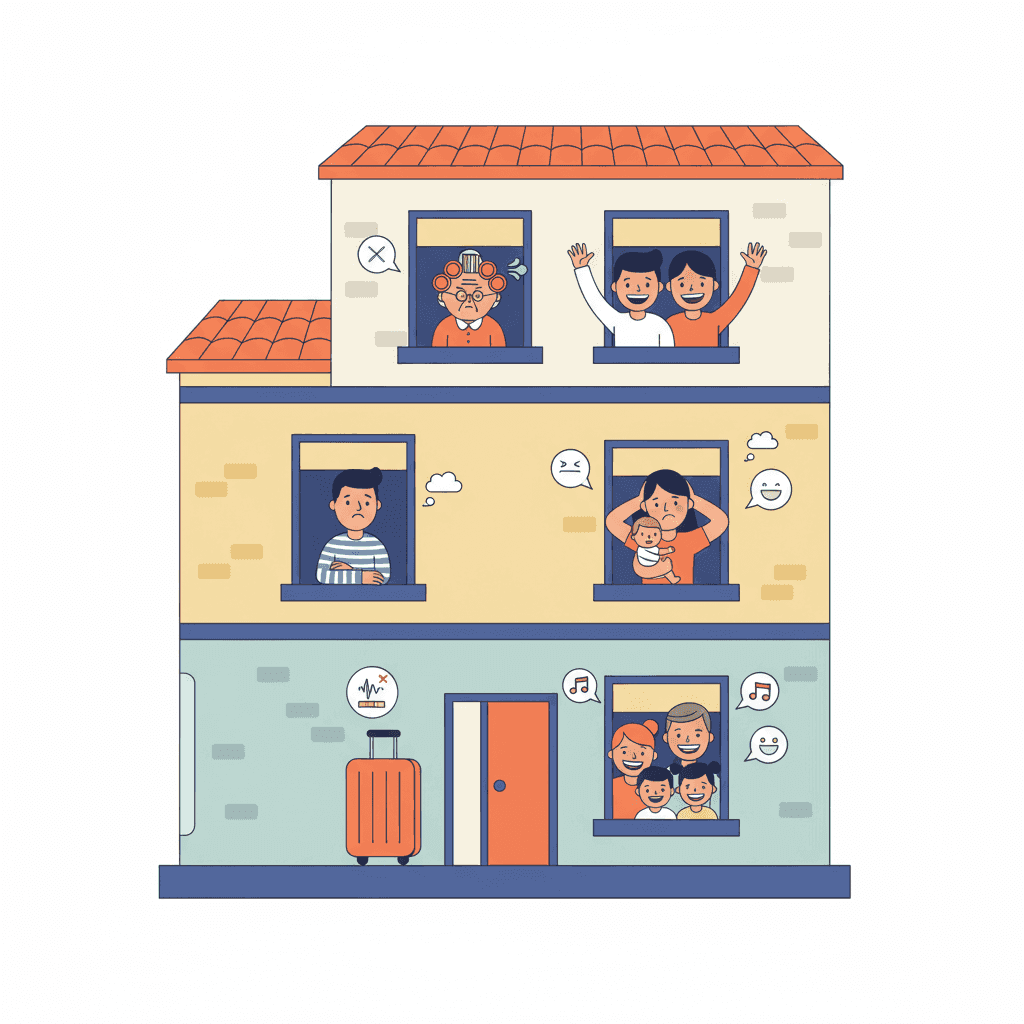
Neighbors are your biggest operational risk. It's not tax authorities, not SES Hospedajes, not problematic guests. It's neighbors. A serious complaint can end your license, result in fines of thousands of euros, or even lead to the prohibition of activity in your building. In this post, I explain how to prevent problems, how to handle complaints when they arrive, and what to do if things get serious.
Why neighbors can shut down your operation
Since the modification of the Horizontal Property Law in 2019 (and reinforced in 2025), a homeowners' community can prohibit or limit vacation rental activity with the favorable vote of 3/5 of the owners, who in turn represent 3/5 of the participation quotas.
Translated: if three out of five neighbors are fed up with you, you're out of business.
And that's not all. Repeated complaints can lead to:
- Inspections by the town hall
- Noise fines (between 600 and 30,000 euros depending on the autonomous community)
- Complaints for disturbances that can end in civil court
- Revocation of the tourist license
- Bad reputation on platforms (yes, neighbors also leave reviews)
A single angry and well-organized neighbor can do more damage than a hundred problematic guests.
Most common complaints (and why they arise)
After talking to hundreds of owners, these are the most repeated complaints:
| Complaint | Frequency | Severity |
|---|---|---|
| Night noise | Very high | High |
| Suitcases and moving in stairs | High | Medium |
| Misuse of common areas (pool, elevator) | Medium | Medium |
| Trash outside scheduled hours | High | Low |
| Parties and gatherings | Medium | Very high |
| Smell of tobacco or marijuana | Medium | Medium |
| Lost keys to the building | Low | Medium |
Noise is king. And within noise, wheeled suitcases at 2 a.m. are the number one enemy. It may seem trivial, but it's what annoys neighbors who have to wake up early the most.
Prevention: how to avoid complaints before they happen
1. Talk to your neighbors before starting
It seems obvious, but almost no one does it. Before posting your first ad, go to the building entrance, knock on the doors of the closest neighbors, and introduce yourself. Tell them you'll rent the apartment for short stays, that they should contact you directly if there's any problem, and give them your phone number.
This turns potential enemies into allies. A neighbor who has your number will call you before reporting you.
2. Filter guests from the start
- Avoid one-night bookings on weekends (high risk of parties)
- Be cautious with large groups of the same age without children
- Request ID or passport before confirming the reservation
- Review the guest's profile on the platform
If you use Self-check-in registration, you're already collecting all guests' identity data, which by law deters those looking for parties.
3. Clear written house rules
It's not enough to say "no noise." Be specific:
- Silence between 10:00 PM and 8:00 AM
- No additional visitors beyond registered guests
- No smoking indoors or on the terrace
- Suitcases must be handled carefully
- Trash should be taken out between 8:00 PM and 10:00 PM
Include these in the reservation, in the welcome message, and on a printed sign on the fridge.
4. Install a noise sensor
Devices like Minut or NoiseAware cost between 100 and 200 euros and alert you on your phone when there's a noise spike. They do not record conversations (which would be illegal), only measure decibels. You can intervene before the neighbor calls the police.
5. Smart lock with unique codes
Goodbye lost keys in the building. Each guest receives a code that only works during their stay. And you know when each one enters and leaves.
What to do when the first complaint arrives
Step 1: Respond quickly and in person
The worst reaction is ignoring the neighbor or becoming defensive. Call them, meet for coffee if needed, listen. Most neighbors just want to feel heard.
Step 2: Document everything
Note date, time, reason for the complaint, which guest was involved, and what measures you took. If there's a future homeowners' meeting to evict you, you'll need proof that you acted diligently.
Step 3: Act with the guest
If the complaint is legitimate (noise, trash, etc.), speak to the guest immediately. Be firm but polite. If they repeat the behavior, remember you can evict them: most platforms and the hosting contract allow it.
Step 4: Compensate the neighbor if appropriate
A bottle of wine, a box of chocolates, a written apology. It's not bribery; it's courtesy. And it works.
When things get serious
The community calls a meeting to prohibit the activity
If you reach this point, you're already late. But you can still do things:
- Attend the meeting. If you're absent, you'll be condemned without opposition.
- Bring proof of good management: log of resolved complaints, check-in data, house rules.
- Propose written commitments: no renting to young groups, no one-night stays, install noise sensors.
- Consult a specialized lawyer. The community agreement must meet strict formal requirements. Many are annulled due to procedural defects.
You receive a fine from the town hall
Review your autonomous community's regulations on responsibilities as an owner. You have a deadline for appeals (usually 10-15 working days). Do not ignore them.
If the fine is for noise, it is often difficult to prove without official measurement. Always contest if possible.
The golden table: what to do and what not to do
| Do | Don't |
|---|---|
| Introduce yourself to neighbors | Hide and wait for it to pass |
| Give your phone number to the president | Only face problems when they arise |
| Respond to complaints within 24 hours | Ignore messages from neighbors' group |
| Document every incident | Improvise without record |
| Install a noise sensor | Rely on guests' good faith |
| Filter risky reservations | Accept everything for occupancy |
| Have liability insurance | Go uninsured "because nothing ever happens" |
How Self-Registration fits in
An important part of preventing complaints is knowing who's in your apartment. Self-registration makes each guest fill out a form before check-in with their full details (including all adult companions), and that data goes directly to SES Hospedajes as required by law.
Two things happen with this:
- Deterrence: those planning to host a clandestine party don't want to leave a trace of their identity. Asking for ID and official data before entry makes many think twice.
- Traceability: if something happens, you know exactly who was in the apartment. And neighbors know too.
It costs 1 euro per month per property. Less than the coffee you're drinking while reading this. And it saves you manual paperwork for traveler registration.
Frequently Asked Questions
Can my homeowners' association prohibit me from renting for tourism if I've been doing it for years?
Yes, since 2019, a community can approve prohibition or limitation with 3/5 votes. The prohibition is not strictly retroactive, but courts are mostly siding with communities. Your best defense is not reaching that vote.
Am I legally required to give my phone number to neighbors?
Not legally, but practically yes. In many autonomous communities, regulations require a 24-hour contact number for issues related to the vacation rental, and common sense says that number should be accessible to neighbors too.
What if a neighbor records my guests without permission?
It's illegal to record without consent in private areas. In common areas, it's more ambiguous. If they present videos as evidence at a meeting, you can challenge them. Consult a lawyer.
Is installing a noise sensor worth it?
Yes, especially in urban apartments. The initial investment of 100-200 euros is offset by avoiding a single fine or a canceled night due to neighbor complaints. It also demonstrates diligence in case of an eventual complaint.
Can I evict a guest who is bothering neighbors?
Yes. The hosting contract (not a lease) allows termination for breach of rules. Document the reason, notify in writing, and if they don't leave, call the police. Platforms usually support you if you have evidence.
Ready to automate your guest registration?
Create your account and start streamlining SES Hospedajes compliance for your Spanish rentals.
Get started