Most profitable areas for vacation rental in Spain in 2026: data, comparisons, and regional insights
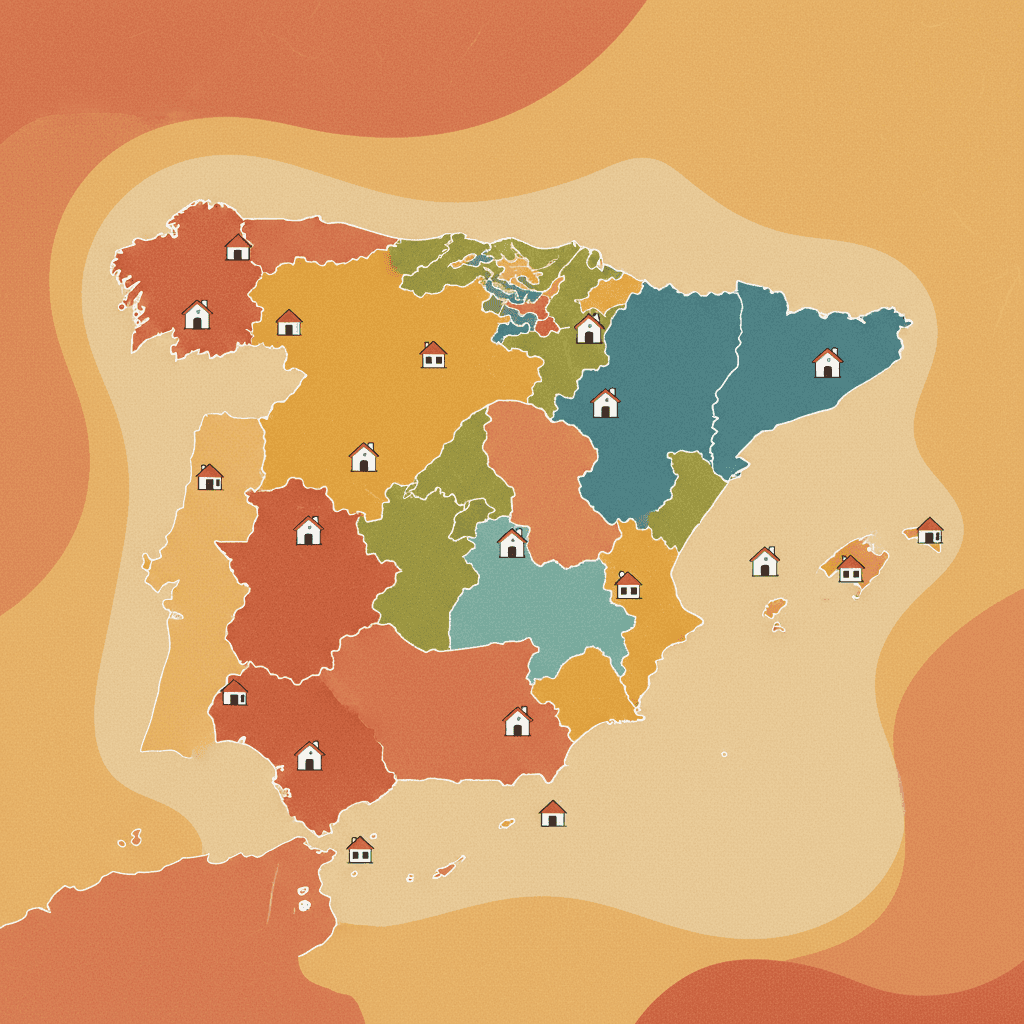
The most profitable areas for vacation rental in Spain in 2026 combine high demand, stable occupancy, and reasonable purchase prices. The Canary Islands lead in net yield (6-8%) thanks to year-round consistent occupancy. They're followed by cities like Málaga, Valencia, and Seville (5-7%), the Mediterranean coast in season (5-8% gross but with marked seasonality), and Madrid and Barcelona (4-6% net with high entry prices). The key isn't just how much you charge per night, but the relationship between income, occupancy, expenses, and property price.
"Where should I buy to rent?" is the million-euro question. And the answer isn't as simple as "wherever there are the most tourists." An area with sky-high nightly rates but expensive properties can yield worse returns than a secondary destination with moderate prices and stable occupancy.
This article analyzes Spain's main vacation rental areas with real market data, so you can compare with criteria rather than intuition.
How to measure profitability by area
Before diving into specific areas, it's important to understand which metrics to use:
- Gross yield = Gross annual income / Property purchase price
- Net yield = (Gross income − Operating expenses) / Purchase price
- Real net yield = Net yield − Taxes
Gross yield is useful for quick comparisons but can be misleading. An area with high nightly rates but low occupancy or high expenses can have mediocre net yield.
The key factors are:
- Property purchase price — the denominator of the equation
- Average nightly rate — what you can charge
- Average annual occupancy — how many nights you actually rent
- Seasonality — whether demand is constant or concentrated in a few months
- Operating expenses — cleaning, utilities, management, commissions
- Local regulation — restrictions that may limit your activity
Area ranking by profitability
1. Canary Islands: the queen of stability
The Canary Islands are probably the area with the best profitability-to-risk ratio in Spain for vacation rental. The reason is simple: tourism 12 months a year.
| Metric | Data |
|---|---|
| Avg purchase price (2-bed) | €150,000-250,000 |
| Avg price/night | €80-140 |
| Avg annual occupancy | 70-82% |
| Seasonality | Very low (constant demand) |
| Gross yield | 8-12% |
| Estimated net yield | 6-8% |
Top areas:
- South Tenerife (Costa Adeje, Los Cristianos): high demand from British and German tourism, occupancy above 75% year-round.
- South Gran Canaria (Maspalomas, Playa del Inglés): similar profile, with slightly more accessible purchase prices.
- Lanzarote (Puerto del Carmen, Playa Blanca): lower supply, which keeps prices and occupancy high.
- Fuerteventura (Corralejo): strong growth in recent years, purchase prices still competitive.
Advantages: constant climate, de-seasonalized tourism, direct flights from all over Europe, established tourist property owner community.
Risks: increasingly strict regulation on some islands, tourism moratorium in saturated areas, dependence on foreign tourism.
2. Málaga and Costa del Sol: the Mediterranean balance
Málaga city has become one of Europe's most dynamic urban destinations, and the Costa del Sol remains a magnet for international tourism.
| Metric | Málaga city | Costa del Sol (Marbella, Nerja) |
|---|---|---|
| Avg purchase price (2-bed) | €200,000-320,000 | €180,000-400,000 |
| Avg price/night | €90-150 | €100-200 |
| Avg annual occupancy | 65-78% | 50-68% |
| Seasonality | Moderate | Marked |
| Gross yield | 8-11% | 7-10% |
| Estimated net yield | 5-7% | 4-7% |
Málaga city stands out for combining urban tourism (culture, gastronomy, conferences) with beach proximity. Occupancy is more stable than on the pure coast because it attracts travelers year-round, not just in summer.
Marbella and the coast have higher nightly rates but more marked seasonality and high purchase prices on the front line. Nerja and Torrox offer better value for money.
Regulation: Andalusia requires registration in the Tourism Registry and compliance with technical requirements (see requirements by region). Málaga city has tightened conditions in 2025-2026.
3. Valencia: low entry price, growing demand
Valencia is one of the cities with the best profitability-to-investment ratio in Spain. Purchase prices are significantly lower than in Madrid or Barcelona, and tourist demand keeps growing.
| Metric | Data |
|---|---|
| Avg purchase price (2-bed) | €150,000-250,000 |
| Avg price/night | €80-130 |
| Avg annual occupancy | 60-72% |
| Seasonality | Moderate |
| Gross yield | 8-11% |
| Estimated net yield | 5-7% |
Top areas:
- Ciutat Vella (historic center): maximum tourist demand, highest purchase prices in the range.
- Ruzafa: trendy neighborhood, highly sought after by young travelers and digital nomads.
- Poblats Marítims (Malvarrosa, Cabanyal): beach proximity, more accessible purchase prices, undergoing urban transformation.
Advantages: low entry price, booming tourist city, good air connections, attractive climate, international events (America's Cup, Fallas).
Risks: regulation has tightened in 2025-2026 with new restrictions in the historic center. Verify current regulations before investing.
4. Seville: cultural tourism with high occupancy
Seville combines powerful cultural tourism with a more contained vacation rental supply than Barcelona or Madrid, which keeps occupancy high.
| Metric | Data |
|---|---|
| Avg purchase price (2-bed) | €170,000-280,000 |
| Avg price/night | €90-140 |
| Avg annual occupancy | 60-72% |
| Seasonality | Moderate (peak in spring and autumn, dip in summer due to heat) |
| Gross yield | 7-10% |
| Estimated net yield | 5-7% |
Unique feature: Seville has inverse seasonality compared to the coast — the strongest months are March-June and September-November. July and August drop due to extreme temperatures. This makes it complementary to beach destinations.
Top areas: Santa Cruz, Triana, Alameda, Macarena.
5. Madrid: high volume, moderate profitability
Madrid is Spain's largest vacation rental market by volume, but high purchase prices compress the percentage yield.
| Metric | Data |
|---|---|
| Avg purchase price (2-bed) | €280,000-450,000 |
| Avg price/night | €100-160 |
| Avg annual occupancy | 68-80% |
| Seasonality | Low (tourism + business + events) |
| Gross yield | 6-9% |
| Estimated net yield | 4-6% |
Advantages: constant demand (tourism, business, conferences, sporting events), very stable occupancy, liquid market for resale.
Disadvantages: high entry price, increasingly restrictive regulation, intense competition.
Top areas: Malasaña, Lavapiés, La Latina, Chueca, Salamanca (premium segment).
6. Barcelona: high revenue, high complexity
Barcelona has the highest nightly rates in Spain, but also the highest purchase prices and the most restrictive regulation.
| Metric | Data |
|---|---|
| Avg purchase price (2-bed) | €300,000-500,000 |
| Avg price/night | €120-200 |
| Avg annual occupancy | 70-82% |
| Seasonality | Low-moderate |
| Gross yield | 7-10% |
| Estimated net yield | 4-6% |
The elephant in the room: Barcelona has frozen new tourist license grants and announced non-renewal of existing ones from 2028. This means investing in Barcelona for vacation rental has a limited time horizon and high regulatory risk.
If you already have a license, profitability remains good. If you don't, obtaining one is practically impossible at present.
7. Balearic Islands: seasonal but powerful profitability
The Balearics offer Spain's highest nightly rates in peak season, but with very marked seasonality and high purchase prices.
| Metric | Mallorca | Ibiza | Menorca |
|---|---|---|---|
| Avg purchase price (2-bed) | €250,000-450,000 | €300,000-600,000 | €200,000-350,000 |
| Avg price/night (annual avg) | €120-200 | €150-300 | €100-180 |
| Avg annual occupancy | 50-68% | 45-60% | 40-55% |
| Peak season (Jun-Sep) | 85-95% | 90-98% | 85-95% |
| Gross yield | 7-10% | 7-11% | 6-9% |
| Estimated net yield | 4-7% | 4-7% | 3-6% |
Key: profitability in the Balearics depends enormously on maximizing peak season. Good dynamic pricing can make the difference between 4% and 7% net.
Regulation: the Balearics have some of Spain's strictest regulations. Moratorium in saturated areas, capacity limits, demanding technical requirements.
8. Mediterranean coast (outside major cities)
The Mediterranean coast — Costa Brava, Costa Blanca, Costa de la Luz — offers more accessible purchase prices but with very marked seasonality.
| Metric | Costa Brava | Costa Blanca | Costa de la Luz |
|---|---|---|---|
| Avg purchase price (2-bed) | €150,000-280,000 | €120,000-220,000 | €100,000-200,000 |
| Avg price/night (annual avg) | €80-140 | €70-120 | €65-110 |
| Avg annual occupancy | 45-60% | 50-65% | 40-55% |
| Gross yield | 6-9% | 7-10% | 6-9% |
| Estimated net yield | 3-6% | 4-7% | 3-6% |
Costa Blanca (Alicante, Benidorm, Jávea, Dénia) stands out for combining low purchase prices with relatively high occupancy thanks to European residential tourism (especially British, Nordic, and Belgian) that extends the season.
Costa de la Luz (Cádiz, Huelva) has very attractive entry prices but a shorter season (June-September).
9. Interior and rural tourism
Rural tourism has lower occupancy but also much lower entry and operating costs.
| Metric | Data |
|---|---|
| Avg purchase price | €80,000-180,000 |
| Avg price/night | €50-90 |
| Avg annual occupancy | 25-40% |
| Seasonality | High (long weekends, summer, Christmas) |
| Gross yield | 5-8% |
| Estimated net yield | 2-5% |
Best-performing areas: Sierra de Grazalema, Alpujarras, Aragonese and Catalan Pyrenees, Sierra de Guadarrama, rural Asturias, Ribera del Duero.
Advantages: low initial investment, less competition, generally more favorable regulation, possibility of combining with personal use.
Disadvantages: low occupancy, smaller market, greater dependence on reviews and positioning.
Summary table: profitability by area
| Area | Investment (2-bed) | Price/night | Occupancy | Gross yield | Net yield | Seasonality |
|---|---|---|---|---|---|---|
| Canary Islands | €150-250K | €80-140 | 70-82% | 8-12% | 6-8% | Very low |
| Málaga city | €200-320K | €90-150 | 65-78% | 8-11% | 5-7% | Moderate |
| Valencia | €150-250K | €80-130 | 60-72% | 8-11% | 5-7% | Moderate |
| Seville | €170-280K | €90-140 | 60-72% | 7-10% | 5-7% | Moderate |
| Madrid | €280-450K | €100-160 | 68-80% | 6-9% | 4-6% | Low |
| Barcelona | €300-500K | €120-200 | 70-82% | 7-10% | 4-6% | Low |
| Balearics | €200-600K | €100-300 | 40-68% | 6-11% | 3-7% | High |
| Costa Blanca | €120-220K | €70-120 | 50-65% | 7-10% | 4-7% | Marked |
| Costa Brava | €150-280K | €80-140 | 45-60% | 6-9% | 3-6% | Marked |
| Costa de la Luz | €100-200K | €65-110 | 40-55% | 6-9% | 3-6% | High |
| Interior/rural | €80-180K | €50-90 | 25-40% | 5-8% | 2-5% | High |
Factors beyond the numbers
Regulation: the invisible factor
Paper profitability is worthless if regulation prevents you from operating. Before investing in any area:
- Check if there's a moratorium or license freeze
- Verify technical and administrative requirements (guide by autonomous community)
- Confirm whether the homeowners' association allows tourist use (they can prohibit it)
- Review rental day limits (limits by area)
Real estate market liquidity
Investing in vacation rental isn't just about annual yield — being able to sell the property if you change strategy also matters. Madrid, Barcelona, and major cities have very liquid markets. Rural or secondary coastal areas can take months to sell.
2025-2026 trends
- Mid-size cities on the rise: Málaga, Valencia, Seville, and San Sebastián are growing in tourist demand faster than Madrid or Barcelona.
- Canary Islands consolidating: occupancy keeps rising and purchase prices haven't yet reached Balearic levels.
- Regulation tightening: Barcelona, the Balearics, and some Canary Islands areas are limiting supply, which benefits those who already have a license but makes new entries harder.
- Post-pandemic rural tourism: demand has stabilized above pre-2020 levels, especially in destinations with good connectivity.
How Autoregistro fits in
Whichever area you choose, guest registration is mandatory across all of Spain since the implementation of Royal Decree 933/2021. Autoregistro automates that process — data collection, document verification, submission of traveler reports to SES Hospedajes — so you can focus on the strategic management of your property rather than paperwork. Especially useful if you manage properties in multiple areas, where each autonomous community may have additional requirements that Autoregistro helps you meet from a single centralized platform.
Frequently asked questions
What's the most profitable area in Spain for vacation rental? In terms of risk-adjusted net yield, the Canary Islands lead thanks to year-round consistent occupancy and reasonable purchase prices. They're followed by Málaga city and Valencia for their strong investment-to-return ratio.
Is it better to invest in a city or on the coast? It depends on your profile. Cities offer more stable occupancy and less seasonality. The coast can deliver higher gross yields in season, but with empty months in winter. For a first property, cities tend to be more predictable.
Is it worth investing in Barcelona for vacation rental? If you already have a license, yes — profitability remains good. If you don't, the regulatory risk is very high. Barcelona has frozen new licenses and announced non-renewal of existing ones from 2028.
Is rural tourism profitable? As a primary business, rarely. As supplementary income with a low investment, it can work well, especially in areas with good connectivity and demand for weekend getaways.
How does regulation affect profitability? Directly. A license moratorium can make your investment unviable. Costly technical requirements reduce margins. Day limits reduce potential income. Always verify local regulation before buying.
Related posts

What Occupancy Rate Can You Expect from a Vacation Rental in Spain?
Real occupancy data by region and season for Spanish vacation rentals: what percentage to expect, how to calculate your break-even point, factors that influence rates, and strategies to improve your occupancy.

Dynamic pricing for vacation rental: how to optimize your rates
Practical guide to dynamic pricing in vacation rental: what it is, why it works, which tools to use, how to set it up, and how much more you can earn compared to a fixed price.

Vacation rental requirements by autonomous community in Spain
Detailed guide to the requirements each Spanish autonomous community demands to operate a vacation rental: licenses, responsible declarations, deadlines, limits, and key particularities.

How much can you earn from a vacation rental in Spain? Real profitability with numbers
Realistic analysis of vacation rental profitability in Spain: average income by area, expected occupancy, real expenses, and comparison with long-term rental. With practical examples and updated figures.
Ready to automate your guest registration?
Create your account and start streamlining SES Hospedajes compliance for your Spanish rentals.
Get started