Accessibility in Vacation Rentals: How to Adapt Your Apartment, Costs, and Why It Boosts Your Bookings
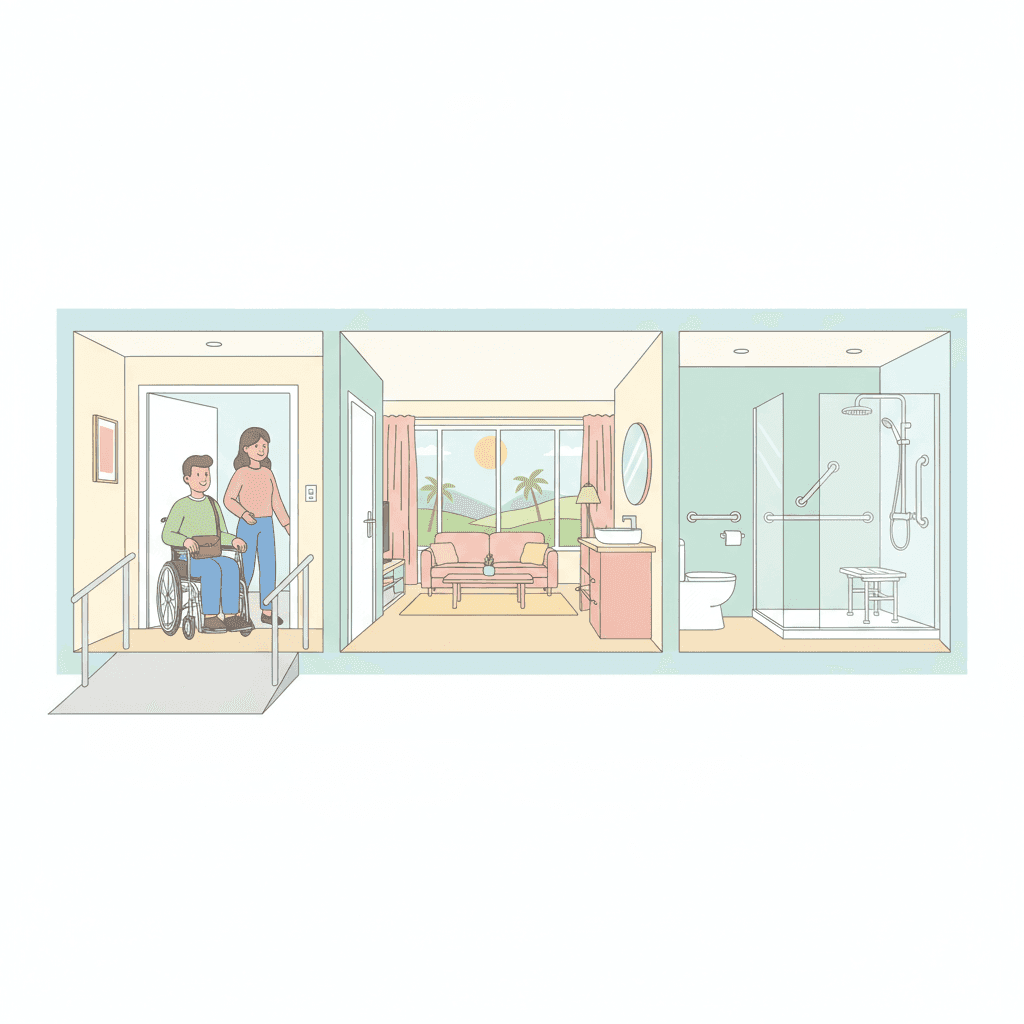
Accessibility in vacation rentals is one of those topics that almost no one considers until they receive a query from a guest in a wheelchair and don't know how to respond. And it's a shame, because we're talking about a huge market (more than 4 million people with disabilities in Spain, plus seniors with reduced mobility, and families with strollers) that usually books in advance, pays without bargaining, and repeats if satisfied. In this guide, I’ll tell you what the law says, which adaptations truly make a difference, how much they cost, and how to promote them in your listing without exaggeration.
Why You Should Consider Accessibility (Even if Not Mandatory)
Let's be clear: unless your property is in a building classified as "accessible" or regional regulations require it (very few cases), you are not obliged to adapt your vacation home. But that doesn't mean it's not in your interest.
The accessible market in Spain is underserved. On Airbnb, you can filter by "accessibility," and in many tourist areas, only 10 or 15 results appear when there are thousands of listings in total. That means: less competition, unmet demand, and guests willing to pay whatever it takes to find something that truly works.
Moreover, many adaptations also benefit:
- Families with babies and strollers
- Elderly people (even if they don't identify as "disabled")
- People with temporary injuries (a knee surgery, crutches)
- Groups traveling with an older person
And all of this is a market.
What the Law Says in Spain
Here, two things must be distinguished: general accessibility regulations and vacation rental regulations.
General Regulations
Royal Decree-Law 1/2013 (General Law on the Rights of People with Disabilities) and the Technical Building Code (CTE DB-SUA) establish accessibility criteria for new buildings and major renovations. If your building is older and you haven't carried out major work, these regulations do not apply retroactively.
Regional Tourism Regulations
Each autonomous community has its own decree for vacation rentals, and most do not require specific accessibility features for small vacation apartments. Some (Andalusia, Catalonia) do require that if you advertise the property as "accessible," it meets certain technical requirements. You can review the requirements by autonomous community for your specific case.
Important: if in your listing you check the "wheelchair accessible" box on Airbnb or Booking and it is not truly accessible, you will definitely get a negative review and possible complaint. Never exaggerate.
Anti-Discrimination
You cannot refuse to rent to someone because of their disability. You can honestly say "my property is not accessible, it has stairs, and a wheelchair won't fit in the bathroom," but you cannot reject the reservation solely for that.
Accessibility Levels: From Easy to Full Renovation
It's not all black or white. There are various levels, and depending on your property, you can go as far as you want (or can).
| Level | What's Included | Approximate Cost | Target Market |
|---|---|---|---|
| Basic | No obvious barriers, good lighting, comfortable furniture | 0-200 euros | Seniors, temporary injuries |
| Intermediate | Support bars, flush shower, no rugs, wide passage | 500-2,000 euros | Mild mobility reduction, families |
| Advanced | Fully adapted bathroom, 80 cm doors, no steps | 3,000-8,000 euros | Wheelchair users (non-electric) |
| Complete | Lifts, articulating beds, home automation, building access | 10,000+ euros | Severe disabilities |
Most owners can reach the intermediate level with little investment and already tap into an interesting market.
Adaptations That Truly Make a Difference
Let's get practical. These are the improvements with the best cost-impact ratio.
Bathroom: Where 80% of the Problem Lies
The bathroom is the critical point. If your bathroom doesn't work well, it doesn't matter how nice the rest is.
- Walk-in shower (no raised tray). If you have a bathtub, replacing it costs between 800 and 2,500 euros. It's the best accessibility investment you can make, and it also modernizes the bathroom.
- Support bars next to the toilet and in the shower. 30-80 euros each, easy to install. Make sure they are fixed, steel, not suction cups.
- Shower head with long hose and a foldable shower seat (50-150 euros).
- Non-slip mat inside and outside the shower.
- Standard or raised toilet (40-45 cm). If yours is very low, a riser costs 30-60 euros.
Doors and Passages
- Doors of at least 70 cm (ideally 80 cm) for wheelchair access.
- Remove high door stops and weatherstripping from between rooms.
- Lever-type handles, not round (easier to use with limited hand strength).
Floors
- Remove loose rugs. They are the number one enemy of reduced mobility and a common cause of falls. If you want something decorative, glue it to the floor with double-sided tape or use non-slip mats.
- Smooth floors, without level differences between rooms.
Bedroom
- Bed at 50-55 cm height from the floor (not too low or too high). If yours is low, there are leg raisers for 20-30 euros.
- Free space on both sides of the bed (minimum 70 cm on one side for a wheelchair).
- Switch near the bed or a bedside lamp that's easy to operate.
Kitchen
This is more complicated if you don't want to do renovations. But you can:
- Keep dishes and utensils in low drawers, not only in high cabinets.
- Single-handle faucet with a long lever.
- Microwave at accessible height (not on an overly high countertop).
Entrance and Hallway
- If you have steps at the entrance, consider a portable ramp (80-300 euros depending on length). Not a perfect solution but helpful.
- Good lighting in hallways and entrance.
- If the building has an elevator, measure the door and cabin: a standard wheelchair needs an 80 cm door and a 1.10 x 1.40 m cabin.
What to Advertise and How (Without Lying)
This is where many go wrong. If you label your property as "accessible" without being so, you damage your reviews. If you don't mention it, those who need it won't find you.
The solution: be concrete and honest. Instead of "accessible," specify exactly what it has and what it doesn't:
"Ground-floor apartment without steps. Walk-in shower with foldable seat and support bars. Doors 75 cm (large electric wheelchair may not fit). Bed at 55 cm. No rugs. Building without elevator but not necessary (ground floor)."
This tells anyone whether your place suits them or not. And prevents bookings from people you can't serve well. You can also update your listing description with this information.
Specific Photos
Upload photos of the bathroom with the walk-in shower, door passage, and entrance without steps. These are "unusual" photos for a normal listing, but accessibility seekers value them greatly.
The Guest with Reduced Mobility: What to Expect
From experience, guests with disabilities or reduced mobility tend to:
- Ask a lot before booking. Respond quickly and in detail. Measure doors, take bathroom photos, whatever is needed.
- Book longer stays (average 5-10 nights).
- Travel with a partner or companion.
- Leave detailed and grateful reviews when everything works.
- Repeat if satisfied (finding accessible accommodation is challenging).
Assistance and Grants
Although not many and changing yearly, there are aid programs for accessibility renovations:
- Residential Rehabilitation Aid Program (Next Generation funds): includes accessibility.
- Regional subsidies from housing departments.
- Tax deductions on income tax for accessibility works in some regions.
Check with your local council or regional government. Remember that accessibility works are often tax-deductible expenses if properly documented.
Common Mistakes
- Marking "accessible" on Airbnb just because "there are no stairs inside the apartment" (but the building has no elevator).
- Installing support bars with suction cups. They fall. Dangerous.
- Leaving rugs "because they look nice." They are traps.
- Not measuring doors before listing accessibility.
- Promising total accessibility but having a 15 cm step at the entrance that "is nothing".
How Autoregistro Fits In
If you target the accessible market, you'll likely receive older or mobility-reduced guests for whom a complicated check-in can complicate their trip. Making arrival easier is better.
Autoregistro helps with the bureaucratic part: your guests fill out their details from their phone or computer before arriving, without downloading apps or dealing with PDFs. The data automatically goes to SES Hospedajes, and you don't have to do anything. It costs 1 euro per month per property (less than a coffee), and it takes care of the paperwork you'd have to do anyway, regardless of the guest profile.
One less thing to manage, one happier guest upon arrival.
Frequently Asked Questions
Am I obliged to adapt my vacation rental for people with disabilities?
Generally no, unless regional regulations require it or you advertise the property as accessible. But you are obliged not to discriminate: you can't reject a reservation solely because of the guest's disability.
How much does it cost to make a vacation rental bathroom accessible?
A basic adaptation (walk-in shower, support bars, foldable seat) costs around 1,500-3,000 euros if replacing a bathtub. Just adding support bars and a seat costs less than 300 euros. It depends heavily on the current condition of the bathroom.
Can I charge more for an accessible property?
Yes, especially in areas with high tourist demand but limited accessible options. A surcharge of 10-20% over the average price in the area is reasonable and usually accepted because supply is limited.
What if I mark "accessible" on Airbnb and it's not fully so?
You risk cancellations on the day of arrival, devastating negative reviews, and possible claims for false advertising. It's better to be very specific about what features are available and what are not, rather than checking a generic box.
Are accessibility works tax-deductible?
Yes, like any improvement or renovation related to the rental activity. Keep invoices, and in some regions, there may be additional deductions specific to accessibility. Consult your tax advisor.
Ready to automate your guest registration?
Create your account and start streamlining SES Hospedajes compliance for your Spanish rentals.
Get started