Night check-in at a tourist accommodation: how to manage it without going crazy (or losing bookings)
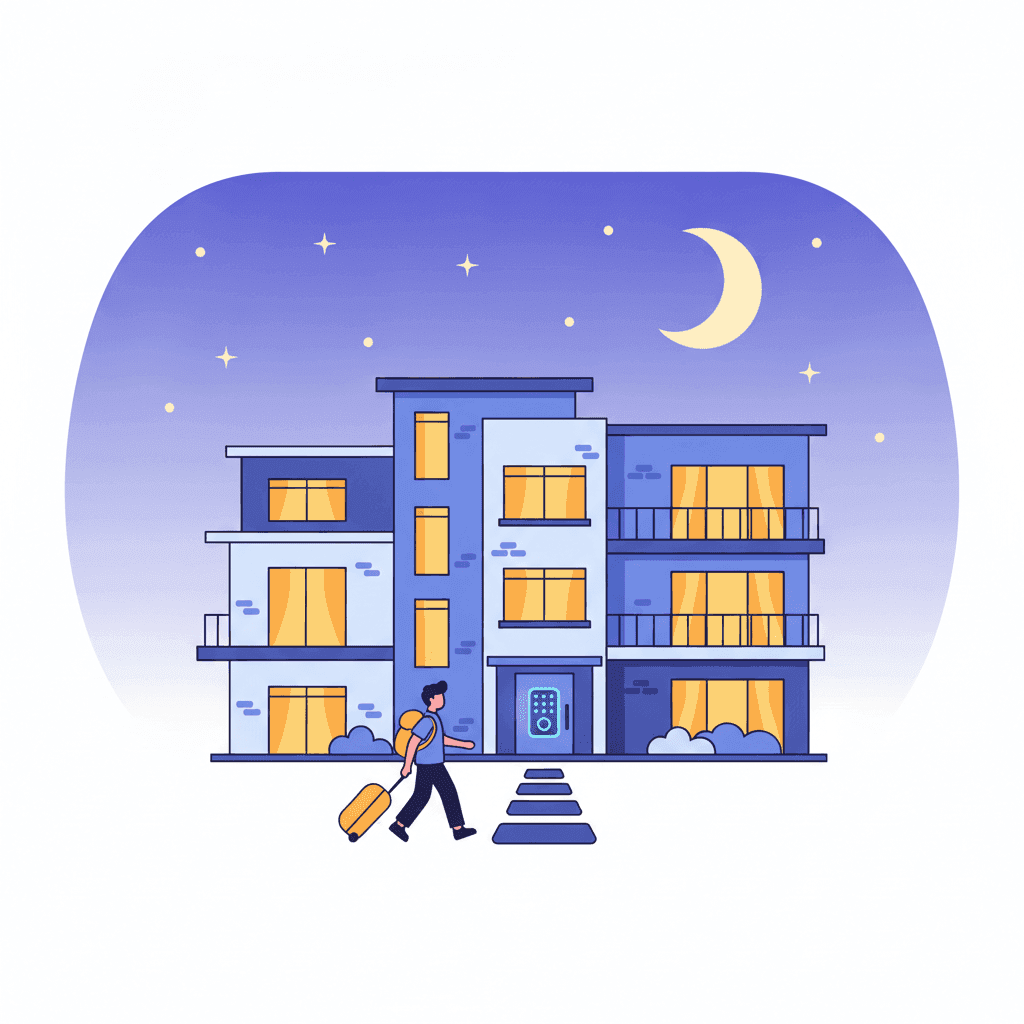
Night check-in is one of those things that seems like a minor detail until you have to open the door at 2 a.m. on a Tuesday. Low-cost flights, long journeys, and plan changes mean many arrivals fall outside normal hours. In this guide, I’ll tell you how to manage them without sacrificing your sleep, losing bookings, or ending up with negative reviews due to chaotic check-ins.
What is considered a night check-in
There is no official definition, but in the industry, any arrival between 10:00 PM and 8:00 AM is usually considered a night check-in. Some owners extend this from 8:00 PM in winter (when it’s already dark) or restrict it starting at midnight.
The important thing is not the exact time, but when it starts to be a problem for you:
- What time do you go to sleep?
- Do you have neighbors who complain about nighttime noise?
- Is the check-in in person or automated?
- Do you live near the property or have to travel?
Why you can't just say "no"
Rejecting all late-night arrivals sounds tempting, but it’s a mistake that costs you money. Many low-cost flights land after 11:00 PM. Last-minute AVE trains arrive at 10:30 PM. Car travelers doing 500 km cannot control their arrival minute by minute.
If you block all arrivals after 10:00 PM, you’re leaving out a huge percentage of the market. Especially in cities with active airports at night like Madrid, Barcelona, Palma, Málaga, or Alicante.
A host in Málaga told me he started accepting check-ins until 2:00 AM, and his occupancy increased by 12 percent in high season. The key: automate the entire process.
The three strategies to manage night check-ins
1. Total automation
This is the most comfortable option and what I recommend for 90 percent of cases. With a smart lock and a good digital welcome manual, the guest can arrive at any time without you having to be there.
What you need:
- Smart lock with temporary code (Nuki, Igloohome, Yale)
- Clear instructions sent 24-48 hours before
- Exterior lighting with sensor or always on
- WiFi working from the start
- Mobile-accessible welcome manual
2. In-person check-in with surcharge
If you prefer to greet in person, you can accept late check-ins but charge a supplement. This is similar to what hotels do with the "late arrival fee".
Typical ranges in Spain:
| Arrival time | Usual surcharge |
|---|---|
| 8:00 PM - 10:00 PM | 0 - 15 euros |
| 10:00 PM - 12:00 AM | 20 - 40 euros |
| 12:00 AM - 2:00 AM | 40 - 60 euros |
| 2:00 AM - 8:00 AM | 60 - 100 euros |
Always notify before the reservation. Include it in the listing description and confirm via message once they book.
3. Delegate to a meet-and-greet company
In large cities, there are specialized companies for 24/7 in-person check-ins. They charge between 25 and 45 euros per check-in and handle everything: receiving the guest, handing over keys, explaining the house, and making the guest report.
It’s worth it if:
- You don’t live near the property
- You have multiple properties and can’t be everywhere
- You want to keep the human touch without sacrificing your life
How to set up an automated night check-in that works
Step 1: the lock
Forget about safes with keys hanging at the entrance. They are insecure, cameras record them, and any cautious neighbor complains. A smart lock costs between 200 and 400 euros and pays for itself in a few months.
Generate a unique code per reservation that activates at check-in time and deactivates after checkout. No permanent codes that rotate among guests.
Step 2: instructions
Send instructions 24 to 48 hours before. Not earlier (they get lost) or right at arrival (panic). Include:
- Exact address with a link to Google Maps
- Photo of the entrance during day and night
- Access code to the portal (if applicable)
- Floor and door number
- Lock code
- How to turn on the lights upon entry
- WiFi (SSID and password)
- Your phone for emergencies
Step 3: lighting
A guest arriving at 11:30 PM at a dark entrance is a negative review waiting to happen. Make sure:
- The building number is visible from the street
- The inside of the building is lit (motion sensor if available)
- There’s light in the landing when leaving the elevator
- The home’s entrance is illuminated when opening the door
A smart bulb at the entrance that turns on automatically upon detecting movement costs 15 euros and prevents many issues. More ideas in the lighting guide.
Step 4: guest registration
This is the point most people forget. Even if the guest arrives at 3:00 AM, you are legally obliged to register their details in SES Hospedajes within 24 hours of check-in.
If you don’t automate it, you’ll have to get up at 3 AM to do the report or do it the next day under time pressure. Neither option is good.
Common mistakes that cost you reviews
Not confirming arrival. If the guest says "I’ll arrive around 11:00 PM" and you don’t reply, they’ll arrive nervous. Always confirm and ask about the flight or estimated time.
Ambiguous instructions. "The lock is on the right" doesn’t work at 2 AM with sleep. Be specific: "The lock is a black numeric keypad to the right of the door. Enter the code and then press the key symbol".
Not testing the system. Before letting a guest try your smart lock at midnight, test it yourself at night with the instructions you will send. You’ll discover things you hadn’t anticipated.
Ignoring noise. A group arriving at 12:30 AM talking loudly in the hallway can generate neighbor complaints. Include a clear message in the instructions: "Please be discreet when entering, neighbors are sleeping".
No backup plan. What if the code doesn’t work? If the power goes out? If the guest confuses the portal? Have an emergency protocol prepared and an operational phone.
How much to charge for night check-in
It depends on three factors:
- Whether it’s in person or automated. For automated, don’t charge extra (or very little). For in-person, charge based on the time.
- Your property type. A high-end apartment can charge 50 euros. An economical one risks losing the reservation.
- The area. In popular destinations (Barcelona, Madrid), charging extra may divert bookings to competitors. In less competitive areas, you have more margin.
My advice: automate everything possible and don’t charge extra. It’s more profitable in the long run to have good reviews and high occupancy than to squeeze 30 euros extra for an occasional late arrival.
Safety during night arrivals
A guest arriving at 2:00 AM is more vulnerable. They’re tired, in an unfamiliar place, with luggage. Consider:
- Well-lit area: if your building is in a dark street, warn and give clear references.
- ID verification: confirm identity before granting access. If you automate with Self-Check-in, the guest already uploaded their ID before arriving.
- Exterior cameras: only in common areas and with mandatory signage. Consult the video surveillance guide.
- Available contact: keep an operational phone until the guest confirms entry.
How Self-Check-in fits in
The guest registration in SES Hospedajes is mandatory even for check-ins at 3:00 AM. With Self-Check-in, the guest fills in their details and uploads their ID before arriving, from their mobile. The data is automatically sent to SES once check-in is completed.
This means that when your guest arrives at 2:00 AM, you already have their registration verified. You don’t have to get up to handle forms or rush the next day within the 24-hour window.
It costs 1 euro per month per property. Less than a coffee, and it saves you the hassle of managing night registrations manually.
Frequently asked questions
Can I reject a booking because the arrival is too late?
On platforms like Airbnb or Booking, canceling a confirmed reservation has penalties. What you can do is clearly state your check-in hours and apply surcharges. If the guest doesn’t accept your conditions, they can cancel.
Is it legal to charge a late check-in fee?
Yes, as long as it’s communicated before the reservation and the guest has accepted it. Best to include it in the listing description and confirm via message. Never charge it unexpectedly upon arrival.
What if the guest arrives much later than planned?
With automated check-in, it doesn’t matter. With in-person check-in, you need to decide how late you will wait. Set a reasonable limit (e.g., 2 hours margin) and if exceeded, charge the fee even if you agreed on an earlier time.
Can I leave keys in an external mailbox?
You can, but I don’t recommend it. Key boxes hanging on facades are prohibited in many municipalities (Barcelona, Palma) and regulated elsewhere. They are also insecure. Invest in a smart lock instead.
What do I do if a guest cannot enter at 3:00 AM?
Have a protocol: operational emergency phone, backup code, and in the worst case, a neighbor or local manager who can assist. If you live far away, hiring a 24/7 emergency service is much cheaper than managing a 1-star review.
Related posts
Check-in Hours at Your Vacation Rental: How to Set Them Without Losing Bookings or Going Crazy
The check-in time may seem like a minor detail, but it influences your reviews, your daily routine, and even your reservations. I'll explain how to set a time window that works, what to do with late arrivals, and how to automate it without losing your mind.
Welcome Manual for Your Vacation Rental: What to Include, How to Do It, and Why It Saves You Problems
A good welcome manual reduces messages, avoids misunderstandings, and improves reviews. I tell you what to include, how to structure it, and common mistakes I see in novice owners.
Ready to automate your guest registration?
Create your account and start streamlining SES Hospedajes compliance for your Spanish rentals.
Get started