Trash and Recycling in Vacation Rental Homes: How to Manage It Without Neighbor Complaints or Fines
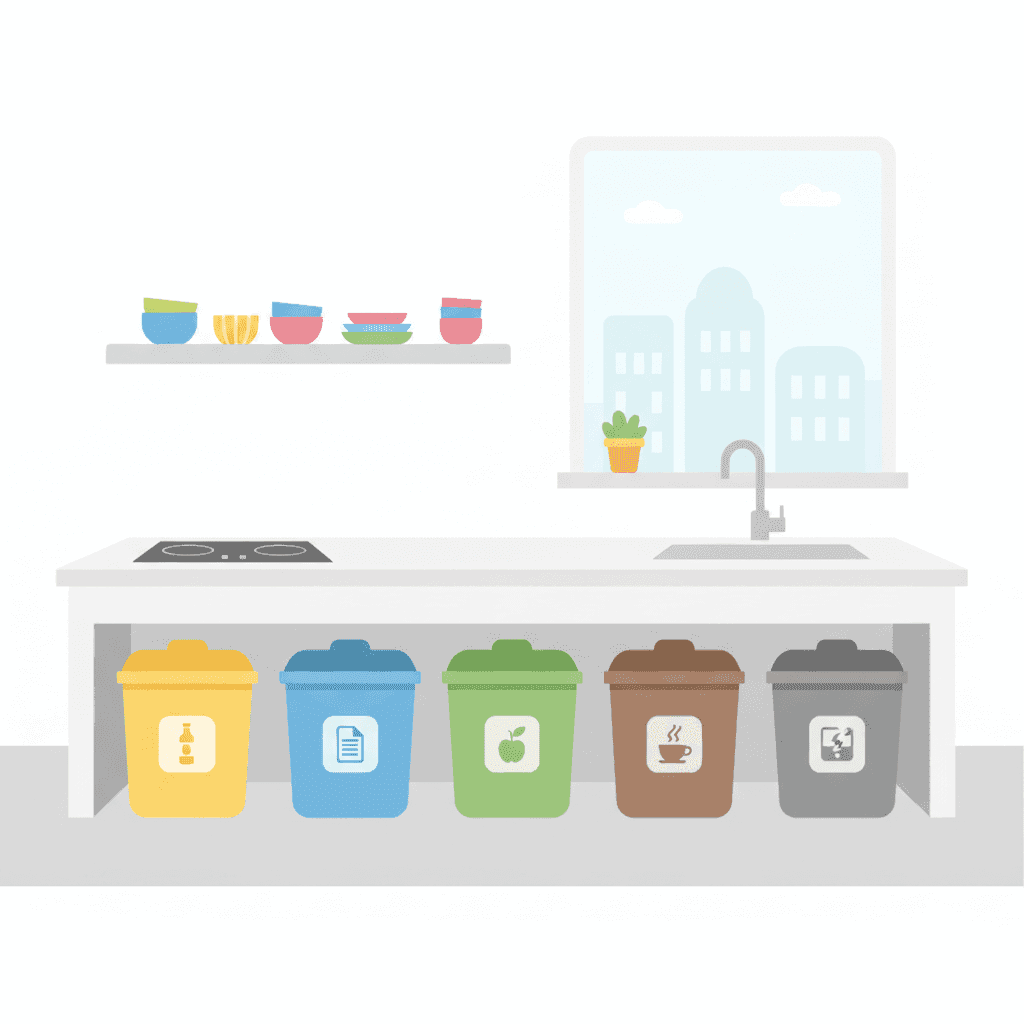
Trash is one of those topics that no one tells you about when you start with vacation rentals. And then comes the day when the neighbor from 2B calls you shouting because there are bags on the landing, or the city council fines you 300 euros for taking out cardboard on a Tuesday. In this guide, I’ll tell you how to set up a waste management system that runs automatically, without you having to chase every guest, and without ending up on the community’s blacklist.
Why trash is a bigger problem than it seems
It may seem silly. It’s not.
Poorly managed trash causes three types of problems, all avoidable:
- Neighbor complaints: bags on the landing, odors, overflowing communal containers. This is the number one complaint in many communities.
- Municipal fines: taking out trash outside designated hours, mixing waste, leaving bags on the street in cities with door-to-door collection. Fines range from 90 to 750 euros depending on the municipality.
- Negative reviews: if the guest doesn’t know what to do with the trash, they will mention it. And not positively.
The good news is that it’s solved with a clear system and 10 minutes of work on your part.
Waste collection systems in Spain: what you will find
Depending on where your property is located, collection works very differently. And this matters because your welcome manual needs to reflect it.
| System | How it works | Where it’s common |
|---|---|---|
| Street containers | Differentiated containers by color in public areas | Most large cities |
| Door-to-door | Each day, a specific type of waste is collected, at a set time | Many towns in Catalonia, Balearic Islands, Basque Country |
| Community containers | Containers inside the building or urbanization | Modern buildings, urbanizations |
| Ecological islands | Underground containers with card access | Cities with modern collection (Barcelona, Bilbao) |
The most problematic for vacation rentals is door-to-door. If your guest takes out trash on the wrong day, you get fined. And guests rotate every 3 days, so the probability is high.
The standard color code
Although there are variations by municipality, generally:
- Yellow: plastic bottles, cans, tetra packs
- Blue: paper and cardboard
- Green: glass
- Brown: organic (food scraps)
- Gray or dark green: residual waste (what doesn’t fit in the others)
Note: in some communities, brown has been mandatory since 2022 (Waste Law 7/2022). In others, it’s not yet implemented. Check what applies in your municipality.
Important: since July 2022, the law requires separating organic waste. Municipalities are implementing it in phases. If your municipality already mandates it, not separating can lead to fines.
How to set up the system inside the property
This is what truly makes a difference. If separating waste inside the apartment is easy, the guest will do it. If it’s complicated, they will throw everything into the same bag.
The minimum viable: double bin
The minimum you should have: a double bin in the kitchen. One for residual waste, another for containers (the yellow, which is the most voluminous).
Cost: 30-60 euros for a decent double bin. It lasts for years.
Recommended setup
For a 2-3 bedroom property:
- Kitchen: double bin (residual + containers) or triple if space allows
- Bathroom: small trash can with lid
- Next to the door or service area: accumulated paper/cardboard and glass bags
The trick: label the bins. Stick a small sticker or sign with the color and what goes in each. At minimum, in Spanish and English. If you get many French or German guests, add those languages.
Bags: don’t be stingy
Always have spare trash bags visible. A pack of 50 bags costs about 3 euros. If the guest can’t find bags, they will improvise with whatever (a supermarket bag, a torn plastic bag), and the result will be messy.
Recommendation: bags that fit exactly in your bins, kept in the drawer under the sink, clearly visible.
What to include in the welcome manual
This is non-negotiable. If your welcome manual doesn’t mention trash, you have a problem. And if you don’t have a welcome manual, check this guide first.
What the trash section should include:
- Where the containers are: exact address or description (“at the corner of street X and Y, 50 meters from the entrance”). Photo if possible.
- What goes in each color: short list, no technical jargon.
- Collection schedule (if door-to-door): exact days and times, calendar if possible.
- What to do with glass: many don’t know it’s separate.
- What NOT to throw: batteries, cooking oil, medicines, electronic devices. Tell them where to take these or leave them in a corner for you to manage.
Clear example text
"In the kitchen, you have two bins: the gray one for RESIDUAL waste (non-recyclable) and the yellow for CONTAINERS (plastic, cans, tetra packs). Paper and cardboard are accumulated separately in the blue box next to the door. The containers are on Calle Mayor, corner with Pérez Galdós, 2 minutes from the apartment. They can be taken out at any time."
Simple. Concrete. Unambiguous.
The special case of door-to-door collection
If your apartment is in an area with door-to-door collection, you have three options:
Option 1: the guest takes out the trash
High risk. If they are supposed to take out organic waste on Tuesday and they take out residual waste instead, you get fined. If they leave the bag on Wednesday after the truck has passed, the bag stays on the street for 24 hours, smelling bad, with a guaranteed fine.
This only works if your stays are long (a week or more) and you give very clear instructions with a calendar.
Option 2: you take out the trash
More work, but zero risk. The guest accumulates trash in a corner (service area, balcony, small room), separated by type, and you or your cleaning team take it out when needed.
This works well if you have frequent cleaning or live nearby.
Option 3: hire private collection
In some cities, companies pick up trash from establishments for a monthly fee. Usually costs between 30 and 80 euros per month. Worth it if door-to-door collection is causing serious problems and you can’t manage it yourself.
Fines: how much they can charge
Depending on the municipality, but here are real figures from current ordinances:
| Violation | Typical fine |
|---|---|
| Taking out trash outside scheduled hours | 90-300 euros |
| Mixing waste that should be separated | 100-450 euros |
| Abandoning bags on the street | 150-750 euros |
| Disposing of hazardous waste (oil, batteries) in the container | 300-1500 euros |
| Repeat offenses | Double or triple |
The fine is issued to the person who takes out the trash, but if it includes identifiable data (an envelope, an invoice), it can be traced back to the property owner. And even if it doesn’t reach you directly, neighbors will notice, and complaints will accumulate.
Typical problems and how to prevent them
Guest leaving bags on the landing
Almost always happens because they don’t know where the containers are or arrive at night and are too lazy to go out. Prevention: clear instructions + a message the day before checkout reminding where to throw trash.
Glass accumulated for two weeks
Weekend guests tend to drink a lot of wine and beer. If there’s nowhere to store glass, it ends up in the regular bin (bad) or on the landing (worse). Solution: a specific box or bin for glass next to the door.
Odors after checkout
If the guest leaves without taking out trash, in summer you’ll be dealing with a stinky apartment the next day. I cover this more thoroughly in the article on odors in vacation rentals, but the basic rule: the cleaning team takes out the trash as the first task, not the last.
Cooking oil down the drain
Guests fry food, don’t know what to do with the oil, and pour it down the sink. Result: clogging. Prevention: small container in the kitchen labeled "used oil" and a note on where to take it (or leave it for you to manage).
The real cost of managing trash properly
Approximate annual budget for a typical vacation rental:
| Concept | Cost |
|---|---|
| Double or triple bin | 40-80 euros (once) |
| Additional trash cans | 20-40 euros (once) |
| Trash bags (full year) | 60-100 euros |
| Labels and signage | 10-20 euros |
| Used oil container | 5 euros |
| Total first year | 135-245 euros |
| Recurring annual cost | 65-105 euros |
Less than 10 euros per month. A fine costs more.
Checklist before the next booking
- Clearly labeled and differentiated bins
- Spare bags visible
- Welcome manual with clear trash section
- Photo or map of containers
- Collection schedule if applicable
- System for glass and cardboard
- Container for used oil
- Instructions in at least two languages
How Autoregistro fits in
Trash is not registered by anyone, but guests do register it. And that’s mandatory with SES Hospedajes from 2024.
Autoregistro is the simplest way to comply with the traveler registration: the guest fills out an online form before arrival, and the data is sent automatically to SES Hospedajes. No apps, no manual scans, no fuss.
It costs 1 euro per month per property. Less than a coffee. And it takes care of the paperwork so you can focus on more important things, like making sure the neighbor from 2B doesn’t hate you for the bags on the landing.
Frequently Asked Questions
Am I required to separate organic waste in my vacation rental?
Since July 2022, Law 7/2022 mandates separate collection of biowaste. Municipalities are implementing it in phases. If your municipality already requires it, you must offer the system in your property. Check your municipal waste ordinance.
Can I charge a waste fee to guests?
Not directly as a separate concept, unless it’s the municipal fee passed on (some municipalities apply it to vacation rentals). Usually, it’s included in the nightly rate or cleaning fee.
What if my guests leave the trash improperly separated?
First, review your manual: if it’s not clear, improve it. If despite clear instructions the guest doesn’t cooperate, you or your cleaning team need to reseparate before taking it out. It’s a hassle, but it avoids fines and neighbor complaints.
Can neighbors report me for trash issues?
They can report to the city council and the homeowners’ association. If it’s recurrent, it can end up as a conflict at the homeowners’ meeting. To prevent this, see the neighbor complaint management guide.
Is it worth setting up a compost bin?
In a vacation rental, no. Composting requires constant management, and guests won’t maintain it properly. Separating organic waste and taking it to the brown container (where available) is enough.
Ready to automate your guest registration?
Create your account and start streamlining SES Hospedajes compliance for your Spanish rentals.
Get started