Electricity and Gas Bills in Vacation Homes: How to Control Them Without Going Crazy
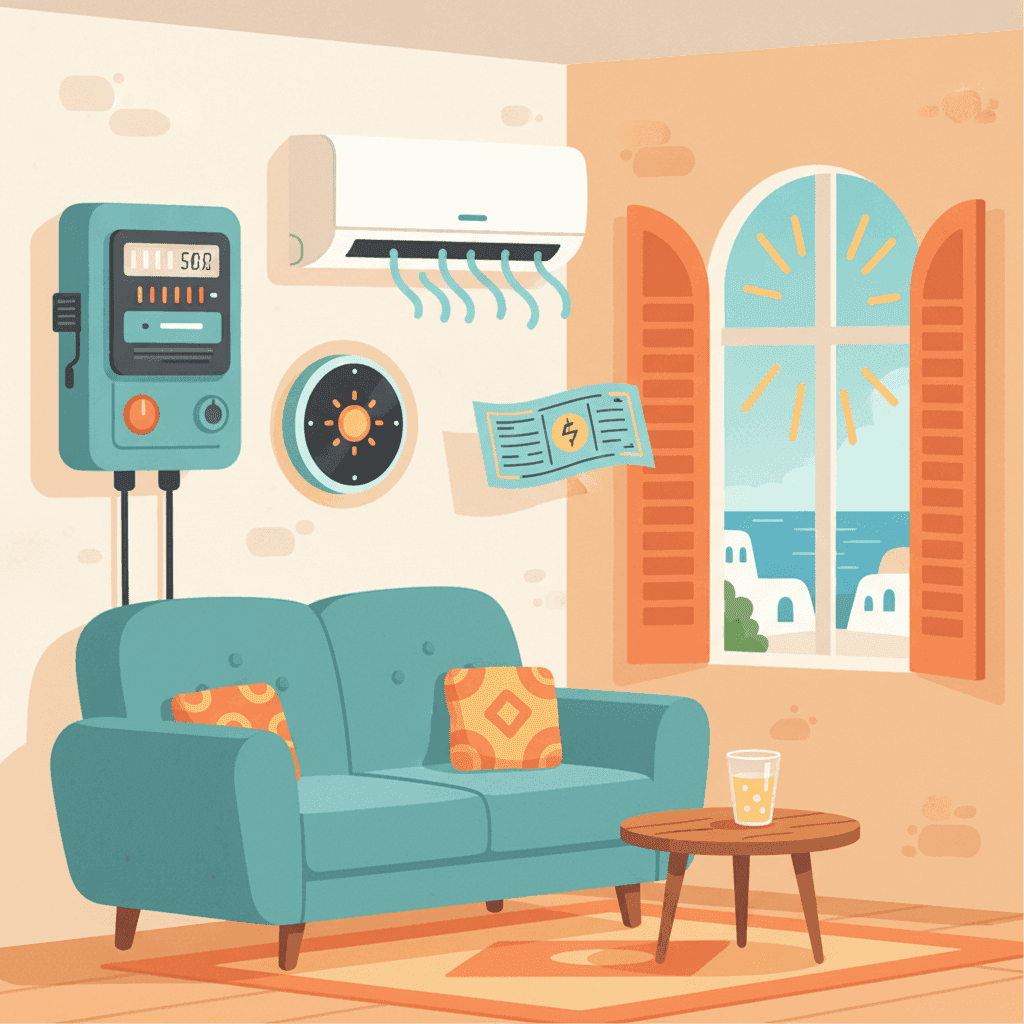
Guests don't pay the bill, so they set the air conditioning to 18 degrees with the windows open. And then you cry when the Iberdrola bill arrives. In this post, I tell you how to control the energy consumption of your vacation home without turning into the thermostat police or ruining yourself in the attempt.
The problem: the guest doesn't pay, the guest doesn't take care
It's simple psychology. If you're in a hotel and the air conditioning is paid for by the hotel, do you turn it off when you leave? Almost no one does. The same applies to a vacation home.
The difference is that a hotel benefits from economies of scale. In your 70-square-meter apartment, a week with the air conditioning at full blast 24/7 in August can cost you 80 or 100 euros just in electricity. If the margin of that reservation was 300 euros, you've just lost a third.
Energy consumption is one of those silent costs that most owners don't calculate well when setting prices. And then they wonder why the accounts don't add up at the end of the year.
How much does a vacation home really spend?
It depends on a thousand factors, but here are real figures I see among owners:
| Type of home | Average monthly consumption (high season) | Approximate cost |
|---|---|---|
| Studio 40 m², coast, air conditioning | 250-400 kWh | 60-100 EUR |
| Apartment 70 m², interior, air + appliances | 400-600 kWh | 100-160 EUR |
| House 120 m² with pool and air | 700-1,200 kWh | 180-320 EUR |
| Large chalet with jacuzzi/heated pool | 1,500+ kWh | 400+ EUR |
In winter, if you have electric heating, multiply by two or three. And if you have gas, add between 40 and 120 euros per month depending on area and insulation.
Hidden expense: standby appliances
An empty apartment between reservations can consume 30-50 kWh per month just with the fridge, router, TV on standby, and water heater if left on. That's 10-15 euros wasted per month. It's not a fortune, but over a year, it's 150 euros.
Electricity rate: yours probably isn't the best
Most owners have the rate set by the developer or the one they contracted five years ago. And in five years, the market has changed 40 times.
Regulated rate (PVPC) vs free
PVPC (regulated): the price varies every hour according to the market. It can be crazy or a bargain. It has three time slots: peak, flat, and off-peak. If your guests use the washing machine at 8:00 PM, you pay triple compared to using it at 3:00 AM.
Free rate: fixed price (or almost) all day. More predictable, but not always cheaper.
For vacation homes, my usual advice is a fixed-price free rate because:
- You can't control when the guest uses each appliance
- It makes cost calculation per reservation easier
- It avoids shocks during heatwaves when the kWh price spikes
Contracted power: neither too much nor too little
Many owners have 5.75 kW "just in case". And they pay 15-20 euros per month just in fixed terms.
If your apartment has air conditioning, a stove, washing machine, and oven running simultaneously, yes, you need power. But if it's a studio with just air conditioning and a few appliances, 3.45 kW is enough. Difference: about 100 euros per year.
How to control consumption without being a bore
This is where most mess up. Putting up a "TURN OFF THE AIR WHEN YOU LEAVE!" sign in each room will cost you reviews, not money.
1. Smart thermostats with limits
A thermostat like Tado, Netatmo, or similar allows you to:
- Set temperature limits (e.g., minimum 22°C in summer, maximum 23°C in winter)
- Automatically turn off when it detects open windows
- Schedule shutdowns when no one is present (with presence detector)
Cost: 150-250 euros per unit. It pays for itself in a season if you had the guest-which-freezes-the-apartment problem.
2. Window open detectors
For 20-30 euros, install sensors on windows and balcony doors that tell the thermostat "turn off the air, this guest has the balcony open". Sounds like science fiction, but it works since 2015.
3. LED lighting everywhere
If you still have halogens or incandescent bulbs, change them now. An 8W LED lights like a 60W old bulb. In an apartment with 20 bulbs on for 4 hours a day, savings are 15-25 euros per month. More info in the post about lighting in vacation homes.
4. Efficient appliances
A class A fridge running 24/7 can consume 300 kWh per year. An old C or D class one, 600-800 kWh. The difference is 100-150 euros per year. When it’s time to replace, don't go for the cheapest: choose the most efficient you can.
5. Aerothermal systems if renovating
If you're doing work or your heating/hot water system is old, aerothermal is the most efficient option right now. It's not cheap (5,000-10,000 euros for installation), but reduces energy consumption by 40 to 60 percent. More details in the post about hot water.
Charging the guest for energy: is it possible?
Spoiler: technically yes, practically no.
Legally: you can include a "excessive consumption surcharge" in your terms or charge separately for energy costs. But it must be very clear before booking.
In practice: neither Airbnb nor Booking makes it easy to charge this. And even if you could, guests get annoyed. A surprise charge of 50 euros for "electricity consumption" guarantees a 1-star review.
What does work
- Include the average cost in the nightly rate. Don't charge 80 euros and then try to recover 15 for electricity. Charge 90 and be done.
- Surcharge for air conditioning in some rural areas. It's common in rural houses. Clearly advertised: "Air conditioning: 10 EUR per night". The guest chooses.
- Deposit covering excesses. If consumption triples the average, you can justify withholding part of the deposit. But be prepared to fight it. More on this in the deposit post.
Long stays: yes or yes
If you have stays longer than a month, the game changes. A guest staying 2 months in winter with full heating can generate a bill of 400-500 euros.
For long stays, many owners:
- Charge utilities separately with meter readings
- Set a consumption cap included, and beyond that, it’s paid
- Increase the monthly price to include a high estimated consumption
This is perfectly normal and accepted in the medium-stay market.
Monitoring: knowing where your electricity goes
There are smart plugs with consumption meters (Shelly, TP-Link, Meross) costing 15-25 euros. Plug them into the air, water heater, and stove, and in a month, you'll know exactly where your electricity is going.
It's valuable information for decision-making. I've seen owners realize their old electric water heater consumes more than the rest of the apartment combined. Replacing it with a heat pump saved them 40 euros a month.
Energy certificate: it's not just a paper
The energy certificate is mandatory for rentals (tourist or not). But beyond the paperwork, it clearly shows where you're losing money: insulation, windows, climate systems.
An apartment with an E or F certificate in the Mediterranean coast, in August, is a furnace. Running the air full blast 24 hours will cost twice as much as an apartment with a C certificate.
If you're planning renovations, improving insulation (double or triple-glazed windows, facade insulation) is one of the investments with the best long-term return.
How Autoregistro fits in
Controlling energy consumption is one of those operational tasks that eats up your time as an owner. And the traveler registration in SES Hospedajes is another: it must be done with each guest, within 24 hours, with all correct data.
Autoregistro automates that part. The guest fills out a form with their details, and we send it automatically to SES Hospedajes. Costs 1 euro per month per property (less than a coffee), and takes one of the most cumbersome tasks of tourist rental off your plate. One less problem while you fight the electricity bill.
Frequently Asked Questions
Can I force the guest to turn off the air conditioning when leaving?
Not exactly. But you can include it as a recommendation in the welcome manual, and use smart thermostats that do it automatically. Never put up aggressive signs: they damage reviews.
Is it legal to cut off the supply if the guest consumes too much?
No, and it would be a terrible idea. If they consume a lot, endure and learn for future pricing. Cutting off electricity or gas is a legal problem and guarantees a 1-star review.
How much should I budget for energy per reservation?
Calculate between 8% and 15% of gross income for utilities (electricity + gas + water). During high season with air conditioning, closer to 15%. In mid-season, 8-10%.
Is installing solar panels worth it?
It depends on orientation, size, and usage. In a vacation home with high summer consumption (full air conditioning), it usually is worth it. Typical amortization: 6-9 years. With subsidies from IDAE or regional governments, it can drop to 4-5 years.
What rate do you recommend for a vacation home?
A fixed-price free rate, with power adjusted to actual use (not what the developer sold you), and review every 12 months. The electricity market changes a lot, and staying on the same rate for 3 years usually means you're paying too much.
Related posts

Ready to automate your guest registration?
Create your account and start streamlining SES Hospedajes compliance for your Spanish rentals.
Get started