Dampness and Mold in Vacation Homes: How to Detect, Eliminate, and Prevent Horrible Reviews
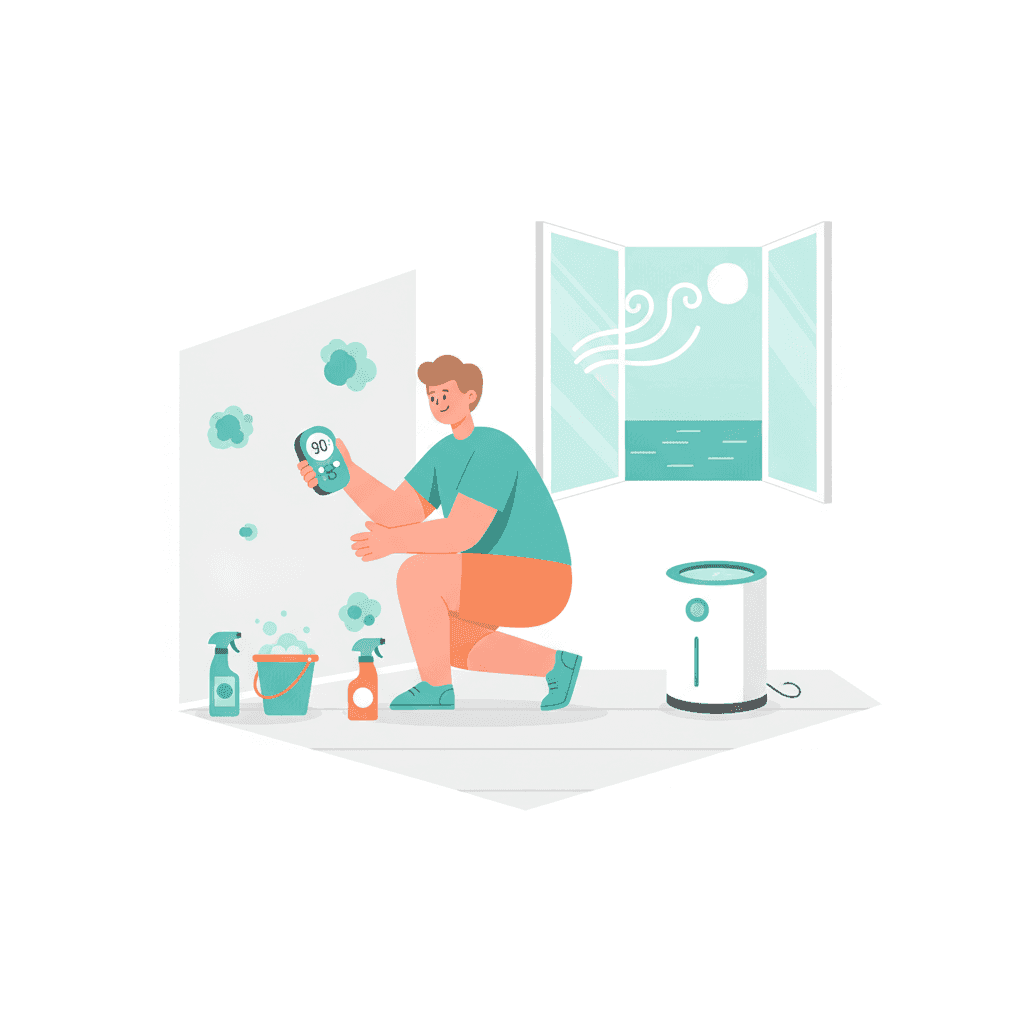
Dampness and mold can ruin your reviews, your health, and even force you to close the property for weeks. I'll explain how to detect them early, what to spend on fixing them, and how to prevent their return. With real numbers, not theory.
If you have a vacation home on the coast, in a basement, or in an old building, this is especially relevant. But even new apartments can have dampness if they are not well ventilated between rooms.
Why Dampness Is a Serious Problem in Vacation Rentals
It's not just aesthetic. It causes a cascade of problems.
First: the guest notices immediately. That musty smell, that black stain in the bathroom corner, that wall that "sweats". And they mention it in the review. "Smelled damp," "mold in the bathroom," "the room was cold and humid." A 3-star review guaranteed, even if everything else is perfect.
Second: it's a health issue. Black mold (Stachybotrys chartarum and similar) can cause allergies, asthma, and respiratory problems. If a guest has an allergic reaction in your property, it's not just a bad review. You have a legal problem.
Third: it destroys your property. Dampness rots wood, oxidizes structures, damages mattresses, curtains, sofas. A moldy mattress is thrown away. End of story.
Fourth: if you don't address it, it grows. A 10 cm stain today can become an entire wall in 6 months.
Types of Dampness and How to Identify Them
Not all dampness is the same. And the solution depends on the type. Confusing them is throwing money away.
| Type | How to detect | Typical cause | Repair cost |
|---|---|---|---|
| Condensation | Foggy glass, mold in high corners, clothes that smell | Lack of ventilation, poor insulation | €200 to €2,000 |
| Leakage | Stains on ceiling, leaks, wet wall after rain | Roof, neighbor's terrace, pipe | €500 to €5,000 |
| Capillarity | Stains on low walls (up to 1.5 m), swollen skirting boards | Ground moisture rising through wall | €1,500 to €8,000 |
| Pipe break | Sudden appearance, warm or cold wall to touch | Embedded pipe leak | €300 to €3,000 |
Condensation (most common in vacation rentals)
It's the most problematic and the easiest to prevent.
It appears when there is a temperature difference between inside and outside, and there is no ventilation. Water vapor condenses on cold surfaces: windows, corners of exterior walls, bathrooms without windows.
Typical symptoms:
- Black stains in the upper corner of the bathroom ceiling
- Mold behind furniture against exterior walls
- Foggy windows in the morning
- Musty smell after opening the property after days closed
Leakage
Water entering from outside. Rain on the roof, upstairs neighbor's terrace, clogged gutter. Yellowish stains with defined edges, usually on ceilings.
If you live in an apartment, 80% of the time it's from the upstairs neighbor or common areas. This means: community, building insurance, and possibly weeks to fix.
Capillarity
Moisture rising from the ground through walls. Typical in ground-floor apartments, zero plants, old houses without horizontal insulation. Clearly visible because stains are at the bottom, not at the top.
It's the most expensive to fix. Requires work: resin injections, drainage, or physical barriers.
How to Detect Dampness Before It Becomes a Disaster
The key is regular inspection. Don't wait for a review.
Quick checklist between rooms
Every cleaning, the cleaner should check:
- Upper corners of bathroom and kitchen
- Behind doors and furniture
- Bathroom ceiling
- Exterior walls (facing the street)
- Skirting boards and lower parts of walls
- Under sink and washbasin
- Around windows
- Mattresses (lift and check the base)
If you see black, green, or brown spots that weren't there before, take a photo and notify. Do not paint over or cover it. Take action.
Instruments that help
- Hygrometer: €10 to €20. Measures relative humidity. Over 60% sustained is mold risk.
- Thermographic camera: apps for mobile and accessories from €200. Detects cold zones where condensation occurs.
- Wall moisture meter: €30 to €80. Puncture the wall and measure actual material moisture.
If you own multiple properties, it’s worth having one. If you have just one, a cheap hygrometer is enough.
How to Remove Existing Mold
Depends on the surface and depth.
Superficial mold (less than 1 m² and only on surface)
You can do it yourself or with your cleaning team.
Product: diluted bleach (1 part bleach to 10 parts water) or specific anti-mold products (€7 to €15).
Process:
- Fully ventilate the room
- Wear FFP2 mask and gloves
- Apply the product and leave for 15 minutes
- Scrub with a brush
- Rinse with clean water
- Dry thoroughly
- Ventilate for 24 hours
If mold is in bathroom silicone: silicone cannot be saved. Remove it, clean well, and apply new anti-mold silicone (€10 per tube).
Deep or extensive mold
This is work for a professional. Do not just paint over it with anti-humidity paint; it’s a temporary patch.
The correct steps:
- Diagnose the cause (why is there mold?)
- Repair the cause (insulation, ventilation, leakage)
- Remove affected plaster or material
- Deep fungicidal treatment
- Rebuild with appropriate materials
- Final coat with anti-mold paint
Cost: €300 to €3,000 depending on extent. And days of property closure. Better in low season.
Important notice: if mold covers more than 3 m² or affects structural materials (beams, partitions), do not do it yourself. Hire a certified professional. And if in sleeping areas, close the property until resolved.
How to Prevent Dampness in Vacation Rentals
This is where you save real money.
Ventilation between rooms
The classic mistake: keeping the property completely closed between guests. In 3 days with windows shut, humidity skyrockets.
Solution: the cleaner leaves windows open during cleaning (at least 2 hours). If there are days between bookings, someone ventilates for 30 minutes every 2 days. Or install automated mechanical ventilation.
Dehumidifiers
In coastal areas or properties with chronic problems, a dehumidifier is the best investment.
- Electric: €100 to €300. Extracts 10 to 20 liters per day. Consumes electricity (300 to 500W).
- Chemical (absorbing salts): €5 to €15. For closets and small spaces. Changed every 2 to 3 months.
In Galicia, Asturias, Basque Country, Mediterranean coast in winter: almost mandatory.
Bathroom exhaust fans
If your bathroom has no window, an exhaust fan is non-negotiable. And not just any: one with humidity detector that turns on when humidity rises and turns off after 15 minutes.
Cost: €60 to €150 for the unit, plus installation (€100 to €200).
Common problem: guest forgets to turn on the fan when showering. That’s why automatic ones are better.
Kitchen extractor hood
Cooking without a working hood releases 2 liters of water into the air in one meal. Remember this in your welcome manual.
Anti-mold and anti-humidity paint
Cost about 30% more than regular paint (€40 to €60 for a 4-liter can), but worth it in bathrooms, kitchens, and exterior walls.
Thermal insulation
If your apartment condenses because exterior walls are cold, the fundamental solution is to insulate them. It's not cheap (€3,000 to €10,000 for an apartment), but it eliminates the problem and reduces your heating bill. Related info in heating and air conditioning in vacation homes.
What to Do If a Guest Complains About Dampness or Mold
Quick protocol:
- Take the complaint seriously immediately. Do not minimize.
- Request photos. You need to see the extent.
- Offer a solution: change of room, emergency dehumidifier, or reallocation.
- If serious (visible mold, strong odor): offer cancellation with full refund. It’s better to lose one night than to get a 1-star review and a legal issue.
- Act before the next guest arrives. Close the property if necessary.
Related: how to manage negative reviews.
Legal Aspects You Should Know
If You Are the Owner
You are obligated to keep the property in habitable condition. A property with severe mold can be considered uninhabitable, and the guest can claim a full refund and even damages.
If You Are a Tenant Subletting
Be careful. Structural dampness is the owner’s responsibility, not yours. But since you manage the vacation rental, you are the face of it. Document everything and claim in writing from the owner.
Insurance
Check your policy. Damage caused by humidity due to poor maintenance is not covered. Damage from sudden pipe break or external leakage (neighbor, roof) is covered. More info at what insurances you need.
Never hide mold from a guest by covering it with furniture or painting over it just before arrival. If the guest discovers it (and they will), it guarantees a destructive review and possible claim.
Actual Cost of Having Humidity vs. Preventing It
Comparison of a typical case: 70 m² apartment on the coast with chronic condensation.
| Scenario | Annual Cost |
|---|---|
| Doing nothing: worse reviews, 15% lower price, 2 weeks closed per year | €3,000 to €5,000 lost profit |
| Cheap solution: dehumidifier + automatic extractor + ventilation protocol | €300 first year, €50 maintenance |
| Long-term solution: insulation + mechanical ventilation + anti-mold paint | €4,000 to €8,000 once, zero problems |
The math adds up. Prevention is infinitely cheaper than repairs and lost reservations.
How Autoregistro Fits In
While you focus on ensuring your property doesn’t smell musty and walls are perfect, Autoregistro handles traveler registration with SES Hospedajes. Guests fill out a form, you send it, and the data is automatically sent to the Ministry platform.
It costs €1 per month per property (less than a coffee), you don’t need to learn SES, and it works with any number of properties. One less problem while you focus on what matters: making your property the one everyone wants to rebook.
Frequently Asked Questions
Does bleach eliminate mold forever?
No. Bleach kills surface spores, but if the cause (humidity, lack of ventilation) persists, mold returns in weeks. It’s a patch, not a solution.
What is the ideal relative humidity in a vacation home?
Between 40% and 60%. Below 40% the air is too dry and uncomfortable. Above 60% mold and dust mites appear. A cheap hygrometer tells you.
Can I rent an apartment with mold stains if they are only aesthetic?
Better not. Even if not serious, the guest sees it and mentions it in the review. Paint or cover with a durable solution before listing.
Does insurance cover mold damage?
Only if caused by a sudden covered event (pipe break, neighbor’s leak with insurance). If caused by condensation or poor maintenance, it’s not covered. Read your policy carefully.
How long must I close the property after an anti-mold treatment?
Depends on the product and extent. With household products and superficial mold: 24 to 48 hours with good ventilation. With professional deep treatments: between 3 days and 2 weeks, depending on the case.
Ready to automate your guest registration?
Create your account and start streamlining SES Hospedajes compliance for your Spanish rentals.
Get started