Emergency Kit in Tourist Accommodation: What to Have Ready When Something Breaks at 11:00 PM
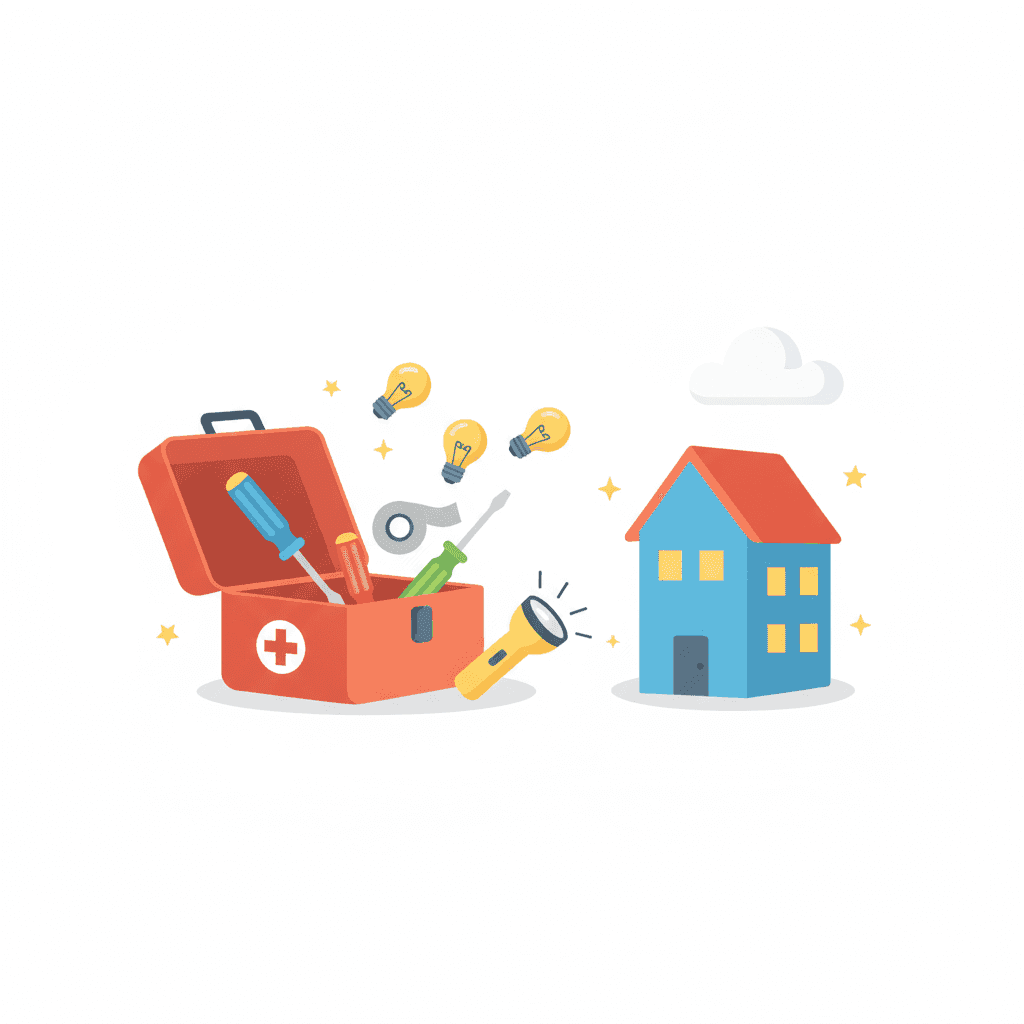
It's 11:00 PM on a Saturday. A guest writes to you: "the toilet cistern is broken and it's flooding." Or worse: "there's no electricity in the entire house." If you don't have a plan, you won't sleep that night. If you do, you can resolve it in 30 minutes. This guide is exactly that: how to set up an emergency kit (physical and mental) for your tourist accommodation, what to include, which contacts to save, and what protocols to follow when something happens outside of working hours.
Why You Need an Emergency Kit (Even if Your Apartment Is "New")
Things break. It's not a matter of "if," but "when." And it usually happens on a Friday night, Sunday at 8 a.m., or December 24th. Murphy lives in tourist rentals.
What is at stake when something fails:
- The review (a guest without hot water at 10:00 PM gives you a 2-star rating without blinking)
- Possible compensation or refund
- Major damages if you don't act quickly (a leak can end up affecting the downstairs neighbor)
- Your mental health
A well-assembled kit turns a crisis into an anecdote. Without it, each incident is a bomb.
The 4 Categories of Emergencies You Will Have
Not everything is the same. Before assembling the kit, it's good to understand the types of incidents to prepare different responses.
| Type | Examples | Urgency | Who Resolves |
|---|---|---|---|
| Critical | Major leak, no electricity, no water, broken lock | Immediate (less than 1 hour) | You or 24h professional |
| High | No hot water, broken appliance, WiFi down | Same day | You or technician the next day |
| Medium | Burned-out bulb, cistern dripping slightly | 24-48 hours | Guest with kit or you |
| Low | Lost remote, dead battery | When possible | Replenishment at next change |
The key: critical issues require a protocol. Medium and low issues, a physical kit in the apartment for the guest to resolve alone.
The Physical Kit: What to Leave in the Property
A box, drawer, or closet. Labeled. Visible. Mentioned in the welcome manual (if you don't have one, see the welcome manual guide).
Basic Tools
- Flathead and Phillips screwdrivers
- Pliers
- Small hammer
- Adjustable wrench
- Duct tape (the fix-all)
- Electrical tape
- Scissors
- Flashlight with batteries (tested)
Total cost: 30-40 euros at any hardware store or bazaar.
Spare Parts and Consumables
- Light bulbs matching your models (LED E27, GU10, whatever). Minimum 3 of each
- AA and AAA batteries (TV remote, AC remote, electronic lock)
- Fuses for the electrical panel if specific
- Spare air conditioning filters
- Vacuum bags if you have a bagged vacuum
- Extra toilet paper rolls (minimum 4)
- Spare propane bottle if applicable
Emergency Products
- Plunger (suction cup)
- Chemical drain cleaner (one)
- Multi-purpose spray like WD-40
- Silicone in stick or plumber's tape (Teflon)
- Universal glue
- Basic first aid kit: plasters, gauze, antiseptic, paracetamol, and ibuprofen (over-the-counter only)
What Must Not Be Missing
- Electrical panel diagram with labeled circuit breakers ("kitchen," "living room lights," "AC"...)
- Localized and marked water shut-off valve
- Gas shut-off valve if applicable
- Fire extinguisher (in some regions mandatory, check the technical requirements by Autonomous Communities)
Important: the fire extinguisher expires. Check it annually. If an inspection finds it expired, a fine is guaranteed.
The Digital Kit: Contacts and Protocols
A toolbox full of tools is useless if at 2 a.m. you don't know who to call.
Emergency Contacts List
A document (Google Doc, Notion, whatever) with:
- Trusted 24h plumber (direct number, not an answering service)
- 24h electrician
- 24h locksmith (pre-agreed price, beware of scams)
- Boiler technician with maintenance contract
- Emergency cleaning service (vomits, accidents, fluids)
- Pest control company
- Building manager (for leaks affecting common areas)
- Insurance company (24h phone)
- Electricity provider (power outages)
- Water company
- Trusted neighbor with key (golden)
Pre-negotiated Rates
Calling a plumber at 11:00 PM without notice can cost you 200-300 euros for the call-out. With a prior agreement, it drops to 80-120. Talk to 2 or 3 local professionals, explain you have a tourist rental and need availability. Many will offer a fixed "urgent for regular clients" rate.
Written Protocols
Don't improvise at 11:00 PM. Have scripts ready:
If there's a water leak:
- Ask the guest to shut the main valve (have a photo in the manual)
- Call the on-call plumber
- Notify the downstairs neighbor if the leak is significant
- Document with photos
- Notify the insurance the next day
If there's no power:
- Ask if it's only the apartment or the entire building
- If only the apartment: ask the guest to go to the panel and reset all circuit breakers
- If it trips again: identify which circuit (with the labeled diagram)
- If persistent: call an electrician
If the lock breaks:
- Verify with the guest that it's not a battery issue (if electronic)
- Call the pre-arranged locksmith
- Coordinate access
How to Train the Guest Without Overwhelming
No one wants to read a 40-page manual. But a guest who knows where the water key is saves you a catastrophe.
The Minimum They Should Know
- Where the electrical panel is
- Where the water shut-off is
- Your phone number or contact person
- Where the emergency kit (toolbox) is
- What to do in case of a major leak (shut the valve and call)
A one-page laminated card next to the kit. Mentioned in the pre-arrival welcome message.
The Video Trick
Record a 2-minute video with your phone showing: electrical panel, water valve, gas valve, kit. Upload it to YouTube as unlisted and include the link in the manual. The guest will see it if needed.
Common Mistakes That Cost You
Relying on "the plumber from my town"
If your apartment is in Málaga and your trusted plumber is in your hometown, it's useless. You need local contacts in the neighborhood where the property is.
Not Having an Accessible Spare Key
A guest loses keys at 3 a.m. If you don't have a safe with an emergency key or a neighbor with a copy, you have to go yourself with the car. Check the key management options.
Not Documenting
When something breaks, take a photo. Before and after repair. It will help with insurance, dispute with the guest if the damage was misuse, and the security deposit.
Not Checking the Kit
A kit with dead batteries, burned-out bulbs, and expired extinguisher isn't a kit, it's decor. Check every 3 months. Mark it on the calendar.
Not Having an Emergency Fund
A serious breakdown (boiler, washing machine, AC) costs at least 400-800 euros. If you live paycheck to paycheck from rental income, a breakdown can throw you off. Reserve 5-10% of income for this.
How Much Does It Cost to Set Up All This
| Concept | Approximate Cost |
|---|---|
| Basic tools | 35 euros |
| Initial spare parts | 40 euros |
| Emergency products | 25 euros |
| Fire extinguisher (if not owned) | 30 euros |
| First aid kit | 20 euros |
| Labeled organizer box | 15 euros |
| Laminated sheets and printing | 10 euros |
| Total initial investment | 175 euros |
Less than what a bad review costs. And it pays off the first time you avoid paying a 250-euro emergency call-out.
What Happens When the Problem Overwhelms You
Some incidents can't be fixed with duct tape: a dead boiler in January, a bedbug infestation, an upstairs flood. In these cases:
- Relocate the guest. Nearby hotel or available apartment. You pay. It's tough, but it's the right thing.
- Compensate. Partial or full refund depending on severity. A bad review for poor management is worth much more than a night in a hotel.
- Communicate transparently. No strange excuses. "X broke down, not repairable until Monday, we offer this".
- Learn. Every crisis provides information to improve the kit and protocols.
How Autoregistro Fits In
Among the many things you already manage (breakdowns, cleaning, reviews, keys), is the mandatory traveler registration in SES Hospedajes. It’s one of those tasks that adds no value but can result in a fine if not done.
Autoregistro solves it effortlessly: the guest fills out a form with their details, and the information is sent automatically to SES Hospedajes. No manual forms, no uploads. 1 euro per property per month, less than a coffee.
While you handle the broken cistern or find a plumber on a Sunday, the traveler registration is done automatically.
Frequently Asked Questions
Is it mandatory to have a fire extinguisher in tourist accommodation?
It depends on the autonomous community and the type of property. In some (Andalusia, Catalonia, Balearic Islands), yes, for certain categories. Even if not mandatory, having one costs 30 euros and can save you from a huge hassle.
What if the guest causes damage? Who pays?
The security deposit is for that. If damage exceeds the deposit or is malicious, the tourist rental insurance should cover you. Document everything with photos and report it through the platform (Airbnb, Booking) for record.
Should I give my personal phone number to the guest or use a different number?
Ideally, a dedicated number for the business. Apps like Google Voice or mobile services with a second line for 5-10 euros a month work. So they don't call your personal mobile at 3 a.m. when you're on vacation.
How quick should response times be in an emergency?
Less than 30 minutes to reply to the message. Less than 1-2 hours to have a solution underway (call technician, alternative option). If more than 3 hours pass without response, prepare for a bad review.
Is it worth hiring a management service just for emergencies?
If you manage more than 3-4 properties or don't live nearby, yes. Some companies offer "24h guard" service for 30-50 euros per month per property. For a single apartment near home, it's more cost-effective to build your own network of contacts.
Related posts
Ready to automate your guest registration?
Create your account and start streamlining SES Hospedajes compliance for your Spanish rentals.
Get started