Pests in Tourist Accommodation: How to Prevent, Detect, and Act Before They Ruin Your Reviews
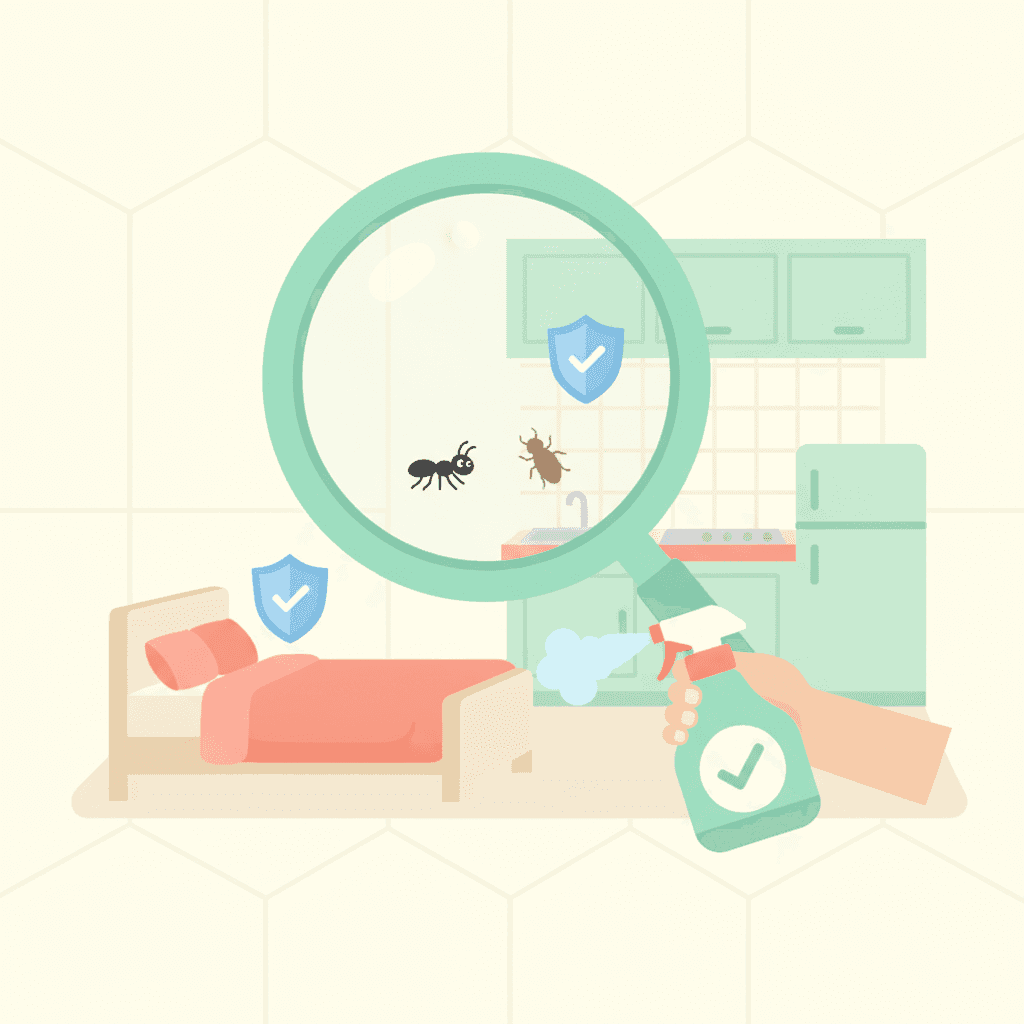
Bed bugs, cockroaches, ants, or mice can sink your vacation rental in just a few days. A single review mentioning "bugs" can cause your bookings to plummet. In this guide, we explain how to prevent pests in your tourist accommodation, how to detect them before it's too late, what to do if they appear, how much each treatment costs, and what legal obligations you have as an owner.
Why Pests Are a Serious Problem in Tourist Rentals
A tourist apartment is the perfect environment for pests. High turnover of people, suitcases coming from other countries, leftover food in trash, heat, humidity... everything a bug needs to settle.
And the problem isn't just the bug. It's what comes after:
- Ruined reviews: a review mentioning "bed bugs" or "cockroaches" can reduce occupancy by 40% for months.
- Mandatory refunds: Airbnb and Booking almost always side with the guest if pests appear.
- Temporary closure: if you need to fumigate, you lose days of bookings (and sometimes weeks).
- Fines: in some communities, failing to act against a pest infestation can lead to sanctions.
- Neighbor complaints: if the pest spreads to the building, prepare for very uncomfortable homeowners' meetings.
Poorly managed pest issues can cost you between €2,000 and €8,000 in lost reservations, treatments, and lower ratings. Prevention costs €100 per year.
The 5 Most Common Pests in Tourist Homes in Spain
1. Bed Bugs (Cimex lectularius)
The number one nightmare of tourist rentals. Travel in guests' suitcases, hide in mattress seams, headboards, and skirting boards. Bite at night, leaving red welts in a line.
How to detect them: tiny black stains on sheets (feces), shed skins near the mattress, sweetish smell of rotten fruit in heavily infested rooms.
Treatment cost: between €250 and €600 per room. Usually requires 2-3 separate interventions spaced 15 days apart.
2. Cockroaches
Most common in coastal areas and old apartments. Come out at night, enter through drains and cracks. Besides being disgusting, they transmit bacteria.
How to detect them: droppings resembling ground coffee, rancid humidity smell, brown eggs (oothecae) in corners.
Treatment cost: between €80 and €200 per intervention with gel bait and aerosol.
3. Ants
Seems like a silly pest, but a trail of ants on the countertop is almost certain to lead to a negative review. Epidemic in summer.
Treatment cost: between €50 and €120. Sometimes, just gel bait bought at a drugstore (€10-15) suffices.
4. Mice and rats
Less common in apartments, but usual in country houses, chalets with gardens, or ground floors. Nocturnal noise and droppings are unmistakable.
Treatment cost: between €150 and €400 with professional rodent control.
5. Mosquitoes and wasps
Seasonal but deadly for reviews. In coastal areas and wetlands, the tiger mosquito is a classic.
Cost: mosquito nets (€30-€80 per window) and anti-mosquito plug-ins (€5/month) are the best investments.
Comparative Table: Pests, Cost, and Resolution Time
| Pest | Treatment Cost | Days Out of Service | Risk of Negative Review |
|---|---|---|---|
| Bed Bugs | €250-€600 | 3-7 days | Very high |
| Cockroaches | €80-€200 | 1-2 days | High |
| Ants | €50-€120 | 0 days | Medium |
| Mice | €150-€400 | 2-5 days | Very high |
| Mosquitoes | €30-€80 per window | 0 days | Medium-high |
Prevention: What You Must Do No Matter What
The best pest is the one that doesn't appear. Prevention is infinitely cheaper than treatment.
Deep cleaning between guests
Standard cleaning isn't enough. At least once a month, do a deep clean: move furniture, vacuum under beds, clean skirting boards, check behind pictures. If you're interested in a detailed guide, we have a comprehensive tourist accommodation cleaning guide.
Bed bug-proof covers for mattresses and pillows
This is essential. A bed bug-proof cover with a zipper costs €25-€40 and protects mattresses worth €400. Plus, it makes detecting bed bugs easier (if present, they are visible on the surface of the cover).
Sealing cracks and drains
Cockroaches and mice enter through unseen gaps. Seal cracks with silicone, install grilles on shower and laundry drains, check the sink trap.
Maintenance contract with a DDD company
A Pest Control, Rodent Control, and Disinfection (DDD) company charges between €200 and €500 annually for 2-3 preventive visits. Every euro is worth it.
Impeccable waste management
Trash is the number one magnet. Use a sealed lid bin, close bags tightly, and take out trash between stays. For more detail, see our waste and recycling guide in tourist accommodation.
Mosquito nets on all windows
In coastal and humid areas, non-negotiable. They also prevent wasps and large flies from entering.
What to Do If a Pest Appears (Urgency Protocol)
A guest writes: "There are cockroaches in the kitchen". Panic. Breathe. Here's the protocol:
Step 1: React in less than 1 hour
Respond immediately. Apologize, do not minimize or argue. Sample phrase: "We are very sorry, this is not normal in the property. We will resolve it immediately".
Step 2: Assess the severity
- Single bug: it might be an isolated incident (entered through the window). Offer a symbolic discount (€20-€30) and treat the area.
- Multiple bugs or nest: it's a pest infestation. You need to rehome the guest or refund.
Step 3: Rehome or refund if serious
If there are bed bugs or an infestation, do not try to convince the guest to stay. You will lose the review anyway. Rehome in another property, nearby hotel, or refund the remaining stay.
Step 4: Call a certified DDD company
Do not try to treat it yourself with supermarket aerosols. Especially with bed bugs: amateur treatments almost always worsen the infestation (spread it). Serious DDD companies resolve it within 24-48 hours.
Step 5: Block the calendar
While treatment (and its repetitions) lasts, block the dates. Losing 5 nights is better than losing 5 reviews.
Step 6: Document everything
Photos before and after, invoice from the DDD company, communication with the guest. You will need this if the guest complains or if the platform asks for justification of the refund.
Legal Obligations of the Owner
As the owner of a tourist accommodation, you are obliged to keep it in adequate hygienic-sanitary conditions. Failing to do so can lead to administrative sanctions and civil liability towards the guest.
Certified DDD companies
Only registered companies in the ROESB (Official Registry of Biocidal Establishments and Services) of your autonomous community can apply biocides. Always ask for the registration number and official invoice.
Certificates
After treatment, the company provides a certificate with products used, doses, and safety period. Keep it for at least 5 years. If a guest reports or there is an inspection, it is your legal shield.
Responsibility towards the guest
If a guest suffers damages (bites, allergies) due to pests in your property, they can claim damages. Your tourist rental insurance should cover this, but check your policy.
Special Mention: Bed Bugs
Deserves its own section because it is the pest that should scare you the most.
Why they are so serious
- Reproduce rapidly (a female lays 500 eggs in her lifetime).
- Can survive months without feeding.
- Resistant to many insecticides.
- Travel in suitcases, clothing, and even books.
- It is almost impossible to prove they were brought by a specific guest.
Specific Bed Bug Protocol
- Visual inspection between guests: check mattress seams, headboards, and sofas. 2 minutes.
- Bed bug-proof covers: on all mattresses and pillows.
- Weekly vacuuming: vacuum mattresses, sofas, and room corners.
- Wash sheets at at least 60°C: kills eggs and adults.
- If signs are detected, act IMMEDIATELY: each day without treatment doubles the infestation.
Actual Cost of a Bed Bug Infestation
In a 2-bedroom apartment:
- Professional treatment (3 sessions): €800-€1,500.
- Lost reservations (blocking 5-10 nights): €500-€1,500.
- Mattresses to discard if heavily infested: €400-€800.
- Decrease in average rating: estimated 20-40% occupancy loss over 3 months.
Total possible: between €3,000 and €6,000 for a bed bug infestation.
Recommended Annual Prevention Budget
| Concept | Estimated annual cost |
|---|---|
| Preventive DDD contract (2-3 visits) | €200-€400 |
| Bed bug-proof covers (amortized) | €30-€50 |
| Mosquito nets (amortized) | €20-€40 |
| Specific cleaning products | €50-€80 |
| Sealing cracks and maintenance | €30-€60 |
| Total | €330-€630 per year |
Compared to the €3,000-€6,000 a pest can cost you, this is a tiny investment.
How Autoregistration Fits In
While you ensure there are no bugs in the property, there's another task you must also resolve: registering each guest in SES Hospedajes. And we can automate that part.
Autoregistration is simple: the guest fills out a form with their details before arrival, and those details are sent automatically to SES Hospedajes. No scans, no manual entry, no Excel templates.
It costs €1 per month per property (less than a coffee) and saves you 15-20 minutes per reservation. You can see more in our guide on how to send reports to SES Hospedajes.
Frequently Asked Questions
Do I have to notify future guests if there has been a pest?
Legally, no, if the pest is resolved and you have the DDD certificate. Ethically, if the pest was serious (bed bugs), many owners prefer to block the calendar for 15 days and confirm total eradication before accepting new guests.
Can I charge the guest who brought the pest?
In practice, it's almost impossible to prove who brought it, especially with bed bugs. Airbnb and Booking rarely accept passing DDD treatments to the guest. Better to prevent and assume it's a business risk.
Can the homeowners' association require fumigation?
Yes. If your apartment is a source of a pest affecting the building, the community can require treatment and, if you refuse, report you. Besides serious neighbor conflicts, see our guide on conflicts with neighbors.
Do supermarket products work for pest control?
For isolated ants and mosquitoes, yes. For cockroaches, bed bugs, or mice, no. Supermarket aerosols scare pests but do not eliminate infestations and sometimes spread them to other areas.
How often should a DDD company come?
It depends on the area and type of property. In urban apartments, 2 visits a year (spring and fall) are usually enough. In rural houses, chalets with gardens, or coastal zones, 3-4 visits annually.
Ready to automate your guest registration?
Create your account and start streamlining SES Hospedajes compliance for your Spanish rentals.
Get started