Platforms to promote your vacation rental: options, differences, and how to choose
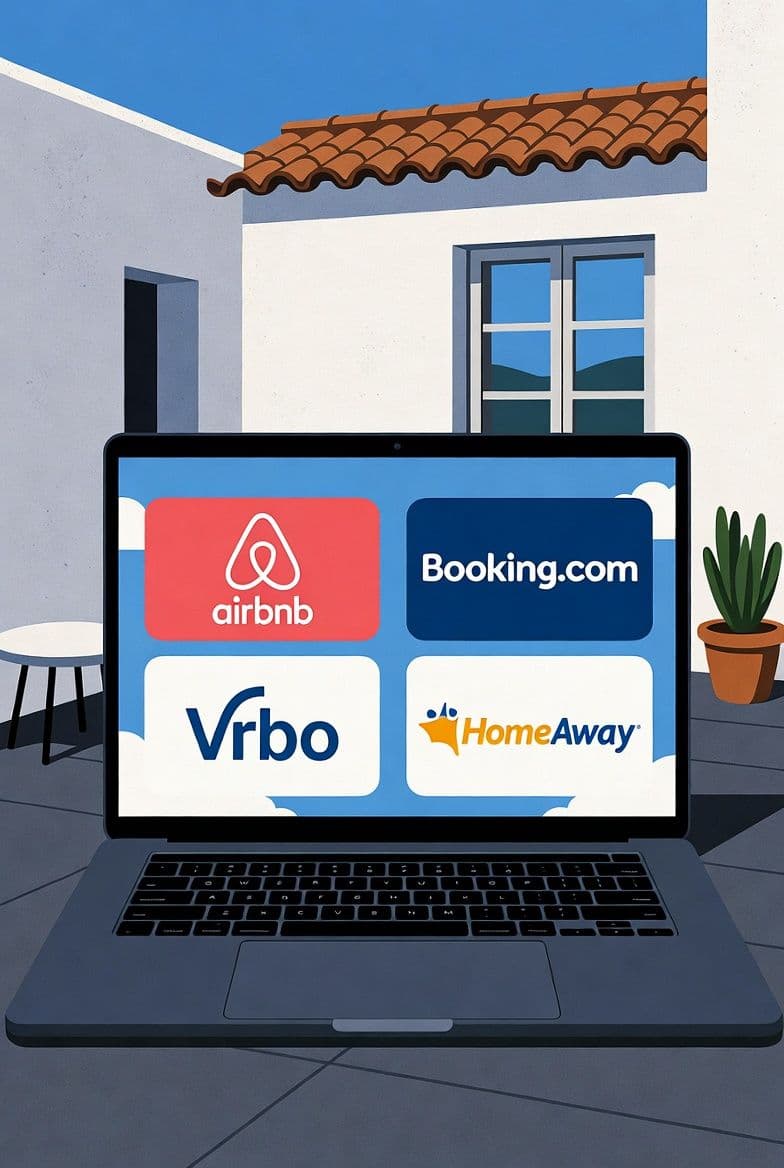
There's no single best platform — most professional managers combine two or three: Airbnb (3-16% commission, global reach), Booking.com (15-18%, dominant in Europe), Vrbo (~8%, families and whole homes), and Google Vacation Rentals (no direct commission, organic visibility). The key is choosing based on location, property type, and margin.
Having a property ready to rent is only half the job. The other half is getting travelers to find it. And that's where the most strategic decision in the business comes in: where to list.
The main platforms
Airbnb
The most well-known and, for many managers, the natural starting point. Airbnb has a massive user base and a brand that travelers directly associate with vacation rentals.
- Commission model: Airbnb offers two options. The most common splits the commission between host (3 %) and guest (up to 14 %). The alternative is for the host to absorb the full commission (between 14 % and 16 %), which simplifies the price the traveler sees.
- Traveler profile: very diverse, from couples and families to digital nomads and groups of friends. Travelers looking for experiences and properties with personality predominate.
- Advantages: global reach, well-established review system, integrated pricing and calendar management tools.
- Things to consider: competition is high, cancellation policies can favor the guest, and the platform has increasing control over the experience.
Booking.com
Originally focused on hotels, Booking.com has grown enormously in the apartment and vacation rental segment. It's the dominant platform in Europe and has very strong reach in international markets.
- Commission model: the host pays between 15 % and 18 % per booking. There's no guest commission, which makes prices more transparent.
- Traveler profile: more oriented toward traditional travelers, families, and business travelers. Many Booking users look for reliability and a fast booking process.
- Advantages: very high traffic volume, presence in markets where Airbnb doesn't reach as well, Genius program that rewards visibility for well-rated properties.
- Things to consider: commissions are higher than Airbnb, communication with the guest is more limited before booking, and the platform prioritizes availability and cancellation flexibility.
Vrbo (Vacation Rentals by Owner)
Owned by Expedia Group, Vrbo focuses exclusively on whole properties — it doesn't allow renting individual rooms. That makes it an interesting option for managers with entire homes.
- Commission model: the host can choose between paying a per-booking commission (around 8 %) or a fixed annual subscription. The guest pays an additional service fee.
- Traveler profile: families and groups looking for complete homes. Very strong in the US market.
- Advantages: less competition than Airbnb, audience with higher spending power, integration with the Expedia ecosystem.
- Things to consider: lower volume in Europe compared to Airbnb or Booking, and the brand is less recognized outside the US.
Google Vacation Rentals
Google isn't a booking platform per se, but its integration of vacation rentals into search results and Google Maps gives it enormous visibility. Listings appear when someone searches for accommodation in a specific area.
- Model: Google aggregates listings from other platforms and channel managers. It doesn't charge a direct commission to the host, but you need to be connected through compatible software.
- Advantages: very high organic visibility, travelers find you without searching on a specific platform.
- Things to consider: requires technical integration, you don't manage the booking directly from Google.
Niche platforms
Beyond the big players, there are specialized platforms that can be very profitable depending on the property type:
- Holidu / HomeToGo: metasearch engines that aggregate listings from multiple platforms. They increase visibility without duplicating management work.
- Despegar / Decolar: very relevant if your target market includes Latin American travelers.
- Spotahome / HousingAnywhere: focused on medium and long-term stays, ideal for properties in cities with demand from students or relocated professionals.
- Escapada Rural / Clubrural: if your property is rural, these platforms have a very segmented and loyal audience.
Direct booking (own website)
Not an external platform, but worth mentioning. Having your own booking channel eliminates commissions and gives you full control over the guest relationship.
- Advantages: full margin, direct communication, ability to build loyalty.
- Things to consider: requires investment in website, SEO, and marketing. Works better as a complement than as a sole channel, especially at the beginning.
How to choose: it's not one or the other
The most common mistake is thinking you need to choose just one platform. The reality is that most professional managers work with several simultaneously. The key is understanding what each one brings and how to combine them without losing control.
Some criteria to help decide:
- Property location. Booking dominates in Europe; Vrbo is strong in the US; Airbnb has global reach. List where your potential travelers are.
- Type of accommodation. If you rent rooms, Vrbo isn't an option. If you have a rural property, niche platforms may perform better than generalist ones.
- Margin you can absorb. Commissions vary widely. Calculate the real cost per booking on each platform before deciding.
- Management capacity. More platforms means more calendars, more messages, more rules. Without a channel manager or centralized management tool, the risk of overbooking and errors grows fast.
The real challenge: managing it all at once
Listing on multiple platforms multiplies visibility, but also operational complexity. Each platform has its own cancellation rules, communication timelines, content requirements, and response expectations.
For a manager with multiple properties, the day-to-day can become a constant juggling act between browser tabs. And that's where mistakes appear: a calendar that didn't sync, a guest report that was forgotten, a message that arrived late.
How Autoregistro fits into your multi-channel strategy
Regardless of where you list, there's a part of the process that's common to all platforms: managing the guest once they book. Data collection, document verification, guest report submission, pre-arrival communication.
Autoregistro automates exactly that layer. It doesn't matter if the booking comes from Airbnb, Booking, or your own website — the guest registration flow is managed centrally and automatically. This lets you scale across platforms without operational burden scaling at the same rate.
For managers working with multiple channels, that automation isn't a luxury — it's what makes it viable to operate on several platforms without losing quality or compliance.
FAQs
What's the best platform to list my vacation rental? There's no single answer. It depends on your location, property type, and target market. The most effective approach is usually combining two or three complementary platforms.
Can I list on Airbnb and Booking at the same time? Yes, and that's what most professional managers do. The important thing is keeping calendars synchronized to avoid overbookings, ideally with a channel manager.
Is it worth having my own website for direct bookings? Yes, especially in the medium term. It lets you eliminate commissions and build a direct relationship with the guest. But it requires investment in visibility and doesn't replace platforms at the beginning.
What commissions does each platform charge? Airbnb charges between 3 % and 16 % to the host depending on the chosen model. Booking between 15 % and 18 %. Vrbo around 8 % or an annual subscription. Google doesn't charge a direct commission.
How do I manage guest reports if I receive bookings from multiple platforms? With a tool like Autoregistro, the registration and report submission process is centralized regardless of the booking's channel of origin.
Related posts
Spain's single rental registry: what property managers need to know
A practical breakdown of Spain's national short-term rental registry — who needs a number, how to get one, key deadlines, and what happens if you ignore it.

Spain's Property Registry for tourist rentals
Complete guide to Spain's Property Registry and its importance for vacation rental managers: what to check, how to process it, and common mistakes.
Ready to automate your guest registration?
Create your account and start streamlining SES Hospedajes compliance for your Spanish rentals.
Get started