What is Spain's national registration number (NRUA) and how do I get one?
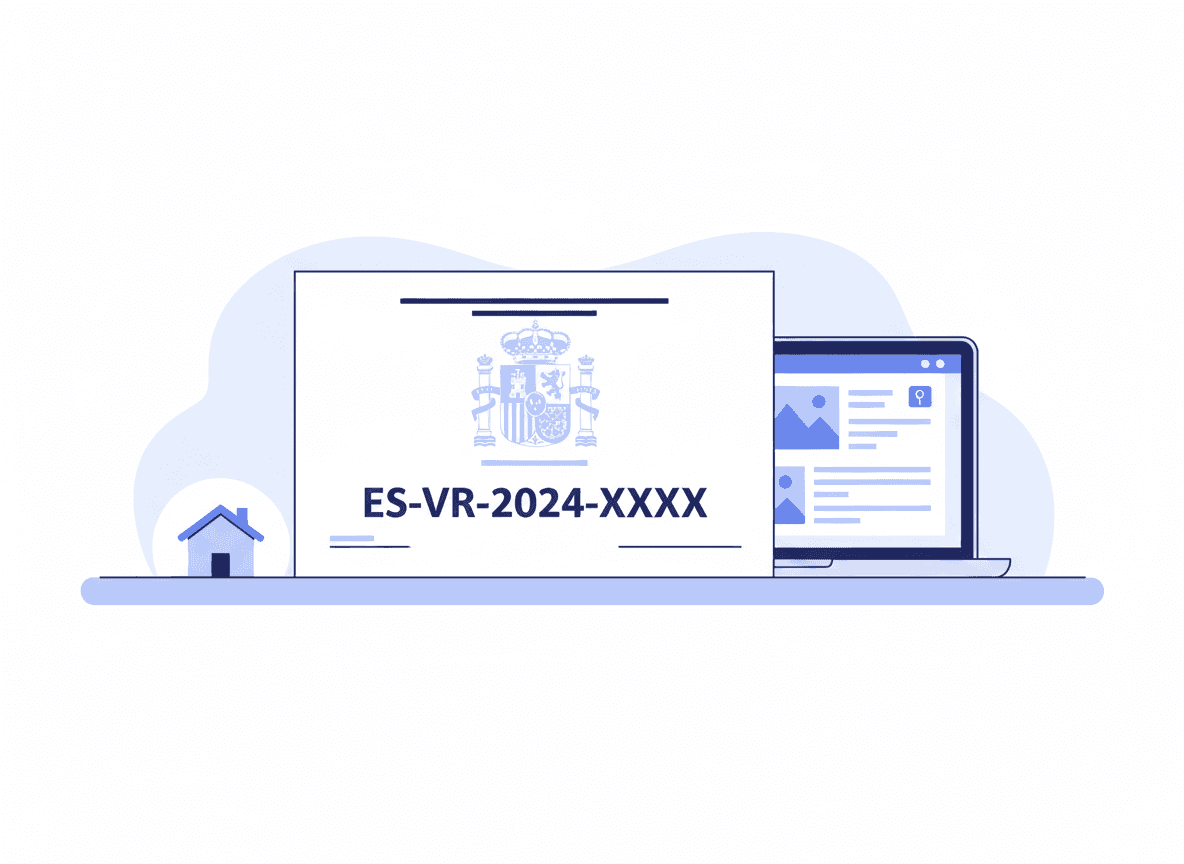
The Número de Registro Único de Alquiler (NRUA) is Spain's mandatory national registration number that every short-term rental needs to be listed on digital platforms like Airbnb, Booking, or Vrbo. Created by Royal Decree 1312/2024, it's been enforceable since July 2025. Without it, platforms can block your listing. It doesn't replace the regional tourist license — it's an additional layer.
If you manage one or more tourist properties in Spain, this number already applies to you. Here's exactly what it is, why it exists, how to get it, and what mistakes to avoid.
What the NRUA is
The NRUA (Número de Registro Único de Alquiler) is an alphanumeric code assigned by Spain's Ministry of Housing and Urban Agenda to each short-term rental unit marketed on digital platforms.
Think of it as your property's license plate. Just as a car needs a plate to drive on public roads, your property needs an NRUA to appear on any booking platform.
Key characteristics
- One number per rentable unit. Three apartments means three numbers.
- National scope. Works across all of Spain, regardless of autonomous community.
- Mandatory for listing on digital platforms.
- Separate from the regional tourist license. You need both.
- Standardized alphanumeric format, allowing platforms to verify it automatically.
Why the NRUA exists
The NRUA comes from Royal Decree 1312/2024, which transposes EU Regulation 2024/1028 on data collection and sharing for short-term accommodation rental services into Spanish law.
In plain terms: Europe decided short-term rentals needed more transparency and traceability. Each member state must create a registration system. Spain implemented it through this royal decree.
The goals behind the NRUA
- Transparency: so authorities know how many tourist properties actually operate and where.
- Tax control: to cross-reference rental activity with tax returns.
- Consumer protection: so travelers can verify an accommodation is registered.
- Fighting illegal listings: making it harder for unlicensed properties to advertise on platforms.
- Data for public policy: reliable information on short-term rental impact on the housing market.
Who needs an NRUA
The short answer: anyone listing a short-term rental on a digital platform in Spain.
Required for
- Owners renting their property directly to tourists through platforms
- Professional managers administering third-party properties
- Property management companies of any portfolio size
- Owners of individual rooms listed on short-term platforms
- Anyone using digital intermediaries to market short stays
Not required (in principle)
- Long-term rentals (standard residential lease contracts)
- Accommodation not marketed through digital platforms
- Hotels and hotel establishments regulated under separate specific legislation
If you're unsure whether your specific case falls within scope, consult a specialist advisor. The regulation is broad and interpretation can vary.
NRUA vs. regional tourist license: they're not the same
This is where most confusion lies. Many hosts believe their regional tourist license covers them. It doesn't.
| Concept | Regional tourist license | NRUA |
|---|---|---|
| Issued by | Autonomous community | Ministry of Housing (State) |
| Scope | Territorial (your region) | National (all of Spain) |
| What it certifies | That you can operate as a tourist rental | That your unit is identified in the national registry |
| Required for | Operating legally in your territory | Listing on digital platforms |
| Relationship | It's a prerequisite for the NRUA | Applied for by providing the regional license |
In practice, you get the regional license first, then apply for the NRUA. The regional license is one of the documents needed for the national number application.
How to get the NRUA step by step
Step 1: Verify you meet the prerequisites
Before applying for the NRUA, you need to have in order:
- Regional tourist license (declaración responsable filed and registration number obtained)
- Cadastral reference for the property (found on your IBI tax receipt or the Catastro website)
- Owner details (DNI/NIE of the owner or CIF of the management company)
- Property details (full address, unit type, maximum guest capacity)
- Liability insurance in force
- Habitability certificate or occupancy license in force
If you don't have the regional license yet, that's your first step. See our guide to registering your tourist property for the full process.
Step 2: Access the Ventanilla Única Digital de Arrendamientos (VUDA)
The application is processed through VUDA, the digital platform created by the Ministry of Housing specifically for this registry.
To log in you need to identify yourself with:
- Digital certificate (the same one used for tax returns)
- Cl@ve permanente or Cl@ve PIN
- Electronic DNI
If you don't have any of these identification methods, you'll need to obtain one first. Cl@ve PIN is usually the fastest to activate — you can request it online if you already have Cl@ve registered, or in person at Social Security or Tax Agency offices.
Step 3: Fill in the application form
Once inside the platform, you'll need to enter:
- Owner details: full name, DNI/NIE/CIF, tax address, contact information
- Property details: full address, cadastral reference, postal code, municipality, province
- Unit type: entire property or room
- Maximum capacity: maximum number of guests per your license
- Regional license number: the one obtained from your autonomous community
- Compliance declaration: confirmation that you meet applicable regulations
Review every field before submitting. Inconsistencies between what you declare here and what's on file with your regional license or the cadastre are the most common cause of rejections and delays.
Step 4: Submit and receive the provisional number
After submitting the form, the system assigns a provisional number. This number is already valid for use on your listings while the administration verifies your documentation.
The provisional number allows you to:
- Publish and keep your listings active on platforms
- Meet the legal obligation while the final number is processed
- Operate normally during the verification period
Step 5: Get the final number
Once the administration verifies that all documentation is correct and consistent, the provisional number becomes final. You'll receive a notification with your definitive NRUA.
The verification timeline varies depending on application volume, but the system aims to resolve it in weeks, not months.
Step 6: Update your listings
With the final number in hand, update all your listings on every platform where you publish:
- Airbnb: in the listing's legal information section
- Booking.com: in the property registration details
- Vrbo: in the license/registration number field
- Any other platform: look for the equivalent field
Platforms automatically verify that the number exists and is valid. If there are discrepancies, the listing may be blocked.
Key dates and deadlines
| Date | What happens |
|---|---|
| January 2, 2025 | Royal Decree 1312/2024 enters into force |
| July 1, 2025 | Platforms begin requiring the number. Listings without NRUA can be blocked |
| February each year (from 2026) | Mandatory annual information return on the previous year's activity |
If you still don't have your NRUA, you're past the deadline. The sooner you apply, the sooner you eliminate the risk of being blocked.
What happens without an NRUA
The consequences are both legal and commercial:
Listing blocks
Platforms are legally required to verify that each listing has a valid registration number. Without an NRUA, your listing can be:
- Rejected when you try to publish it
- Suspended if it was already active
- Removed by administrative order
Administrative penalties
Operating without registration can lead to financial penalties. The sanctioning regime varies, but fines can be significant, especially for managers with multiple properties.
Lost revenue
A blocked listing during peak season is money you don't get back. And reactivating it isn't instant — you need to complete registration, wait for verification, and have the platform reinstate the listing.
Cascade effect on portfolios
For professional managers, a compliance issue on one property can trigger reviews across the entire portfolio. If the administration finds one unregistered unit, it may audit the rest.
Common mistakes when applying for the NRUA
1. Mismatched data
The most common error. The address on the NRUA application doesn't exactly match the cadastre, or the declared capacity differs from the regional license. Any inconsistency triggers a rejection or delay.
Fix: before applying, cross-check your regional license, cadastre, and application data. They must be identical.
2. Missing regional license
Some hosts try to apply for the NRUA without completing the regional registration first. The NRUA requires the regional license number as a mandatory field.
Fix: complete the regional process first. Check the requirements by autonomous community.
3. Wrong cadastral reference
Using an outdated, incomplete, or incorrect cadastral reference. This is more common than you'd think, especially for properties that have been split or merged.
Fix: verify your current cadastral reference at the Catastro website.
4. Not registering each unit separately
If you manage several apartments in the same building, each one needs its own NRUA. One number per company or per building is not valid.
Fix: apply for an individual NRUA for each rentable unit.
5. Forgetting to update listings
Getting the number and not adding it to your listings. Or using the provisional one and not updating it when the final number arrives.
Fix: create a checklist of platforms and update all of them when you receive the final number.
The annual information return
Beyond obtaining the NRUA, you have a recurring obligation: every February, starting in 2026, you must file an information return on the previous year's rental activity.
What the return includes
- Identification of the owner and each property
- Number of nights rented per unit
- Revenue generated
- Platforms used
- Activity periods
The template was approved by Order VAU/1560/2025. This is separate from your tax obligations (income tax, VAT), though the data should be consistent.
Practical tip
Keep an organized record of your activity from day one. If you wait until February to compile a full year's data, the process will be far more tedious and error-prone. A management tool that centralizes this information will save you hours.
FAQ
Is the NRUA the same as the tourist license? No. The tourist license is issued by your autonomous community and authorizes you to operate. The NRUA is issued by the State and is required for listing on digital platforms. You need both.
How much does the NRUA cost? The NRUA application is free. The costs are in the prerequisites (regional license, energy certificate, insurance, etc.).
How long does it take? The provisional number is assigned immediately or within a few days of applying. The final number depends on application volume and document verification, but the system aims to resolve it in weeks.
Can I operate with the provisional number? Yes. The provisional number is valid for listing on platforms while the final one is processed.
Do I need one NRUA per property or one per company? One per rentable unit. If you manage five apartments, you need five NRUAs.
What if the owner or manager changes? You must notify the registry to update the data linked to the NRUA. The number may remain the same, but the owner details must always be current.
Does the NRUA expire? The number itself has no expiration date, but it's tied to ongoing compliance with requirements. If you lose your regional license or stop meeting the conditions, the NRUA can be revoked.
What do I do if my listing was blocked for missing an NRUA? Apply for the NRUA as soon as possible, get at least the provisional number, and update your listing on the platform. Contact platform support to request reactivation once you have the number.
How Autoregistro helps with compliance
The NRUA is one piece of the regulatory puzzle. Together with the regional license, guest registration via SES Hospedajes, the annual information return, and tax obligations, the administrative burden of managing tourist rentals in Spain keeps growing.
Autoregistro doesn't process the NRUA for you — that's a personal procedure with the administration. But it does automate the daily operations that come after:
- Guest data collection before arrival
- Automatic identity document verification
- Submission of guest reports to SES Hospedajes without manual intervention
- Digital signature archiving and record keeping for the full legal retention period
- Centralization of data from all your properties in one place
You handle getting the NRUA and keeping your documentation current. Autoregistro handles making sure every guest is properly registered from minute one.
Related posts
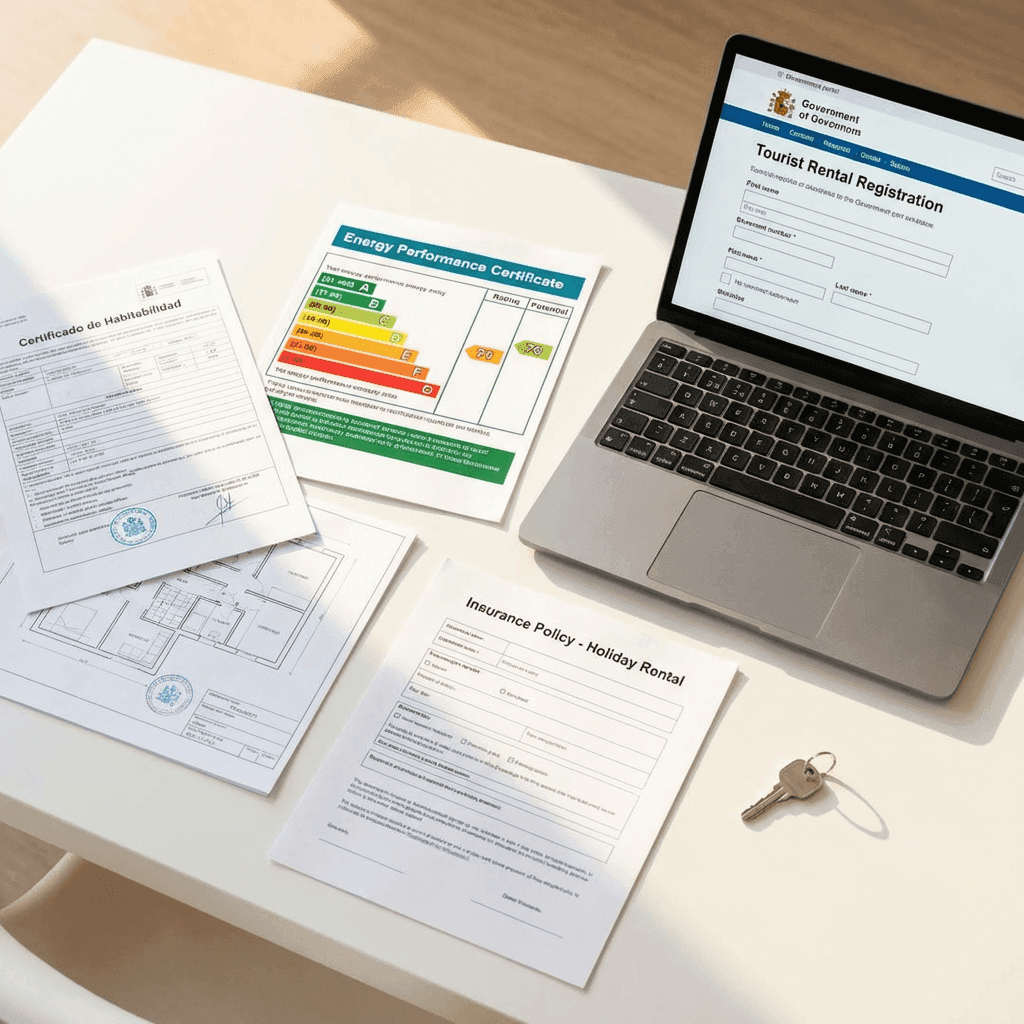
How to register your tourist rental property in Spain: step-by-step guide
The complete process to register your property as a vacation rental in Spain: prior documentation, responsible declaration, national registration number, SES Hospedajes setup, and platform listing.
Spain's single rental registry: what property managers need to know
A practical breakdown of Spain's national short-term rental registry — who needs a number, how to get one, key deadlines, and what happens if you ignore it.

Spain's Property Registry for tourist rentals
Complete guide to Spain's Property Registry and its importance for vacation rental managers: what to check, how to process it, and common mistakes.

Vacation rental requirements by autonomous community in Spain
Detailed guide to the requirements each Spanish autonomous community demands to operate a vacation rental: licenses, responsible declarations, deadlines, limits, and key particularities.
Ready to automate your guest registration?
Create your account and start streamlining SES Hospedajes compliance for your Spanish rentals.
Get started