Hot water in holiday rental: electric water heater, gas boiler, or aerothermal system (and which one is cost-effective for you)
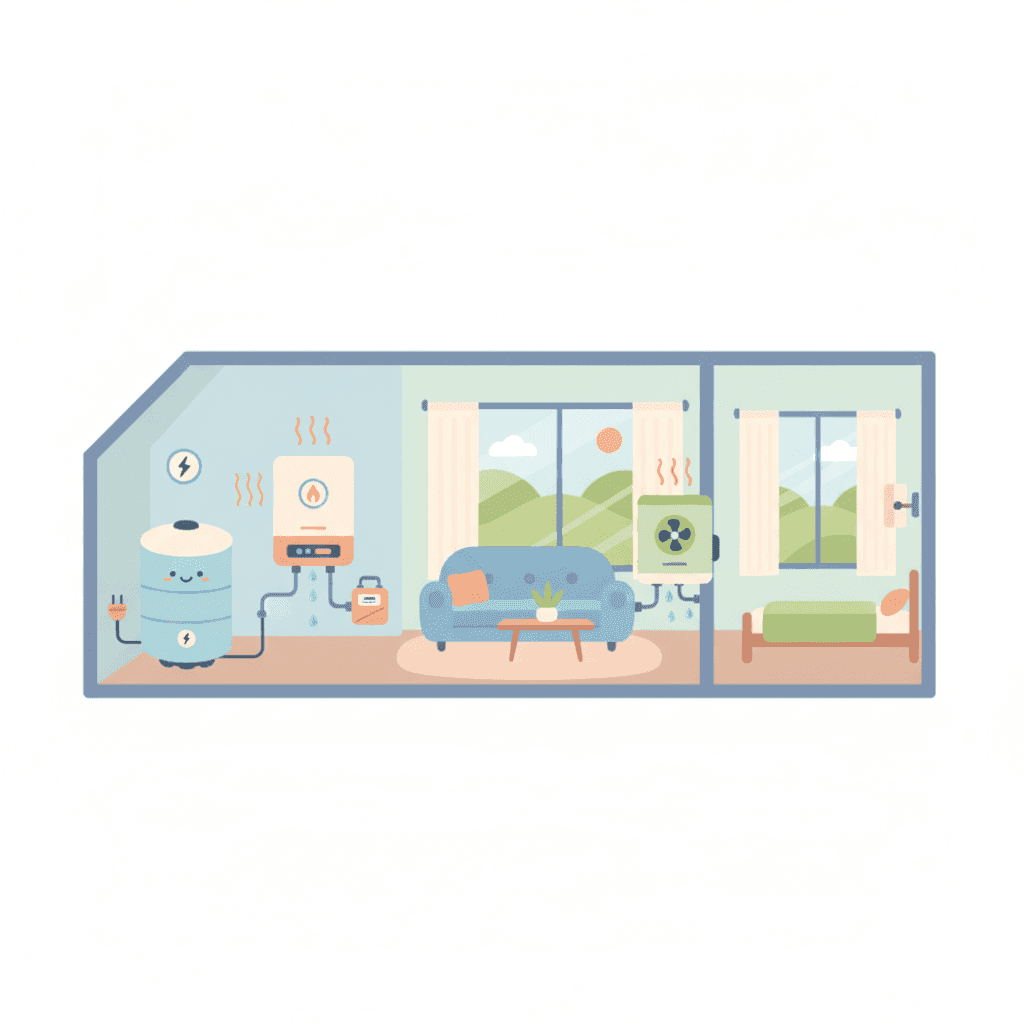
A guest turns on the shower tap, cold water comes out for 3 minutes, then hot for 4. The second guest no longer even gets lukewarm water. Result: a 3-star review and a public comment that appears on your listing forever.
Domestic hot water (DHW) is one of those things that nobody appreciates when it works, but can ruin you if it fails. Yet, many owners do not even consider what system they have or if it is suitable for tourist use. In this article, we review the three most common options in Spain, with real costs, consumption, and when each is worth it.
Why hot water is more critical in tourism than in long-term rentals
In a regular home, the family organizes itself. They know that if there is an 80-liter water heater and there are four people, one showers at 8 and another at 8:30. In a tourist apartment, that doesn’t happen. You have:
- Four adults wanting to shower at the same time because they are going out to dinner.
- Families arriving sweaty from the airport and all wanting an immediate shower.
- Guests filling the bathtub to the top because they are on vacation.
- Long showers of 20 minutes because they are not paying the electricity bill.
The DHW consumption in a tourist property is between 30% and 60% higher than in a regular home with the same number of people. Complaints about cold water are the third most common reason for negative reviews after WiFi and cleanliness.
The three systems you will encounter
Electric water heater
Most common in small apartments and areas without natural gas. A tank that heats water with a resistor and keeps it hot until used.
Advantages: inexpensive to install (€300-600 for the unit, plus installation), requires no annual inspections, no flue or gas pipe needed. Works in any apartment.
Disadvantages: when the tank runs out, it’s out. You have to wait 2-4 hours for it to heat again. Consumes a lot of electricity if not on time-of-use tariffs.
Gas boiler (natural or bottled)
Heats water instantly, without a tank. As long as there is gas and water, hot water is available.
Advantages: unlimited hot water. Four people can shower consecutively without issue. Natural gas remains cheaper per kWh than conventional electricity.
Disadvantages: mandatory biannual inspection (€80-120), more expensive installation (€800-1,500), and many new buildings no longer allow gas. If using bottled gas, you need to change bottles regularly.
Aerothermal system and heat pump for DHW
A system that extracts heat from the air to heat water. Increasingly common in new constructions.
Advantages: very low consumption (3-4 times less than an electric heater), compatible with solar panels, no gas needed.
Disadvantages: high initial investment (€2,000-4,000), requires space, and takes time to heat the tank. Not the first choice for a 50 m² apartment downtown.
Real comparison with numbers
Assuming a two-bedroom tourist apartment with 70% occupancy per year (about 255 days), averaging 3 people per stay:
| System | Initial investment | Annual energy cost | Maintenance | Lifespan |
|---|---|---|---|---|
| Electric heater 80L | €400-700 | €450-600 | €0 | 10-12 years |
| Electric heater 100L | €500-800 | €550-750 | €0 | 10-12 years |
| Natural gas boiler | €1,200-1,800 | €350-500 | €60/year | 15 years |
| Bottled gas boiler | €800-1,200 | €500-700 | €60/year | 12-15 years |
| Aerothermal DHW | €2,500-4,000 | €150-250 | €80/year | 15-20 years |
Over 5 years, the natural gas boiler is slightly cheaper than the electric heater if occupancy is high. Aerothermal systems pay off only if you plan to rent the property for many years and have space.
How many liters do you need if you choose a water heater
This is where most people make mistakes. They install a 50-liter heater "because that’s what was available" and then the guest is left cold.
Practical rule for tourism:
- 1 person: 50-80 liters
- 2 people: 80-100 liters
- 3-4 people: 100-150 liters
- 5-6 people: 200 liters or switch to a boiler
And these numbers are for modern water heaters. If yours is 15 years old, it heats worse and the insulation is terrible. You lose heat even when not in use.
Note: an electric water heater consumes energy even if no one is using it because it maintains the temperature. If you have weeks without guests, turn it off from the panel. It can save you €100-200 per year.
Common mistakes that cost you
Setting the thermostat too high
Many set the heater to 70-75°C thinking it lasts longer. Wrong. Above 60°C, limescale formation accelerates, electricity consumption increases, and the water is so hot that you have to mix in cold water, making it pointless. Set it to 55-60°C. That’s the optimal point.
Not purging or descaling
In areas with hard water (Levante, Balearic Islands, much of Andalusia), limescale builds up on the heater’s resistor and the boiler’s heat exchanger. If not descaled every 2-3 years, the heater takes twice as long to heat and consumes twice as much energy. Maintenance costing €80 can save you from replacing the unit after 5 years.
Not inspecting the gas boiler
Biannual inspection of the gas boiler is legally mandatory. If you have an accident and it’s not up to date, your insurance won’t cover anything. For a tourist property, the responsibility increases. More details can be found in our guide on what insurance you need for your tourist rental.
Installing a small water heater under the kitchen sink to save pipes
It seems like a good idea, but small 15-30 liter heaters are not enough for a shower. They are only suitable for taps. If your plumber sells this for the entire apartment, run away.
Not informing the guest in the manual
If your 80-liter heater has 4 people, mention it humorously in the welcome manual: "Quick showers or take turns. The heater is nice but has its limits." An informed guest won’t leave a bad review. An surprised one might.
Practical cases: what I would choose
Small apartment with 1-2 rooms in the city center without gas: latest-generation 100-liter electric heater, with energy class A or higher. Done.
House with 3-4 rooms with natural gas: condensing natural gas boiler. Unlimited hot water, less consumption than old atmospheric models, and no worries about large groups.
Chalet or rural house without natural gas: aerothermal system if you have the budget and space. If not, a large electric heater (200L) or a combination of two heaters.
New construction apartment: usually comes with centralized aerothermal system of the building. Just make sure you understand how the meter works and how much the community will charge.
The cost of hot water in your reviews
A single negative review due to cold water can lower your average score from 4.8 to 4.6. On Airbnb, dropping from one to another can mean appearing 3-5 positions lower in searches and losing between 10% and 20% of bookings that quarter.
If you multiply this over a year, and compare it to the €800 it would have cost to install a larger heater or replace the old boiler, the calculation becomes clear.
How Autoregistro fits in
While you deal with installers, gas inspections, and deciding between aerothermal or boiler systems, registering guests in SES Hospedajes remains mandatory. Doing it manually after each check-in is a huge time sink.
Autoregistro costs €1 per month per property (less than a coffee). Your guests fill out a form, data is sent automatically to SES Hospedajes, and you forget about it. This allows you to focus on what really matters, like ensuring all your guests leave the shower warm.
Frequently Asked Questions
Can I install an electric water heater in a tourist property without legal issues?
Yes, as long as the installation complies with electrical regulations (REBT). If the apartment has a certificate of habitability and a tourist license, the heater is part of the installation and does not require any additional specific permit for tourism.
Does the gas boiler need inspection even if the apartment is tourist?
Yes, and even more so. Periodic inspection is mandatory every 2 years (or 5 in some cases, depending on the installation). Keep the certificate, as it may be required during a tourist inspection.
Is it worth installing solar panels for DHW in a tourist property?
Only if you have a single-family house or chalet with high occupancy. In community apartments, it’s complicated, and collective systems often cause more problems than benefits. New constructions already include them by regulation (CTE).
What should I do if the water heater breaks and I have guests in 3 days?
Buy a new one of the same size and call an urgent plumber. Installing a similar unit takes 2-3 hours. If you can’t make it, be transparent with the guest, offer compensation (discount, bottle of wine), and buy the replacement. Never hide the problem.
How long does it take to amortize switching from an electric heater to a gas boiler?
With high occupancy (over 60%), between 4 and 6 years. With low occupancy, it might never pay off. Calculate with your actual bill before spending €1,500.
Related posts

Welcome Manual for Your Vacation Rental: What to Include, How to Do It, and Why It Saves You Problems
A good welcome manual reduces messages, avoids misunderstandings, and improves reviews. I tell you what to include, how to structure it, and common mistakes I see in novice owners.

Electricity Consumption in Tourist Accommodation: How to Control Your Bill Without Your Guests Feeling Cold
Guests don't pay for the electricity, so they leave it at 24 degrees with the window open. I tell you how much a typical tourist accommodation really spends, which rate to choose, and real tricks to lower the bill without touching comfort.
Electricity consumption in holiday rental homes: how much your guests spend and how to reduce the bill without complaints
Guests spend 30-50% more on electricity than a regular tenant. I'll tell you how to control the electricity usage in your holiday rental home without setting the air conditioning to 26 degrees or ending up with bad reviews.
Electricity Consumption in Vacation Rental Homes: How to Lower Your Bill Without Guest Complaints
Guests don't pay for electricity, so they use it freely. Here's how to control your vacation home's electricity consumption without ruining the experience or receiving negative reviews.
Ready to automate your guest registration?
Create your account and start streamlining SES Hospedajes compliance for your Spanish rentals.
Get started