Heating and air conditioning in holiday homes: what to install, how much you spend, and how to avoid crazy bills
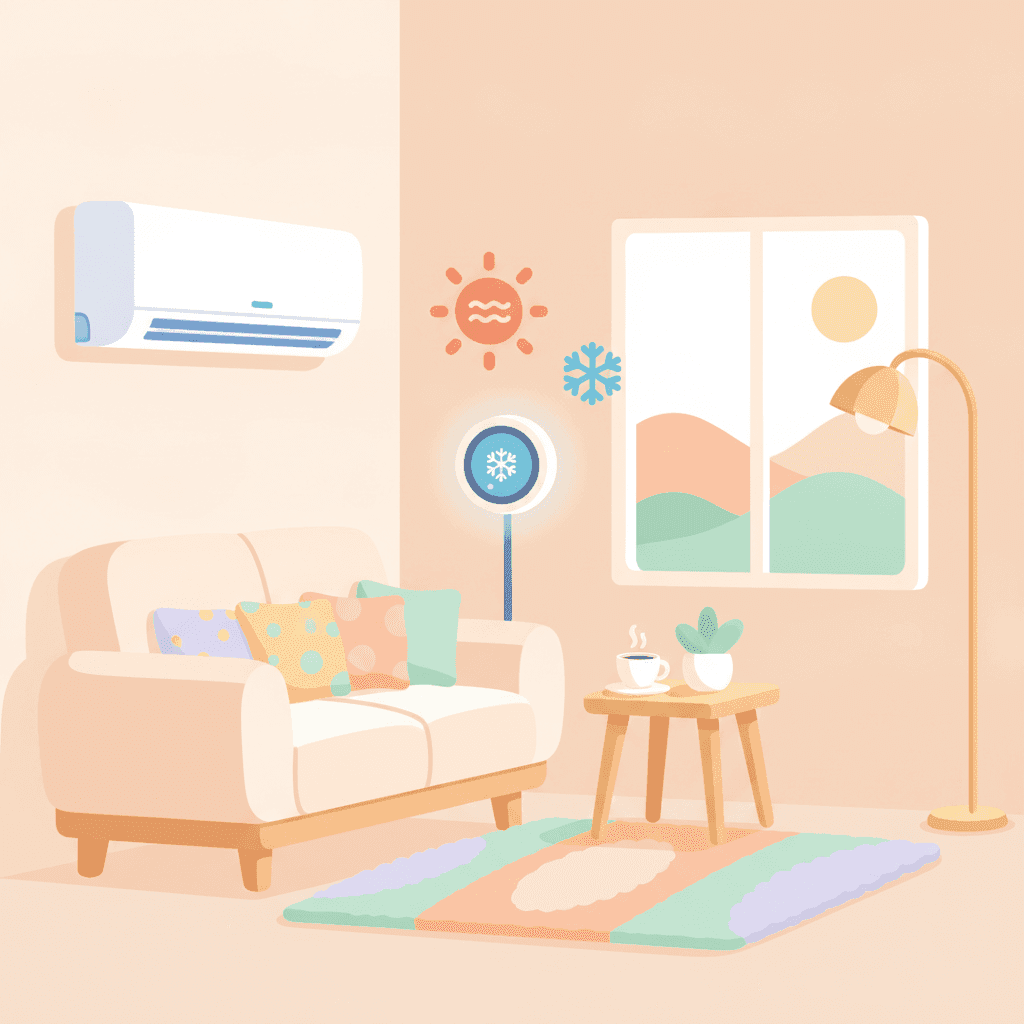
Climate control is one of the hidden expenses that surprises new owners of holiday homes the most. A guest can leave the air conditioning at 18 degrees with the windows open for a week and give you a shock of 200 euros on the bill. In this guide, I tell you which systems work best depending on the area, how much they cost to install, their real consumption, and tricks to keep your guests comfortable without breaking the bank.
Why climate control is a serious issue (and not just comfort)
It's not just about guest comfort. Because:
- On Airbnb and Booking, lack of air conditioning in hot areas lowers your ratings and limits bookings in July and August.
- In cold areas, not having decent heating excludes you from the market in winter.
- Electricity consumption can skyrocket if you don't control the system.
- Poorly installed systems generate noise, condensation, and constant breakdowns.
And note: each autonomous community has minimum requirements for holiday homes. In many, heating and/or air conditioning are mandatory. I leave more details in tourist rental requirements by autonomous community.
Types of systems: what's available and what each is for
Split air conditioning (heat pump)
The top choice for holiday homes. A modern split with a heat pump provides cooling in summer and heating in winter with the same device.
- Cost per unit installed: between 700 and 1,400 euros for a 3,000 BTU split.
- Consumption: very efficient. An inverter A++ split consumes between 0.5 and 1 kWh per hour of actual use.
- Duration: 10-15 years if maintained properly.
This is what I recommend for most apartments up to 80-90 m² in coastal or interior areas with mild summers.
Multisplit (multiple indoor units, one outdoor)
For apartments over 80 m² or with several independent rooms. A multisplit allows you to climate 2, 3, or 4 rooms with a single outdoor unit (important if you have community restrictions).
- Installed cost: between 2,000 and 4,500 euros depending on the number of splits.
- Advantage: the guest only turns on the room they are using.
Aerothermal
Premium system. A heat pump that provides both climate control and domestic hot water. Very efficient but expensive to install.
- Cost: between 6,000 and 12,000 euros.
- Only worthwhile in new builds or major renovations.
Electric radiators or thermal emitters
The cheap heating solution. Plug them in and go.
- Cost: 80-300 euros per radiator.
- Consumption: high. A 1,500W radiator consumes 1.5 kWh per hour. If the guest leaves it on all night, multiply accordingly.
Suitable as support or for small apartments in temperate zones. Do not use as the main system in Madrid or Burgos in January.
Gas central heating
If your apartment already has a gas boiler and radiators, perfect. But installing one from scratch today is expensive and bureaucratic.
- New installation cost: 4,000-7,000 euros.
- Consumption: depends on gas price, generally cheaper than electricity per equivalent kWh.
Underfloor heating
Very comfortable but only feasible in new construction or major renovations. Forget it if your home is already finished.
Quick comparison
| System | Investment | Consumption | Best for |
|---|---|---|---|
| Heat pump split | 700-1,400 euros | Low | Apartments up to 90 m² |
| Multisplit | 2,000-4,500 euros | Medium | Large apartments, multiple rooms |
| Aerothermal | 6,000-12,000 euros | Very low | New builds, renovations |
| Electric radiators | 80-300 euros/unit | Very high | Supportive use |
| Gas boiler | 4,000-7,000 euros | Medium | Large apartments in cold zones |
How much you'll really spend on electricity
I'll give you real numbers for a 60 m² apartment on the Mediterranean coast with an inverter split:
- Summer (July-August), intensive use: 80-120 euros/month extra on electricity.
- Winter (December-February), moderate use: 100-150 euros/month extra.
- Rest of the year: 20-50 euros/month.
For an apartment in Madrid city center of 70 m² with electric heating via radiators (a bad idea, but common):
- January with regular guests: electricity bill of 250-400 euros. No joke.
That's why the choice of system is not just about comfort. It's about profitability. If you want to learn more about operational costs, check out deductible expenses for tourist rentals.
How to prevent your guests from ruining your bills with the air
This is the trick few talk about. The guest paying 100 euros per night thinks the air is "free" and sets it to 17 degrees with the windows open. How to control this:
1. Smart thermostats with limits
A thermostat like Sensibo, Tado, or similar (80-200 euros) allows you to:
- Limit minimum/maximum temperature remotely.
- Turn off the air if it detects open windows (with sensor).
- Schedule automatic shutdown when no one is around.
- View real-time consumption.
An investment that pays off in one season.
2. Open window detector
Cheap magnetic sensors (15-30 euros) connected to the thermostat. If the window remains open for more than 5 minutes, the system turns off automatically.
3. Clear instructions in the welcome manual
Many people misuse the air because they don't know how to use it properly. A small sign next to the remote with "We recommend 24 degrees in summer and 21 in winter for efficient consumption" reduces misuse. For more communication ideas, see what to communicate to your guests before they arrive.
4. Locking the physical remote
Some splits allow you to lock temperature ranges from the installer menu. Set it between 20 and 26 degrees and forget about it.
5. Passing on energy costs in extreme zones
In some extreme cases (mountain cabins with expensive heating, for example), owners charge extra for energy consumption. Note: this must be clearly stated in the listing.
Maintenance: what almost no one does but should
A split without maintenance consumes 25-30% more and breaks down sooner. The minimum:
- Clean filters every 2-3 months (you can do it yourself).
- Annual professional inspection: 60-90 euros.
- Deep cleaning with sanitizer every 2 years: 100-150 euros.
A split that lasts 12 years with maintenance lasts 6 without. Do the math.
Important: systems with more than 2 kg of refrigerant are required to undergo periodic inspections according to F-Gas regulations. Although most domestic splits do not reach this amount, it is advisable to keep installation certificates and invoices in case of inspection. More on this in tourist rental inspections.
Common mistakes that will cost you money
- Buying the cheapest split from the market. Decent brands (Mitsubishi, Daikin, Panasonic, Fujitsu) cost a bit more but last twice as long and consume less.
- Installing the indoor unit above the bed. The guest will set it to 18 directly on their face and complain in the review about "excessive cold". Place it on a side wall.
- Poor sizing. A 2,000 BTU split for a 30 m² living room will always be working at 100%. It will cost more and cool less.
- Ignoring outdoor unit noise. Angry neighbors, complaints, and possible fines. See how to avoid conflicts with neighbors.
- Not having decent heating because "I don't rent in winter". You lose the remote workers' market, weekend getaways, and the entire north of Spain.
Is investing in energy efficiency worth it?
If your holiday home operates year-round, yes. An inverter A+++ system versus an A can save you 300-500 euros annually in consumption. In 5 years, you recover the investment difference.
Additionally, there are grants (Plan PREE, European funds depending on the region) that cover part of the change. Ask your town hall or IDAE before installing.
How Autoregistro fits in
Climate control, cleaning, supplies... the holiday home has many fronts to control. The last thing you want is to waste time manually entering guest data into SES Hospedajes.
Autoregistro costs 1 euro per month per property (less than a coffee). Your guests fill out an online form before arrival, and the data is sent automatically to SES Hospedajes. You focus on what matters: optimizing your business, not copying IDs.
Frequently Asked Questions
Is air conditioning mandatory in a holiday home?
It depends on the autonomous community. In Andalusia, Valencian Community, Murcia, and Balearic Islands, it is mandatory in bedrooms and living rooms. In other cold zones, heating may be required instead. Check your regional regulations.
Is a powerful split better or several small ones?
It depends on the apartment. If you have a large living room open to the kitchen, a well-sized powerful split. If you have separate rooms with doors, a multisplit is better so each guest can control their zone without cooling/heating the entire apartment.
How long does it take to amortize a smart thermostat?
One summer season with intensive use. You reduce consumption by 20% to 40% depending on the case. If you paid 100 euros extra per month for air, you save 20-40 euros monthly. It pays for itself in 4-6 months.
Can I charge guests for excess electricity consumption?
Legally yes, as long as it is clearly indicated in the listing and accepted before booking. In practice, in urban apartments, it causes friction and bad reviews. In cabins or rural houses with oil or wood heating, it is more common and accepted.
What if the guest damages the air conditioning?
Document the condition before check-in (photos), notify through the platform if detected during stay, and claim via the deposit or damage insurance of Airbnb/Booking. More details in how to manage damages and deposits.
Related posts

Ready to automate your guest registration?
Create your account and start streamlining SES Hospedajes compliance for your Spanish rentals.
Get started