How to build guest loyalty in your vacation rental: strategies for direct bookings and repeat stays
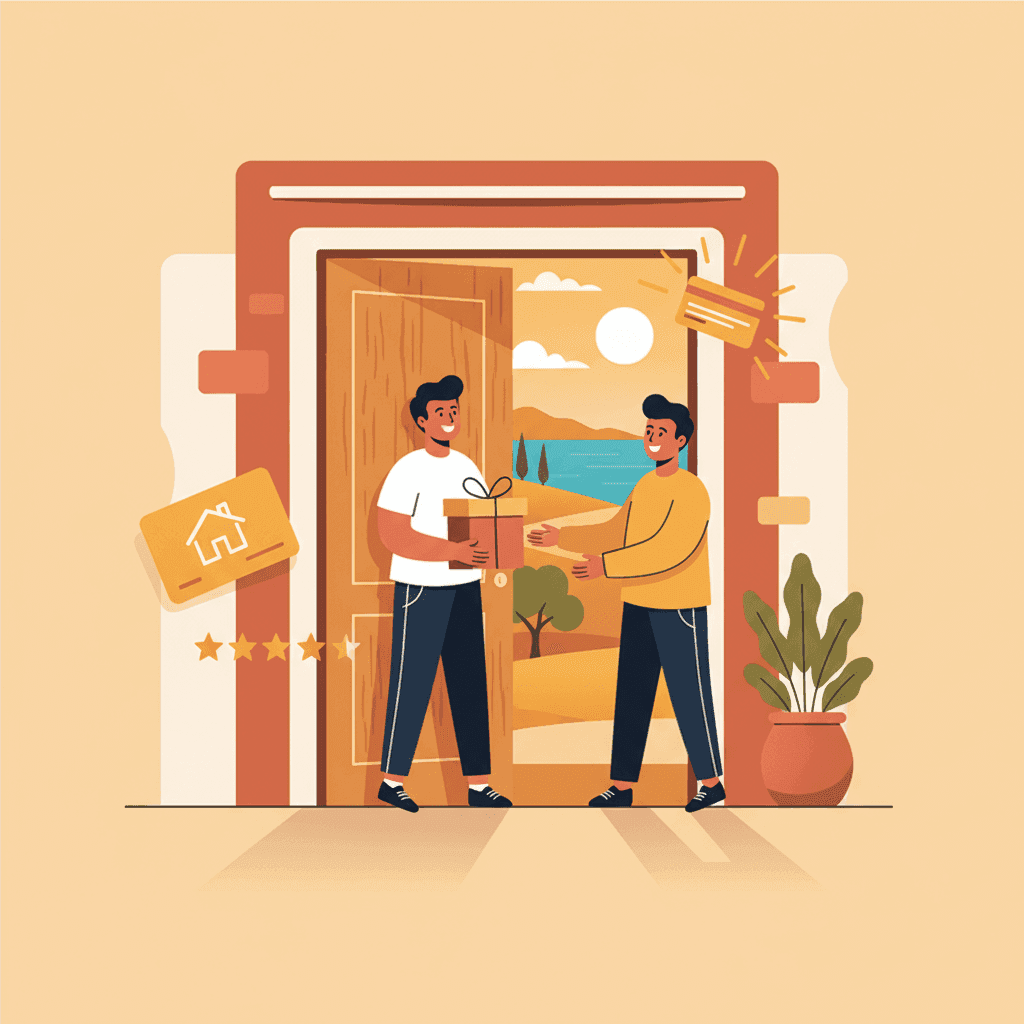
Building guest loyalty is the most profitable long-term strategy for a vacation rental: a repeat guest has no acquisition cost, pays no platform commission if booking direct, already knows your property (less management), and is more likely to leave good reviews. Owners who achieve 20-30% repeat or direct bookings can save between €2,000 and €6,000 annually in platform commissions.
Most vacation rental owners treat each booking as an isolated transaction: the guest arrives, leaves, and is never heard from again. But the most profitable managers do exactly the opposite — they build a relationship that converts that one-time guest into a recurring customer who books direct year after year.
This isn't about becoming a hotel with a points program. It's about small actions that create a bond and eliminate the friction of rebooking.
Why loyalty matters (with numbers)
Let's say you manage an apartment with 60 bookings per year and an average income of €500 per booking.
| Scenario | Platform bookings | Direct/repeat bookings | Annual commissions (15%) |
|---|---|---|---|
| No loyalty strategy | 60 | 0 | €4,500 |
| 20% direct repeat | 48 | 12 | €3,600 |
| 30% direct repeat | 42 | 18 | €3,150 |
| Annual savings | €900-1,350 |
And that's just commissions. Repeat guests also:
- Generate fewer inquiries and messages (they already know the property)
- Cause less damage (they respect a place they know more)
- Leave better reviews (if they return, they liked it)
- Book further in advance (giving you predictability)
- Recommend to friends and family (free acquisition)
The 3 phases of loyalty building
Phase 1: during the stay (planting seeds)
Loyalty starts before check-out. If the experience is mediocre, no post-stay strategy will work.
Key actions:
- Exceed expectations in something specific: you don't need to be perfect at everything, but you do need to surprise in something. A local welcome detail (regional wine, typical sweets, personalized map) costs €5-10 and generates disproportionate impact.
- Proactive communication: a mid-stay message asking if they need anything shows attention without being invasive.
- Resolve problems quickly: if something fails (wifi, hot water, noise), response speed determines whether the guest leaves happy or frustrated.
- Personalize if you can: if you know they're traveling with children, leave a toy. If they're celebrating an anniversary, a note. Small gestures that show they're not "just a number."
Phase 2: at check-out (capturing)
The check-out moment is your opportunity to capture contact information for future communications.
Key actions:
- Physical card in the property: leave an attractive card with your website, direct email, and an incentive for the next booking ("10% discount on your next stay if you book direct"). Place it somewhere visible — bedside table or by the door.
- Farewell message with link: in your post-check-out message, include a link to your website or a direct contact email.
- Ask for email explicitly: "If you'd like us to notify you about special offers or peak season availability, leave us your email." Many guests happily provide it.
- Guest book: a physical book where guests write about their experience. Besides being a nice touch, it gives you names and dates for follow-up.
Important: respect data protection regulations (GDPR). You need explicit consent to send commercial communications. A simple "Would you like us to notify you about offers?" with an affirmative response is sufficient.
Phase 3: after the stay (nurturing)
This is where most fail. The guest leaves and the owner forgets. But maintaining contact is what converts a good experience into a future booking.
Key actions:
- Email 1-2 weeks later: genuine thanks + "we hope to see you again." Don't sell anything yet.
- Pre-season email (2-3 months before): "We're preparing for summer season. As a previous guest, you have priority to book + 10% discount if you book before [date]." This works especially well with families who repeat the same destination every year.
- Special date email: if you know when they came last year, send a reminder: "Last year you stayed with us in June. Shall we repeat this year?"
- Value content: local recommendations, area events, property updates. Not everything has to be "book now."
Recommended frequency
| Communication | When | Objective |
|---|---|---|
| Post-stay thank you | 1-2 weeks after | Close well, request review |
| Pre-season offer | 2-3 months before their season | Generate early booking |
| Anniversary reminder | 1 year after their stay | Activate emotional memory |
| Newsletter/updates | 2-3 times per year maximum | Maintain presence without saturating |
Golden rule: maximum 4-5 emails per year. More than that and you go from "attentive owner" to "spam."
Incentives that work
Direct booking discount
The most effective and logical incentive: if the guest books direct (without platform), you save the commission. Share part of that saving:
- 5-10% discount on the platform price
- Free extra night on stays of 7+ nights
- Free late check-out (costs you nothing if there's no arrival that day)
- Upgrade if you have multiple properties
Referral program
"If you recommend our property to a friend and they book, you both get 10% off." Simple, effective, and generates free acquisition.
Welcome details for returning guests
When a guest returns, let them know you remember:
- Personalized note: "Welcome back, [name]. We're glad to have you again"
- Improved detail compared to the first time
- Their preferences remembered (if they requested a crib, extra pillow, etc.)
Tools for managing loyalty
Guest database
You don't need a complex CRM. A spreadsheet with:
- Name and email
- Stay dates
- Booking source (platform or direct)
- Notes (children, preferences, incidents)
- Date of last contact
Basic email marketing
Free or cheap tools for emailing your base:
- Mailchimp (free up to 500 contacts)
- Brevo (free up to 300 emails/day)
- MailerLite (free up to 1,000 subscribers)
With 50-200 contacts from previous guests, a free tool is more than enough.
Own website with direct booking
For direct booking to work, you need a channel where the guest can book without a platform:
- Simple website with calendar and booking form
- Payment link (Stripe, PayPal)
- Or simply an email/WhatsApp where you confirm availability and send a payment link
You don't need a complex website. A landing page with photos, availability calendar, and a "Book Direct" button is enough to start.
Common loyalty mistakes
| Mistake | Why it fails | Solution |
|---|---|---|
| Not collecting emails | Without contact, no follow-up possible | Ask for email at check-out or during registration |
| Sending only commercial offers | Guest feels used | Alternate value content with offers |
| Discount too small (2-3%) | Doesn't justify the effort of booking outside platform | Minimum 5-10% or tangible benefit |
| Not delivering on promises | Destroys trust | If you offer a discount, apply it without excuses |
| Saturating with emails | Guest unsubscribes | Maximum 4-5 contacts per year |
| Forgetting GDPR | Legal risk | Explicit consent always |
Loyalty vs. platform dependence
Platforms don't want you to build loyalty outside of them. Airbnb and Booking limit contact data communication between host and guest precisely to prevent the relationship from moving outside their ecosystem.
What you can do (legal and permitted):
- Leave physical material in the property (cards, brochures)
- Communicate through platform channels suggesting direct contact for future stays
- Collect data during the guest registration process (which is mandatory and legitimate)
- Offer your website in the welcome book
What you shouldn't do:
- Ask the guest to cancel on the platform to book direct (violates terms)
- Send mass spam without consent
- Share guest data with third parties
How Autoregistro fits in
The guest registration process — which is mandatory by law — gives you a natural opportunity to collect your guests' contact data with their consent. Autoregistro manages that data collection automatically, and the data is stored securely and accessibly. This gives you the foundation to build your loyalty strategy: you have the name, email, stay dates, and contact details of every guest who has stayed at your property, collected legitimately and with consent.
Frequently asked questions
Is it legal to contact guests after their stay to offer them a return visit? Yes, as long as you have their explicit consent for commercial communications (GDPR). Guest registration gives you their data, but you need additional consent for marketing. A simple checkbox or question during registration is sufficient.
How much discount should I offer for direct booking? Between 5% and 15%. Consider that you save 15-18% in platform commission, so a 10% discount to the guest still leaves you 5-8% more margin than a Booking reservation.
What percentage of guests repeat in vacation rental? Without a loyalty strategy, less than 5%. With an active strategy (post-stay contact, incentives, own website), professional managers achieve 15-30% repeat or referred bookings.
Do I need my own website to receive direct bookings? Not necessarily. You can start with an email or WhatsApp where you confirm availability and send a payment link. But a simple website (even a landing page) professionalizes the process and generates more trust.
Do platforms penalize me if I get direct bookings? Not directly. Your position on Airbnb or Booking depends on your activity on that platform, not what you do outside. But if your platform occupancy drops significantly, your visibility may decrease. The ideal strategy is to complement, not replace.
Related posts

Airbnb, Booking, Vrbo & other platform fees: real comparison for vacation rental owners
Detailed comparison of fees charged by the main vacation rental platforms in 2026 — Airbnb, Booking.com, Vrbo, Google and more — with real examples of how much you actually keep per booking.
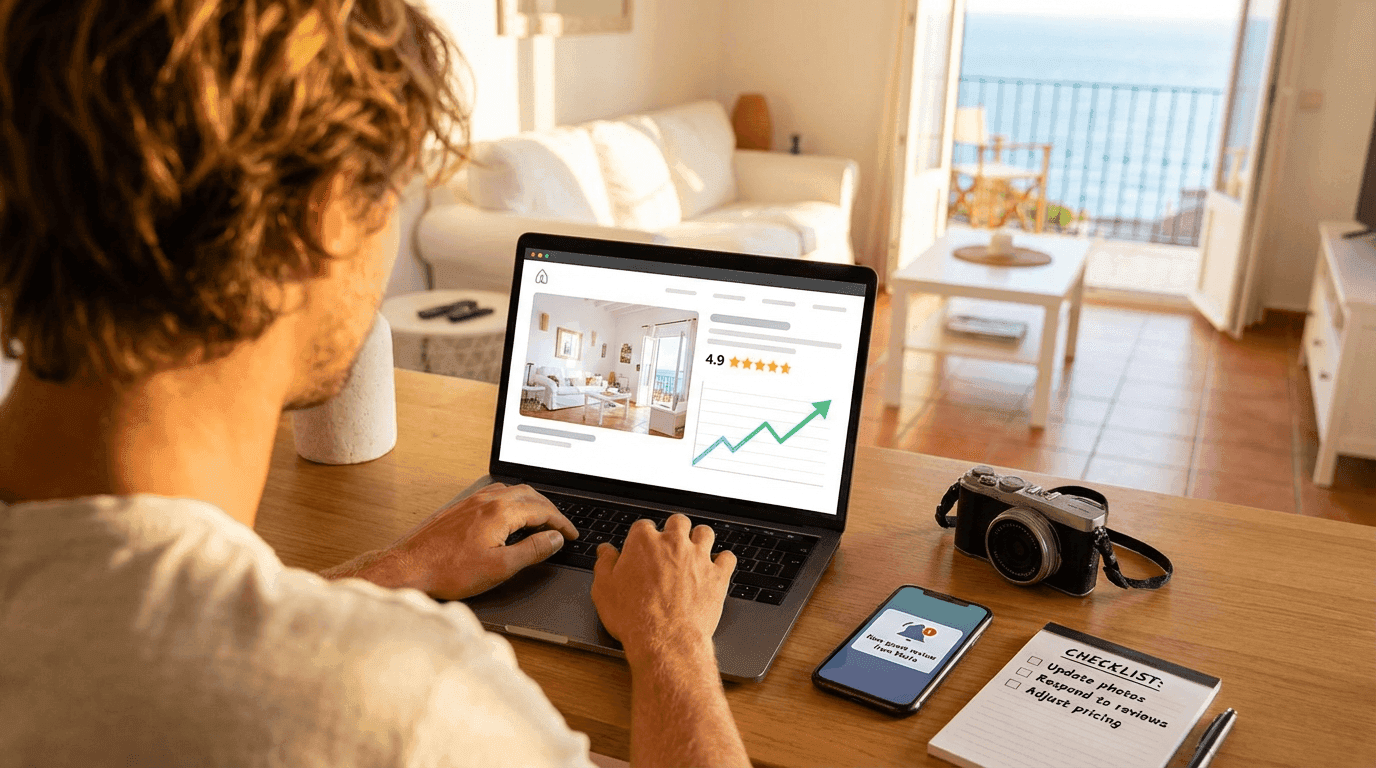
How to improve your vacation rental listing and get more bookings
A practical, in-depth guide to optimizing every aspect of your listing — photos, title, description, pricing, reviews, and more — to turn views into actual reservations.
Platforms to promote your vacation rental: options, differences, and how to choose
Practical breakdown of the main platforms for listing tourist properties — Airbnb, Booking.com, Vrbo and more — with their pros, costs, and what each one means for property managers.
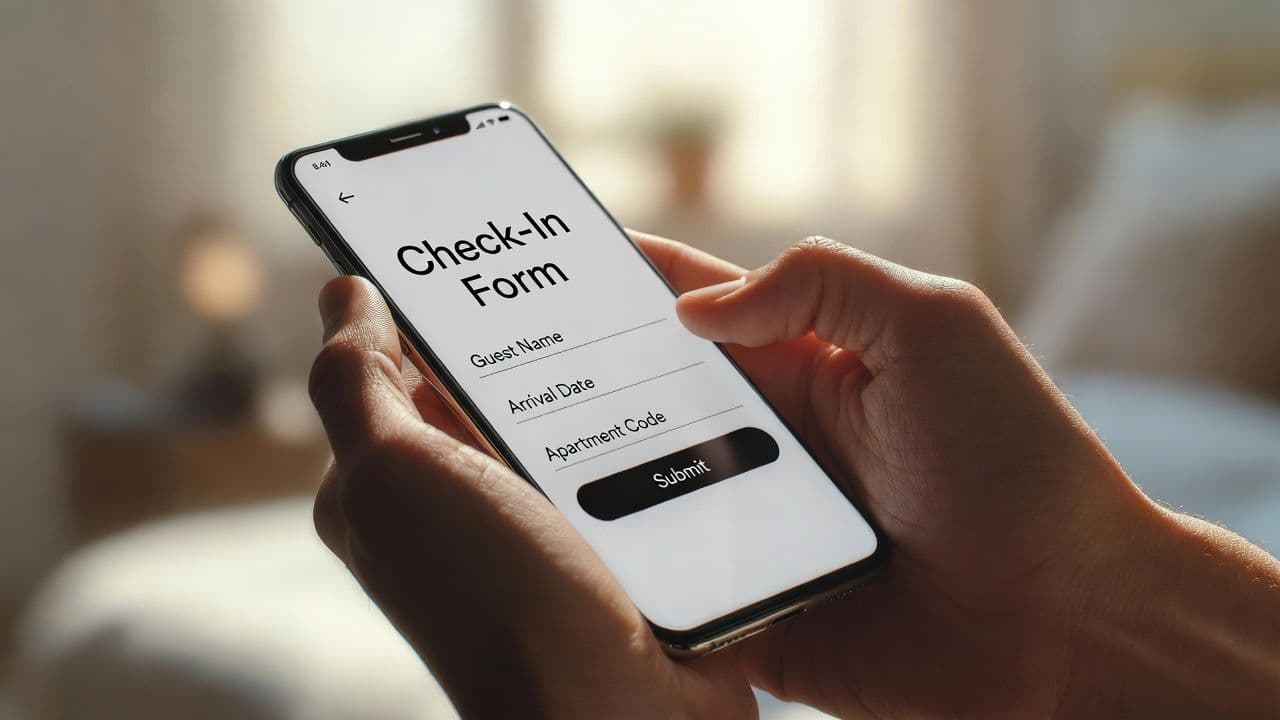
How to automate check-in for your Spanish vacation rental
Discover how self-service guest registration can save you hours every week while keeping your vacation rental compliant with Spanish law.
Ready to automate your guest registration?
Create your account and start streamlining SES Hospedajes compliance for your Spanish rentals.
Get started