Air Purifiers in Vacation Homes: Are They Worth It? Models, Prices, and When to Install Them
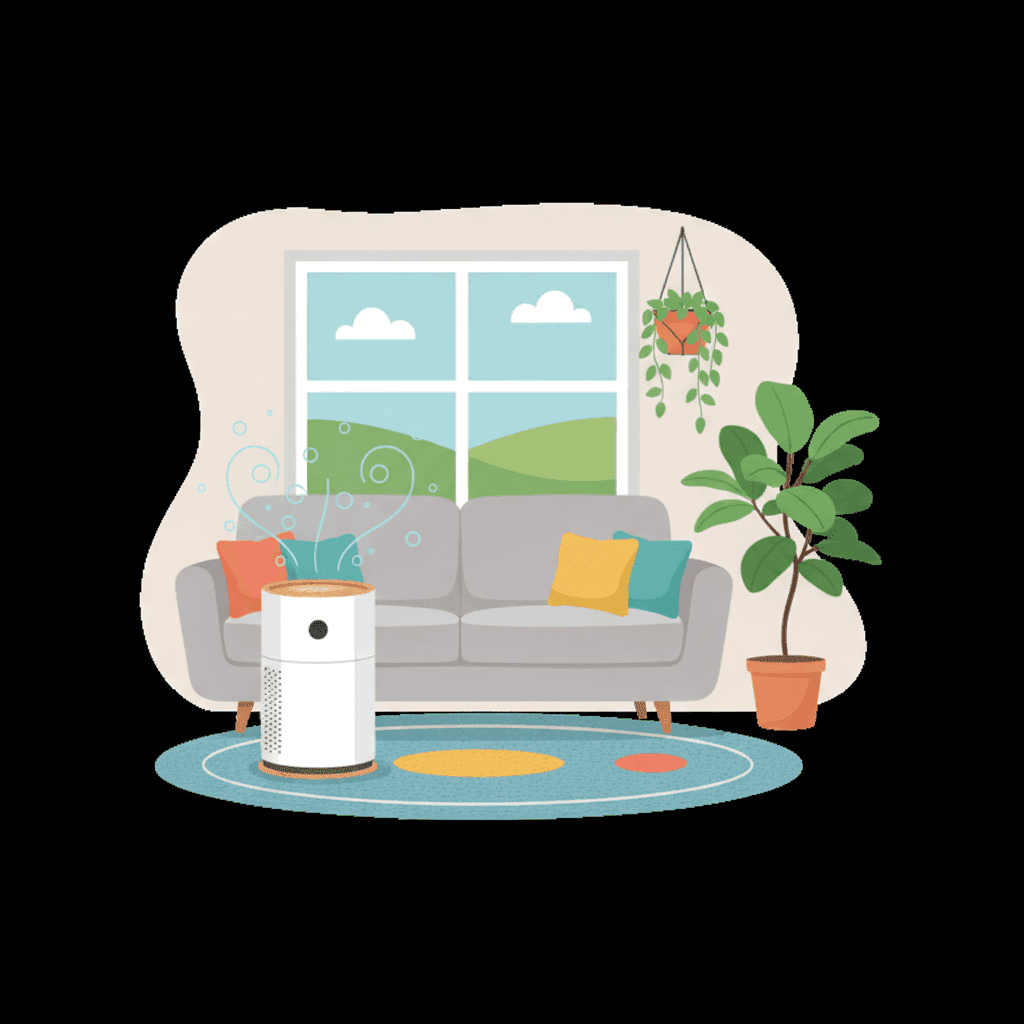
Air purifiers are trending in vacation rentals. Pure marketing, some will say. But if your apartment is in a city with pollution, near a highway, or you host many guests with allergies, they can make the difference between a 5-star review and a complaint about a "strange smell." In this guide, I tell you when they are worth it, which models to buy, how much you'll spend, and common mistakes.
What is an air purifier (and what it doesn't do)
An air purifier is a device that filters the air in a room: particles, dust, pollen, smoke, odors, and some allergens. Good ones have a HEPA filter (traps particles smaller than 0.3 microns) and an activated carbon filter (absorbs odors and VOCs).
What an air purifier does:
- Reduces dust, pollen, and mites in suspension
- Absorbs odors (food, residual tobacco, light humidity)
- Helps with allergies and asthma
- Improves the "clean air" feeling upon entry
What it doesn't do:
- It doesn't eliminate mold from walls (that's another issue, see the moisture and mold guide)
- It doesn't replace ventilation
- It doesn't eliminate viruses 100% (although HEPA filters help)
- It doesn't fix a floor that smells bad due to structural problems
An air purifier is a complement, not a miracle. If your apartment smells bad, first fix the cause. The purifier comes afterward.
When is it worth installing?
Not all apartments need it. These are the cases where it makes sense:
1. Apartments in highly polluted cities
Madrid city center, Barcelona Eixample, areas near M-30, Gran Vía, etc. If opening the window brings noise and fumes, an air purifier helps make indoor air breathable without constant ventilation.
2. Pet-friendly rentals
If you accept pets (see the pet-friendly rental guide), an activated carbon purifier removes suspended hair and odors lingering between stays. Saves complaints from allergy-prone guests.
3. Apartments with humidity or near the sea
Coastal areas, ground floors, renovated basements. The heavy air, the "closed smell" that appears when the apartment has been empty for days, is noticeable immediately upon entry. Plugging in a purifier 30 minutes before check-in changes the first impression.
4. Target audience with allergies or small children
If you position yourself for families, details matter. "HEPA air purifier in the master bedroom" in your listing adds points.
5. Rural areas with high pollen
Country houses, cottages in the countryside. In spring, pollen can ruin the stay for allergy sufferers. A purifier saves the reservation.
When NOT to bother
- Large, well-ventilated apartments in clean areas
- Very short stays (1-2 nights) where guests won't notice
- Apartments where the real problem is other issues (mold, tobacco smell, poor cleaning)
Types of purifiers and what to buy
| Type | Price | Ideal use | Notes |
|---|---|---|---|
| Basic HEPA | €60-120 | Studios, small bedrooms | Covers up to 20 m² |
| HEPA + activated carbon | €150-300 | Living rooms, medium apartments | Most recommended |
| With ionizer | €200-400 | Polluted areas | Beware of ozone |
| Smart (WiFi, app) | €300-600 | Remote management | Useful if you have multiple properties |
Brands that work
- Xiaomi Smart Air Purifier 4: €130-160. Great quality-price ratio. HEPA + carbon, app, quiet. My default recommendation.
- Levoit Core 300: €90-110. Quiet, H13 HEPA filter, ideal for bedroom.
- Philips Series 800/2000: €150-250. Solid brand, durable filters.
- Dyson Purifier Cool: €500-700. Nice design with fan, but expensive for what it offers.
What to look for before buying
- CADR (Clean Air Delivery Rate): higher is better. For 25 m², look for at least 250 m³/h.
- Noise: less than 30 dB in night mode. Otherwise, guests will turn it off and lose filtration.
- Filter costs: between €20 and €60. Changed every 6-12 months. Include in your budget.
- Power consumption: 20-50W. Not a problem, but running 24/7 costs about €5-10 extra per year.
Actual costs: purchase, maintenance, and electricity
Breakdown for a 60-70 m² apartment with two purifiers (living room and bedroom):
| Item | Cost |
|---|---|
| 2 Xiaomi purifiers | €260-320 |
| Replacement filters (year 1) | €60-80 |
| Annual electricity cost | €15-25 |
| Total first year | €335-425 |
| Subsequent years | €75-105/year |
It's not a fortune. Compared to the amenities that do increase the price, a purifier pays for itself if it prevents 1 or 2 negative reviews per year.
How to integrate it into your operations
Placement
- Living room near the window or passage area
- Main bedroom, away from the bed (to reduce noise) but not in a blocked corner
- NOT behind furniture or on the floor against the wall
Use between stays
Turn it on high during cleaning and leave it for 2-3 hours afterward. Eliminates odors from cleaning products, dust kicked up, and the "empty floor" smell.
Instructions for guests
Include it in the welcome manual. Explain:
- How to turn it on and off
- Quiet mode for sleeping
- Not to cover it with clothes or blankets
Maintenance
- Clean pre-filter every 2-3 months (vacuum)
- Change HEPA + carbon filter every 6-12 months depending on use
- Check sensors annually
Add this to your preventive maintenance calendar and forget about it.
Common mistakes
- Buying the cheapest on Amazon without a real HEPA filter. Many €40-50 devices are fans with perfume. They filter nothing.
- Putting a huge one in a 15 m² living room. Oversizing is expensive and makes unnecessary noise.
- Never changing filters. Saturated filter = purifier that pollutes the air. Worse than not having it.
- Aggressive ionizers. Some generate ozone, which is toxic. Avoid or disable the function.
- Advertising as "antivirus" or "anti-COVID". Beware of misleading advertising. Just say what it does: filters particles and odors.
- Turning it on without explaining to guests. If they don't know what it is, they'll unplug it because "it makes noise".
Does it really improve reviews?
Honestly: it's not a decisive factor. But it contributes overall. Guests rarely write "5 stars because of the purifier," but they do notice when the air is clean upon entry. This translates into phrases like "the apartment smelled wonderful" or "very clean and well-maintained," which boost your ranking.
If you have a premium apartment, families, or sensitive guests (allergies, asthma), it's a detail that reinforces your positioning. If your apartment is budget and basic, spend money on other things first.
How Autoregistro fits in
While considering purifiers, filters, and amenities, there's an obligation that can't be solved by buying things on Amazon: registering each guest in SES Hospedajes within 24 hours. Autoregistro automates this. The guest fills out a form from their phone before arrival, and the data is sent automatically to the Ministry's platform. €1 per month per property, less than a coffee. One less problem while you focus on the rest.
Ready to automate your guest registration?
Create your account and start streamlining SES Hospedajes compliance for your Spanish rentals.
Get started