Noise sensors in vacation rentals: how they work, how much they cost, and whether they are worth it
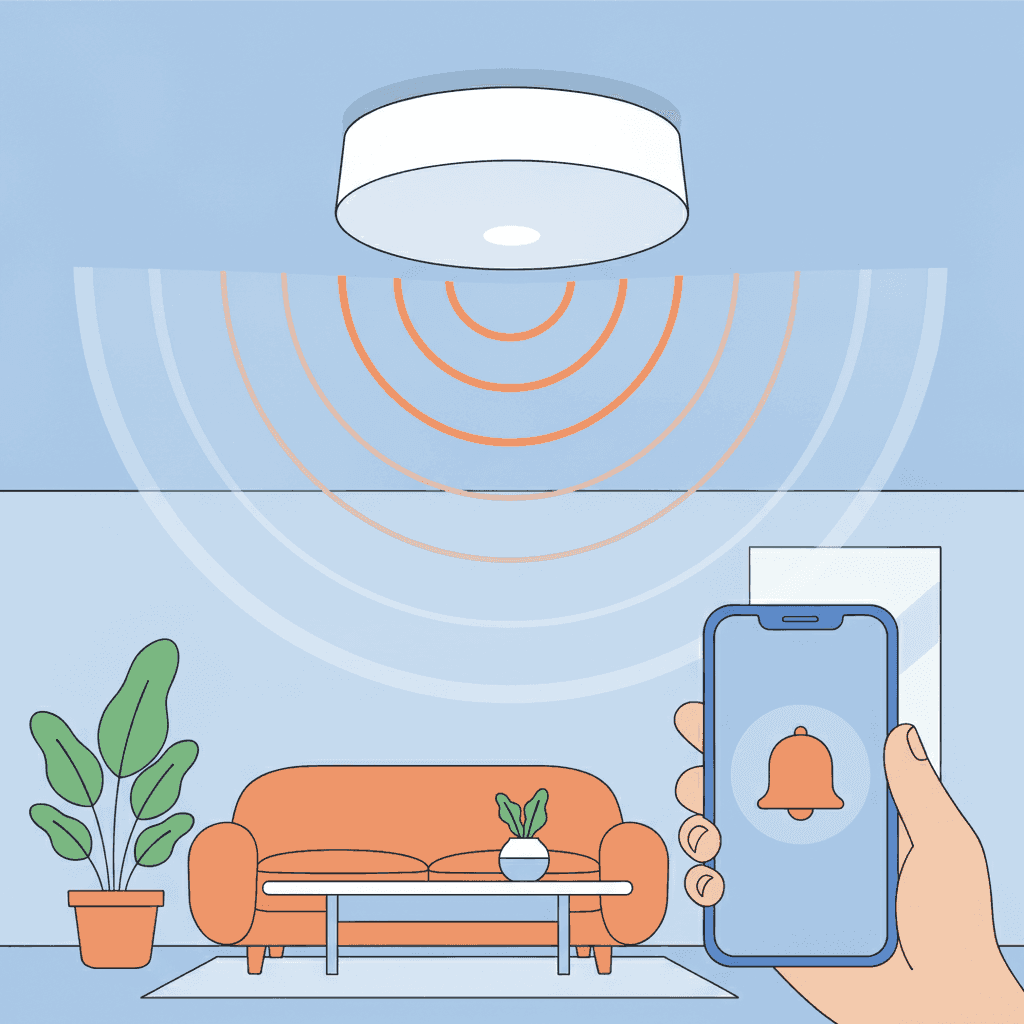
If you rent out a vacation home in Spain, noise is probably your biggest nightmare. A party at 2 a.m. can lead to a neighbor complaint, a fine, a bad review, and even the loss of your license. Noise sensors promise to alert you before things get out of control, without recording conversations or invading your guests' privacy. In this post, we explain how they actually work, what brands are available, how much they cost, what Spanish law says, and whether the expense is justified.
What is a noise sensor (and what it is NOT)
A noise sensor is a device that measures decibel levels in a room and alerts you when a threshold is exceeded for a certain period. End of story.
It does not record audio. It does not listen to conversations. It does not identify voices. It only measures volume.
This is important for two reasons:
- Legality: recording audio in a rented property is illegal in Spain without explicit consent. A sensor that only measures decibels does not infringe the LOPD or GDPR.
- Guest trust: guests are more accepting of a noise sensor than a camera or microphone. They feel their privacy is protected.
If a device records audio even temporarily, it is no longer a noise sensor: it becomes a listening device. And that can lead to serious legal issues.
How they work in practice
Most sensors follow the same scheme:
- They connect to the home's WiFi.
- They continuously measure decibel levels.
- When a threshold (e.g., 75 dB) is exceeded for X minutes, an alert is triggered.
- You receive a notification on your phone.
- Some systems automatically send an SMS or email to the guest warning them.
The interesting part is step 5. Properly configured, the system manages 90% of alerts without your intervention. The guest receives a message like: "We have detected a high noise level. Please lower it to avoid disturbing neighbors." And it usually works.
Typical thresholds per room
| Room | Normal level | Alert threshold |
|---|---|---|
| Living room / dining area | 50-60 dB | 75-80 dB |
| Bedroom (night) | 30-40 dB | 60-65 dB |
| Outside / terrace | 55-65 dB | 70-75 dB |
Thresholds are adjusted based on time of day. During the day, you can allow 80 dB; at night, lower to 60 dB. Normal conversation is around 60 dB, a party starts at 80 dB.
Most used brands in Spain
There aren't many options, but those available are well differentiated:
Minut
Probably the most popular among European owners. Swedish, round, white, attaches to the ceiling. Measures noise, temperature, humidity, and movement. Costs about 130-150 euros for the device and around 9 euros per month per sensor with subscription if you want all features.
NoiseAware
American, very focused on vacation rentals. Has indoor and outdoor versions. The device costs around 100 euros and the subscription about 100 dollars per year.
Roomonitor
Spanish. Designed for the domestic market, with integration with local platforms and support in Spanish. Similar prices, with a monthly subscription.
Alexa / Echo with routines
Not a professional noise sensor, but some owners use Echo with sound detection routines. It's a patch and not recommended for this purpose: it does not measure real decibel levels and its reliability is low.
How much does it cost to install? Real numbers
For a 2-bedroom apartment with sensors in the living room and outside:
| Concept | Initial cost | Monthly cost |
|---|---|---|
| 2 Minut sensors | 280 euros | - |
| Subscription for 2 sensors | - | 18 euros |
| DIY installation | 0 euros | - |
| Total first year | 280 euros | 216 euros |
| Total from second year onward | - | 216 euros/year |
Approximately 500 euros the first year and 216 euros from the second. For a property earning 15,000-25,000 euros annually, this represents about 1-2% of income.
Is it worth it? When yes and when no
When it SURELY is worth it
- Apartments in buildings with neighbors. A single complaint can end your rental (see our guide on how to avoid conflicts with neighbors).
- Areas with strict night noise regulations (Barcelona, Madrid city center, Palma, San Sebastián).
- Large properties attracting groups. If your apartment has 3+ rooms, the risk of parties increases.
- If you do self check-in and are not nearby to monitor.
- If you've had a previous incident. The second one could cost you your license.
When it is NOT worth it
- Isolated rural house without neighbors within 500 meters.
- Studios for 1-2 people in quiet residential areas.
- If you live in the same building and hear everything from your home.
What the law says in Spain
Here, you need to be careful. Summarized:
- It is legal to install sensors that only measure decibels, without recording audio.
- You must inform the guest that a sensor exists. Usually, it's included in the listing, in the contract (if any), and in the welcome manual.
- You cannot place them in bedrooms or bathrooms. Only in common areas (living room, hallway, outside).
- The device cannot record audio at any time, not even temporarily for analysis.
Airbnb and Booking specifically require that the presence of noise sensors be declared in the listing. If you don't and a guest finds out, your account could be suspended.
How to communicate this to guests without alarming them
Tone matters. It's not the same to say "there's a sensor watching you" than "there's a device that protects the harmony with neighbors."
Example text for your listing and welcome manual:
"This property has a noise sensor in the living room that measures decibel levels to ensure the neighbors' rest. The device does not record audio or conversations, it only measures volume. If the level exceeds the allowed limit for a prolonged period, you will receive an automatic notification on your mobile."
Transparent, clear, without threats. 95% of guests accept it without issue.
Common mistakes when installing sensors
- Placing them in bedrooms. Illegal and problematic. Only in common areas.
- Thresholds set too low. If alerts trigger during normal conversations, you'll get alerts all day and end up ignoring them.
- Not informing the guest. Could cost you your platform account.
- No response protocol. Receiving an alert at 3 a.m. and not knowing what to do is worse than not having a sensor.
- Relying 100% on automatic alerts. Sometimes you need to call or go.
Recommended protocol when an alert is triggered
- First alert: the system sends an automatic message to the guest. Wait 15 minutes.
- If it persists: personal message via WhatsApp reminding the rules.
- If still ongoing: phone call.
- If no answer and it's late: go or send someone.
- If a party is confirmed: cancel the stay and, if necessary, call the police.
Document everything. Screenshots, times, recorded decibel levels. If there's a claim or a bad review later, you'll have evidence.
How Autoregistro fits in
Noise sensors help you control what happens inside the apartment. Autoregistro helps you control what happens beforehand: the registration of travelers in SES Hospedajes.
It works simply: guests fill out an online form with their details, and Autoregistro automatically sends them to SES Hospedajes. You do nothing. 1 euro per month per property, less than a coffee. If you have multiple properties, see how to manage registration with multiple properties.
Frequently Asked Questions
Do noise sensors record conversations?
No. Devices legally in Spain only measure decibels, they do not record audio. If a device records even temporarily, it is not legal for this purpose.
Do I have to tell the guest?
Yes, it is mandatory. It must be mentioned in the listing (Airbnb and Booking require it), in the contract if you have one, and in the welcome manual. Transparency prevents issues.
Can I place it in the bedroom?
No. Sensors can only be installed in common areas (living room, hallway, terrace). Bedrooms and bathrooms are prohibited, even if they do not record audio.
Does normal WiFi work or do I need special installation?
Most connect to the home WiFi without issue. Just ensure the signal reaches well where you install it. If your WiFi is weak, improve that first.
What if the guest unplugs or covers it?
Sensors detect tampering and notify you. If a guest deliberately disconnects it, you already have grounds to consider it a violation of house rules and, if necessary, cancel the stay.
Ready to automate your guest registration?
Create your account and start streamlining SES Hospedajes compliance for your Spanish rentals.
Get started