Vacation Rental in Spain as a Non-Resident: Taxes, Obligations, and Tax Traps

If you own a property in Spain but don't reside in the country, renting it to tourists has very different tax implications than for a resident. The tax you pay, the expenses you can deduct, and how you file change radically. This guide explains the non-resident tax regime, differences with income tax, double taxation treaties, and obligations you can't ignore.
Every year, thousands of foreign property owners — British, German, French, Nordic — rent their Spanish coastal properties to tourists. Many don't know they have tax obligations in Spain regardless of where they pay their main taxes. And the consequences of ignoring them are the same as for a resident.
Resident or Non-Resident for Tax Purposes?
You're a tax resident in Spain if you meet any of these criteria:
- You stay more than 183 days per year in Spanish territory
- Your center of economic interests is in Spain
- Your spouse and minor children reside in Spain (presumption, can be rebutted)
If you don't meet any, you're a non-resident taxpayer and pay the Non-Resident Income Tax (IRNR) instead of income tax (IRPF).
IRNR: How It Works
Tax Rate
| Owner's residence | IRNR rate |
|---|---|
| EU, Iceland, or Norway resident | 19% |
| Resident of any other country | 24% |
Compare this with IRPF, where rental income is added to your general base and taxed at the marginal rate (19% – 47%). For moderate income, IRNR can be more favorable; for high income, also.
Deductible Expenses: The Big Difference
Here's the main trap:
- EU/EEA residents: can deduct expenses directly related to earning the income (same expenses as a resident). Check our deductible expenses guide.
- Non-residents outside the EU: cannot deduct any expenses. They're taxed on gross income at 24%.
This means a British owner (post-Brexit, outside the EU) who earns €20,000 with €8,000 in expenses pays:
- As non-EU non-resident: €20,000 × 24% = €4,800
- If they could deduct expenses (EU): (€20,000 - €8,000) × 19% = €2,280
The difference is brutal. Some double taxation treaties can mitigate this, but not all.
Imputed Income for Non-Rented Days
Days when the property isn't rented generate imputed income:
- EU/EEA residents: 1.1% of cadastral value (or 2% if not revised in the last 10 years), proportional to non-rented days, at 19%
- Non-EU non-residents: same calculation but at 24%
This imputed income is payable even if the property sits empty. Many non-residents don't know about it.
How to File: Form 210
Non-residents file using form 210 with the Spanish Tax Agency. You must submit:
- One return per income type (rental, imputed)
- Quarterly for rental income (within the first 20 days of the month following the quarter)
- Annually for imputed income (before December 31 of the following year)
Tax Representative
If you reside outside the EU, you're required to designate a tax representative in Spain (individual or entity domiciled in Spain). EU residents don't have this obligation, but it's recommended.
Double Taxation Treaties
Spain has double taxation treaties with over 90 countries. These treaties determine:
- Which country has the right to tax real estate income (generally, the country where the property is located — Spain)
- How to avoid paying twice on the same income
- Elimination methods: exemption or deduction
In most treaties, income from properties located in Spain is taxed in Spain. The owner's country of residence must eliminate double taxation, usually by allowing a deduction for tax paid in Spain.
Example: Owner Resident in Germany
- Earns €15,000 from vacation rental in Spain
- Deductible expenses: €5,000
- IRNR in Spain: (€15,000 - €5,000) × 19% = €1,900 (EU resident, can deduct expenses)
- In Germany: declares €15,000 but deducts the €1,900 paid in Spain
Example: Owner Resident in the UK
- Earns €15,000 from vacation rental in Spain
- IRNR in Spain: €15,000 × 24% = €3,600 (non-EU, cannot deduct expenses)
- In UK: declares income but deducts the €3,600 paid in Spain
Obligations Beyond Tax
Being a non-resident doesn't exempt you from operational obligations:
Tourist License
You need the same responsible declaration and registration number as a resident. The process can be more complex if you don't have a NIE or local representative.
Guest Registration
The obligation to register guests with SES Hospedajes is identical. It doesn't matter where you reside — if you operate a vacation rental in Spain, you must report each guest's data.
National Registration Number
Since 2025, you need the national registration number to list on platforms, just like any resident owner.
Remote Management
Many non-residents hire a local management company. This adds an expense (deductible for EU residents) but enormously simplifies compliance with all obligations. Check our guide on management companies.
Common Non-Resident Mistakes
- Not filing in Spain: "I already pay taxes in my country" is not an excuse. Spain taxes properties located in its territory.
- Not paying imputed income: even months without rentals generate a tax obligation.
- Not designating a tax representative (non-EU): it's mandatory and its absence can block procedures.
- Deducting expenses as non-EU: not permitted under standard IRNR.
- Ignoring form 210: quarterly filing is mandatory, not optional.
How Autoregistro Fits In
For a non-resident owner, Autoregistro solves one of the hardest obligations to manage remotely: guest registration. The guest completes their data online before arrival, reports are sent automatically to SES Hospedajes, and signatures are archived — without needing to be physically in Spain. It's especially useful if you manage the property through a third party, as the process is completely digital.
Related posts
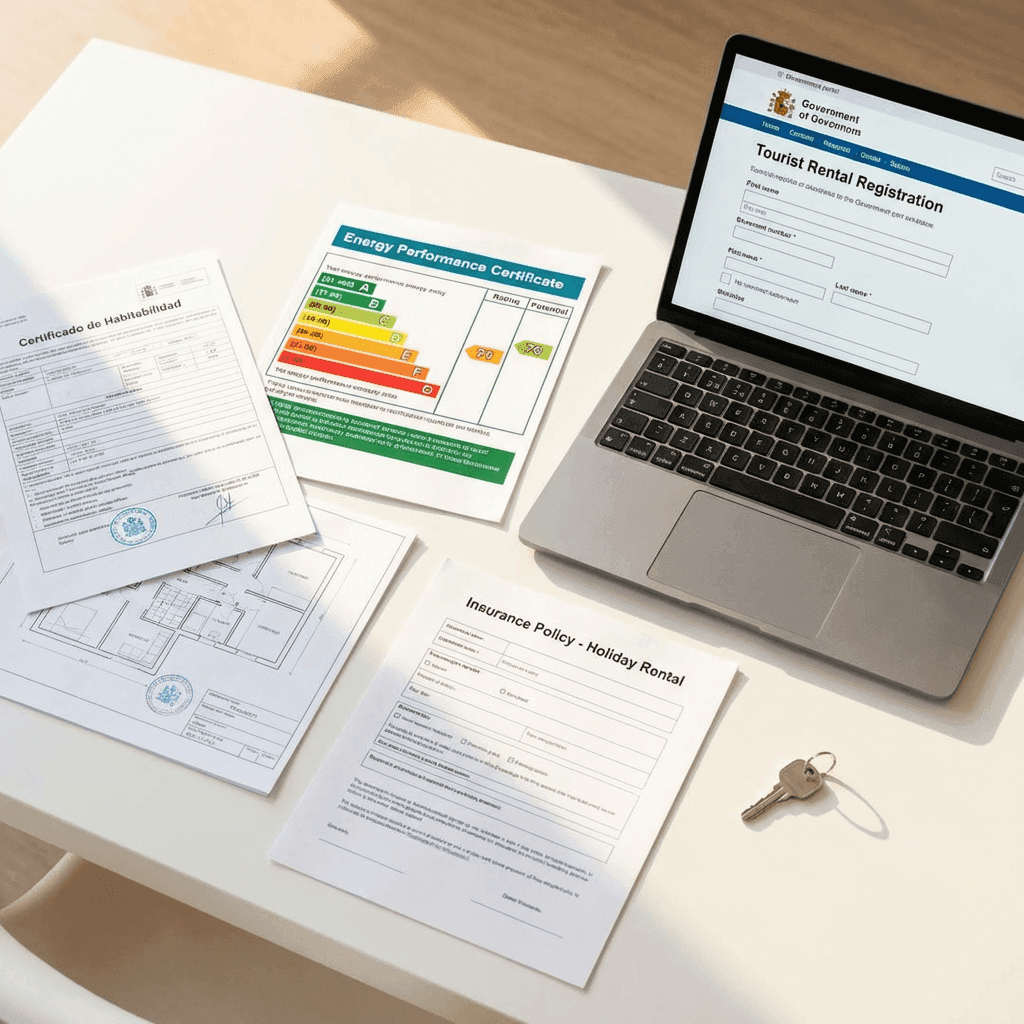
How to register your tourist rental property in Spain: step-by-step guide
The complete process to register your property as a vacation rental in Spain: prior documentation, responsible declaration, national registration number, SES Hospedajes setup, and platform listing.

Vacation rental taxes in Spain: income tax, VAT, and deductible expenses
Complete guide to how vacation rental income is taxed in Spain: which taxes apply, what expenses you can deduct, how part-year rental affects your return, and what changes if you're a non-resident.

What Expenses Can You Deduct from Vacation Rental Income in Spain?
Complete list of tax-deductible expenses for vacation rental owners in Spain: utilities, cleaning, repairs, insurance, depreciation, platform commissions, and how to calculate the deductible proportion.

What Happens If You Don't Declare Vacation Rental Income in Spain?
Real consequences of not declaring vacation rental income to the Spanish tax authority: how they detect it, what penalties apply, form 179, and how to regularize your tax situation before it's too late.
Ready to automate your guest registration?
Create your account and start streamlining SES Hospedajes compliance for your Spanish rentals.
Get started