Smoke and Carbon Monoxide Detectors in Vacation Homes: Regulations, Models, and How to Install Them Properly
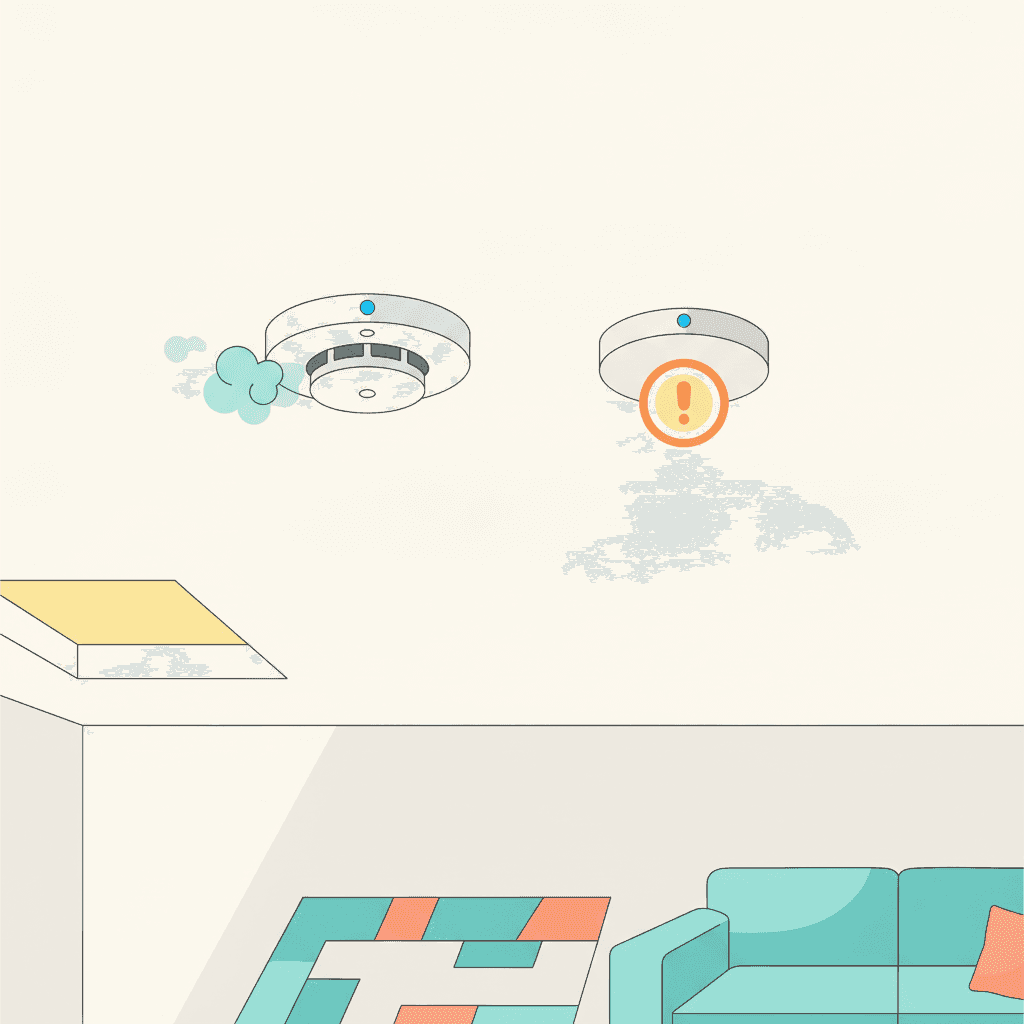
A smoke detector costs 15 euros. A carbon monoxide detector, about 30. Total: less than what you spend on dinner. But they can save your guests' lives and, in the process, prevent a lawsuit that could shut down your business forever. In this post, I’ll tell you what Spanish regulations say, which detectors you need depending on your property, where to place them, and how to maintain them without going crazy.
Why does this matter (more than you think)
In Spain, between 50 and 100 people die each year from carbon monoxide poisoning. Most in homes with poorly maintained boilers, old gas water heaters, or wood stoves. And many domestic fires start in the early morning hours, when people are asleep.
In a vacation home, the risk multiplies: your guests don’t know the house, they don’t know where the electrical panel is, they don’t know if the boiler makes strange noises. They cook drunk at 3 a.m. They leave candles burning. They smoke in bed even if you’ve put "no smoking" in the listing.
You’re not there. The detector is.
If something happens and you didn’t have detectors, you’re not only civilly liable. You could face criminal liability for negligence. And your insurance may refuse to cover you if you didn’t comply with basic regulations.
What does the regulation say in Spain
This is where things get confusing. There is no single national law requiring detectors in all vacation homes. It depends on:
- The autonomous community (some explicitly require them)
- The Technical Building Code (CTE) for new constructions or renovations
- Gas installation regulations (RITE, RIGAS)
- Municipal ordinances
Communities that explicitly require or recommend them
| Community | Smoke Detector | CO Detector |
|---|---|---|
| Catalonia | Recommended | Mandatory if gas is present |
| Andalusia | Recommended | Recommended |
| Balearic Islands | Mandatory in higher categories | Mandatory if combustion is present |
| Canary Islands | Recommended | Recommended |
| Madrid | Not mandatory | Not mandatory |
| Valencia | Recommended | Recommended |
| Basque Country | Mandatory for new licenses | Mandatory if gas is present |
Regulations are constantly changing. Check what applies in your area in our vacation rental requirements by autonomous community.
The practical rule
Even if your community doesn’t explicitly require it, install them. Always. For three reasons:
- They cost little.
- Insurance companies value them (and sometimes require them).
- If something happens, it makes the difference between "I did everything possible" and "it was negligence".
Types of detectors: what each one does
There are two you definitely need (depending on your case) and a third optional.
Smoke detector
Detects combustion particles in the air. It sounds when there’s fire or abundant smoke. There are two types:
- Ionization: faster with active flames. Cheaper. But banned in many countries for containing radioactive material.
- Photoelectric (optical): detect dense smoke. Slower with dry fire but better with slow fires (mattresses, sofas). These are recommended today.
Always buy photoelectric detectors. Standard EN 14604.
Carbon monoxide (CO) detector
Detects CO, a colorless, odorless gas produced by incomplete combustion. Gas boilers, water heaters, wood stoves, braziers, cars in adjacent garages.
It’s morally obligatory if you have:
- Gas boiler or water heater
- Fireplace or wood stove
- Garage connected to the house
- Gas stove
Standard EN 50291.
Combined smoke + CO detector
A single device that performs both functions. More expensive (about 50-60 euros) but saves you from installing two. Good option if space is limited or you want to simplify.
Natural gas or butane detector
Optional but highly recommended if you have a gas stove or boiler. Detects leaks before combustion occurs. About 25-40 euros.
How many do you need and where to place them
This is where most people go wrong. "I’ll put one in the hallway and that’s it". No.
Smoke detectors: installation rules
- One per floor at minimum.
- One in each bedroom (or in the hallway just outside if bedrooms are close).
- On the ceiling, in the center of the room. If not possible, at least 30 cm from the wall.
- NOT in the kitchen (false positives will ruin your reviews). Place it in the nearby hallway.
- NOT in the bathroom (steam triggers them).
- NOT near ceiling fans, exhaust fans, or air vents.
Real example: an 80 m² apartment with 2 bedrooms: 1 in the hallway between bedrooms, 1 in the living room. Total: 2 detectors. Cost: 30 euros.
CO detectors: installation rules
- One near each combustion appliance (boiler, water heater, stove).
- One in each bedroom or nearby (1-3 meters from the bed).
- At breathing height (not on the ceiling, not on the floor). About 1.5 to 1.7 meters from the ground is ideal, or follow manufacturer instructions.
- NOT directly above the boiler (gases rise vertically, CO disperses).
- NOT in areas with high humidity or drafts.
How much does it cost to do it right
Here’s a real breakdown for a standard property:
| Item | Unit Price | Typical Quantity | Total |
|---|---|---|---|
| Photoelectric smoke detector | 15-25 € | 2 | 30-50 € |
| CO detector | 25-40 € | 1-2 | 25-80 € |
| Combo smoke + CO detector | 50-70 € | 1-2 | 50-140 € |
| Spare batteries (yearly) | 3-5 € | 3-4 | 12-20 € |
| Installation (if hired) | 20-40 € /device | 3 | 60-120 € |
Realistic total cost: between 60 and 200 euros per unit. Device lifespan: 7-10 years. Amortization: absurd.
Brands and models that work well
Without advertising, these are the most recommended by firefighters and insurers:
- Kidde: wide range, good combo smoke + CO.
- FireAngel: high reliability, 10-year sealed battery (never change it).
- Nest Protect (Google): expensive but with app, alerts on your phone. Good if managing multiple floors.
- Ei Electronics: professional range, widely used in new constructions.
- Meross / Aqara: cheap smart home options, app alerts.
For vacation homes, I recommend models with 10-year sealed batteries. No need to change batteries every year (the classic beep at 3 a.m. that ruins reviews). They cost a bit more but you forget about it.
Connected or not detectors?
Wi-Fi or Zigbee detectors notify your phone when they go off. Useful if:
- You manage the property remotely.
- You have multiple floors.
- You want to know if the guest has "disabled" the detector (spoiler: they do).
Disadvantage: they depend on Wi-Fi and app. If internet goes down, you won’t know (but the detector still beeps in the apartment, that doesn’t fail).
If your property has good connectivity, they’re worth it. Complement with our Wi-Fi guide for your vacation rental.
Maintenance: how not to ruin them
Monthly
- Press the test button. It should sound loudly. If not, change the battery (or the detector if sealed).
Every 6 months
- Vacuum the detector externally. Dust causes failures or false alarms.
Annually
- Change the battery if it’s not 10-year sealed.
- Check manufacturing date. CO detectors expire (usually after 5-7 years). Smoke detectors after 10.
Each stay
- Visually verify they are in place and the LED is blinking. Many guests remove them ("the beeping annoys me") or cover them with plastic wrap.
Include this check in your preventive maintenance protocol.
Common mistakes that will cost you
- Placing it in the kitchen. Guaranteed false positives. 3-star review: "the detector kept beeping when we cooked".
- Using a standard battery instead of 10-year. One day it runs out and the warning beep sounds at 4 a.m. 1-star review.
- Not testing before each stay. The previous guest covered it with tape and you forgot.
- Expired detector. Yes, they have an expiration date. An 8-year CO detector might not detect anything.
- Buying the cheapest from a bazaar. Without EN certification. In case of incident, your insurance washes its hands.
- Not informing the guest. Include in your welcome manual: where they are, what sound they make, what to do if they sound.
And insurance, what’s its role here?
A lot. If your liability or multi-risk policy covers fire or poisoning damages, it almost always requires the property to meet safety standards. If you didn’t have detectors and there were victims, they might refuse to pay.
More details in our insurance guide for your vacation rental.
How Autoregistro fits in
Autoregistro doesn’t install detectors (hopefully), but it takes one of the most cumbersome operational tasks off your plate: the traveler registration in SES Hospedajes.
It’s simple: for 1 euro per month per property (less than a coffee), your guests fill out a form with their details and we send it automatically to SES. You focus on what matters, like making sure detectors are in place and working.
Frequently Asked Questions
Is it mandatory to have a smoke detector in my vacation home?
It depends on your autonomous community. In Balearic Islands and Basque Country, it’s mandatory in many cases. In Madrid or Andalusia, it’s not explicitly required. But morally and for common sense (and your insurance), yes.
Can I install them myself or do I need a professional?
Smoke and CO detectors are easy to install: screw them to the ceiling or wall, powered by battery. Anyone can do it. Only centralized wired systems require an electrician.
What if a guest disables the detector?
First, always inform in your welcome manual that tampering with detectors is prohibited. Second, include a clause in your reservation conditions about penalties. Third, always check between stays.
Are connected Wi-Fi detectors worth it?
If you manage multiple properties or live far away, yes. They alert your phone and you know if someone manipulates them. If you only have one property and live nearby, regular ones are more than enough.
When do detectors expire?
Smoke detectors: between 8 and 10 years. CO detectors: between 5 and 7 years. Check the label on the back. Set a reminder on your calendar. It’s one of those things that get forgotten and shouldn’t.
Related posts

Ready to automate your guest registration?
Create your account and start streamlining SES Hospedajes compliance for your Spanish rentals.
Get started