Guests Who Throw Parties in Your Vacation Rental: How to Detect, Stop, and Prevent Them
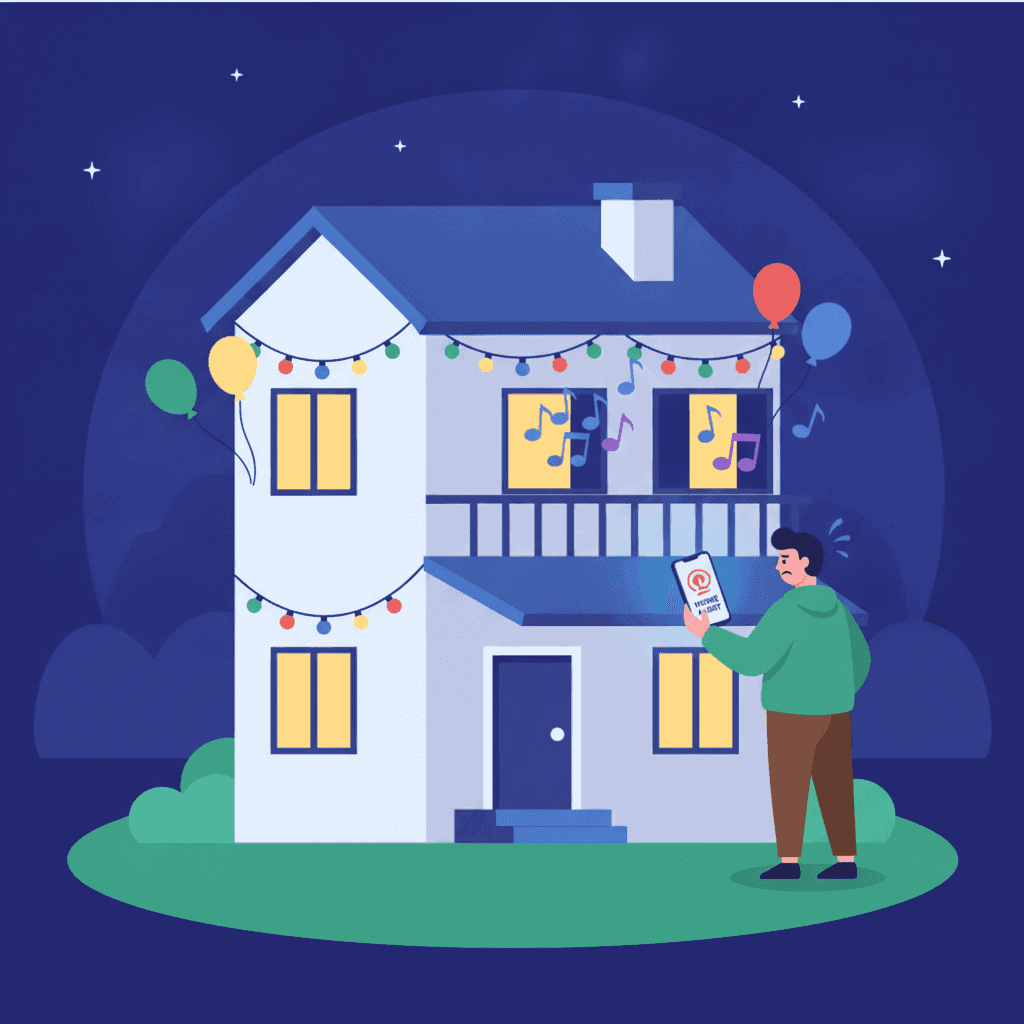
Parties in vacation rentals are the number one nightmare for any owner: angry neighbors, police at the door, damages worth thousands of euros, and municipal fines that can reach 3,000 euros. I explain how to detect them early, what to do when they are already happening, and most importantly, how to prevent them from the moment of booking.
Why you should worry (more than you think)
A party in your vacation home is not just noise. It's a cocktail of problems that can cost you a lot:
- Material damages: between 500 and 5,000 euros on average (broken furniture, stains, glass, appliances).
- Municipal fines: for noise, they can range from 300 to 3,000 euros depending on local regulations.
- Neighbor complaints: which can lead to formal reports to the community or city hall.
- Loss of tourist license: in cities like Barcelona or Madrid, repeated complaints can cost you your license.
- Negative reviews: guests destroy your apartment and leave you with 3 stars.
- Expulsion from platforms: Airbnb and Booking suspend listings with repeated complaints.
And the worst part: almost all parties happen in homes where the owner did not put up a single barrier. They could have been avoided.
Guest profiles that throw parties (real patterns)
Not all guests have the same risk. These are the patterns that recur in 80% of cases:
Last-minute weekend bookings
Reservation made on Thursday or Friday for Saturday, in a property near entertainment areas. Huge red flag.
Same-age, same-sex groups
8 guys aged 22 going on a "getaway". They are not visiting museums.
Local or very nearby city bookings
If you live in Madrid and someone from Madrid books, ask yourself why. It’s almost always a party, a farewell, or something they don’t want to do at home.
Newly created profile, no reviews
Account created that same week, no photo, no verification. Not impossible to be legitimate, but it requires more filters.
Special dates
New Year’s Eve, Halloween, San Juan, Fallas, San Fermín, Carnival. On these dates, any suspicious booking has double the risk.
Suspicious questions before booking
"Do neighbors complain about noise?", "Until what time can I be on the terrace?", "Are there cameras inside?". Red, red, red.
How to filter bookings before it’s too late
The best party is the one that never happens. And that is achieved at the booking stage.
Clear and visible rules in the listing
Write in uppercase and in multiple languages: "NO parties, events, or visits allowed. Maximum X people accommodated. Any violation will result in immediate eviction without refund."
It seems obvious, but many owners hide this in house rules that no one reads.
Actual deposit (not Airbnb’s)
Airbnb has a "security deposit" system that is practically impossible to charge. For real protection, collect a deposit outside via Swikly, Chekin, or similar. With 300-500 euros held on the card, many guests discard the idea of throwing a party.
I explain how it works in how to manage damages and deposits and in deposits and guarantees.
Automatic age filters
Airbnb allows (in some cases) filtering reservations from locals under 25 without reviews. Enable it if your property is in entertainment zones.
Ask for the reason of the trip
A simple message before accepting: "What is the purpose of your trip? How many of you exactly?". Evasive or incoherent answers are a clear sign.
Mandatory registration of all guests
If all guests must provide their ID for traveler registration (mandatory by law), someone planning a party with 20 people will think twice. I explain this in mandatory traveler registration.
How to detect an ongoing party
Sometimes, despite everything, the party happens. You need to detect it as early as possible.
Noise sensors
The only truly effective tool. Devices like NoiseAware or Minut measure decibels without recording audio (100% legal). When a threshold is exceeded for X minutes, they notify your phone.
Cost: 100-200 euros per device, plus a subscription of 10-20 euros per month. Details in noise sensors in vacation rentals.
WiFi device counter
Some routers (or apps like Fing) tell you how many devices are connected. If 4 people booked and 25 devices are connected, something’s off.
Occupancy sensors
Motion detectors in common areas that record abnormal activity (many people entering and leaving).
Exterior camera
A camera at the entrance (only outside, never inside) lets you see how many people enter. Be careful with AEPD regulations; I explain in outdoor video surveillance.
Neighbors as allies
Give them your number. A good neighbor who alerts you at 23:00 is worth more than 10 sensors. And yes, maintaining that relationship is important: how to avoid conflicts with neighbors in vacation rentals.
What to do when a party is already underway
The sensor sounds, or a neighbor calls you. What now?
Step 1: Call the guest (don’t go yourself)
Call first. "I am receiving noise complaints, I need you to lower the volume and remove the visitors immediately." Make it clear you know what’s happening.
Step 2: Document everything
Screenshots of sensor readings, messages with the guest, exact time of complaints, photos if you have them. You will need all this later.
Step 3: Go in person (with caution)
If the party continues, go to the apartment. Never alone, never at night without backup. Ideally with another person. Do not enter if prevented: that’s already grounds to cancel the reservation.
Step 4: Call the police
If they do not cooperate, call 091 or 092. Police can access, identify all present, and make a report. That report is gold for claiming damages, canceling the reservation, and reporting to the platform.
Step 5: Cancel the reservation
With evidence in hand, contact Airbnb/Booking. They are obliged to allow cancellation with a refund to the owner if there is a serious violation of rules.
Step 6: Claim damages
Inventory before/after with photos, repair estimate, claim to deposit or insurance. Be aware that without a real deposit, collecting damages is difficult. That’s why filtering beforehand is so important.
Prevention methods comparison
| Method | Cost | Effectiveness | Effort |
|---|---|---|---|
| Clear rules in listing | €0 | Low-medium | Low |
| Booking filters (age, no reviews) | €0 | Medium | Low |
| Actual deposit outside platform | 1-3% of booking | High | Low |
| Noise sensor | €100-200 + subscription | Very high | Medium |
| Exterior camera | €50-150 | Medium | Medium |
| WiFi device counter | €0-50 | Low-medium | Low |
| All guests registration | From €1/month | High | Low |
The ultimate trick: combine filters
Nobody uses just one method. Owners who never have parties combine:
- Clear and visible rules in the listing.
- External real deposit.
- Mandatory registration of all guests with ID.
- Noise sensor in the living room.
- Good relationship with neighbors (who alert you).
With this, throwing a party becomes so complicated that they simply choose another property.
Beware of interior cameras: in Spain, it is illegal to place cameras inside the rented property, even if they are off or you inform the guests. AEPD sanctions of up to €20,000. Do not do it.
What happens afterward: insurance and platforms
If your apartment is trashed, you have three ways to recover the money:
- External collected deposit: the fastest and most effective.
- Platform protection program: AirCover (Airbnb) covers up to 3 million, but requires extensive evidence and usually reimburses only part.
- Vacation rental insurance: if you have it. Details in what insurance you need.
And document everything from the first minute. Without photos, sensor readings, police report, there’s no valid claim.
How Autoregistro fits in
One of the best defenses against parties is that each guest knows they will be officially registered with their ID. This is the legal obligation in Spain since Royal Decree 933/2021.
Autoregistro automates this process: the guest receives a link, fills in their details and passports/DNIs of all staying, and that information is sent automatically to SES Hospedajes. All for €1 per month per property, less than a coffee.
An interesting side effect: when a guest sees they have to register their 8 friends with name, surname, and ID, many decide not to throw a party. And you comply with the law without spending more than five minutes.
Frequently Asked Questions
Can I explicitly prohibit parties in the contract?
Yes, and you should. Airbnb has done this globally since 2022, but it’s good to reinforce it in your house rules. Specify that "any gathering with unregistered persons" results in immediate cancellation.
Can I enter the apartment if I suspect a party?
Legally, during the stay, the guest has exclusive use rights. You cannot enter without permission unless in an emergency (water leak, fire, etc.). If they prevent you and there is a serious breach, call the police.
Are noise sensors legal in Spain?
Yes, as long as they measure decibels and do not record audio. You must notify in the listing and house rules. Commercial models like NoiseAware or Minut are designed specifically to comply with regulations.
How much can I charge for damages from a party?
Whatever you can prove with estimates and invoices: repairs, extra cleaning, lost nights due to cancellations, etc. Without documented proof, forget it.
Does Airbnb cover damages from a party?
AirCover covers up to 3 million dollars, but requires prior inventory, before-and-after photos, estimates, and communication within 14 days. In practice, they only cover part, and the process is lengthy.
Related posts
Ready to automate your guest registration?
Create your account and start streamlining SES Hospedajes compliance for your Spanish rentals.
Get started