Vacation rental security: smart locks, cameras, and what you can (and can't) do

Vacation rental security has two sides: protecting your property (from damage, parties, squatters) and protecting the guest (safe access, emergencies). Smart locks are now almost essential — they eliminate key problems, enable autonomous check-in, and give you remote access control. Exterior cameras are legal and useful, but interior ones are prohibited. And there's a clear line between legitimate security and invasive surveillance you cannot cross.
Security is one of those topics where many owners go to extremes: either they do nothing (and regret it when there's a problem) or they overdo it with cameras and sensors that invade guest privacy and generate negative reviews. The middle ground is simple: protect your property without making the guest feel watched.
Smart locks: the most profitable investment
If you can only make one security improvement, make it this one. A smart lock solves so many problems at once that it's hard to justify not having one.
What it solves
| Problem | How a smart lock solves it |
|---|---|
| Lost keys | No physical keys to lose |
| Unauthorized copies | Code changes with each guest |
| Mandatory in-person check-in | Guest enters alone with their code |
| Not knowing if guest has left | Last access log |
| Giving cleaning team access without keys | Temporary code for the team |
| Guest who doesn't return keys | Nothing to return |
Types of smart lock
| Type | Price | Installation | Best for |
|---|---|---|---|
| Numeric keypad (PIN code) | €80-200 | Easy (replaces cylinder) | Most properties |
| Bluetooth + app | €100-250 | Easy | Tech-savvy guests |
| Wifi with remote management | €150-350 | Medium | Managing multiple properties |
| Combined (code + app + card) | €200-400 | Medium | Maximum flexibility |
Popular brands in Spain
- Nuki: installs over existing lock (no door changes), app management, Airbnb integration
- Yale Linus: similar to Nuki, good platform integration
- Igloohome: PIN code without wifi (works offline), ideal if connection is poor
- TTLock: affordable, many options, app management
- August: good smart home integration, more expensive
Installation tips
- Verify compatibility with your current door and lock before buying
- Always have a physical backup key stored somewhere safe (trusted neighbor, exterior key safe)
- Batteries: most run on batteries. Change them every 6-12 months preventively. Some alert when low.
- Emergency code: set up a master code that doesn't change, in case technology fails
- Homeowners' association: verify there are no restrictions on modifying the exterior door
Cameras: what you CAN and CAN'T do
What's LEGAL
- Exterior cameras recording your property's entrance/facade (your property, not the public road)
- Cameras in common areas of the building (if the community approves)
- Noise sensors (measure decibels, don't record conversations)
- Occupancy sensors (detect number of people, don't identify)
What's ILLEGAL
- Interior cameras anywhere in the property (living room, bedrooms, bathroom) — NEVER
- Cameras recording public roads beyond what's strictly necessary to access your property
- Audio recording without consent (even outdoors)
- Hidden cameras — they must be visible and signposted
Legal obligations if you install cameras
- Information sign visible indicating the area is under video surveillance
- Registration with Spain's Data Protection Agency (AEPD) — or at least documented purpose
- Inform the guest in the listing description and house rules
- Limited retention of recordings (maximum 30 days, unless there's an incident)
- Restricted access — only you can view recordings
Important: Airbnb and Booking require you to declare any surveillance device in your listing. Not doing so can result in penalties or listing removal. Airbnb explicitly prohibits interior cameras and audio monitoring devices.
Noise sensors: the smart alternative
Noise sensors (like Minut, NoiseAware, or Roomonitor) are the best option for preventing parties without invading privacy:
- Measure decibels, don't record conversations
- Alert you when noise exceeds a threshold (e.g., above 75 dB for 15 minutes)
- Are legal because they don't capture conversation content
- Prevent problems with neighbors before they escalate
- Price: €100-200 for the device + €5-10/month subscription
Protection against parties
Unauthorized parties are one of an owner's biggest nightmares. Strategies:
Prevention
- Clear rules in the listing: "No parties or events allowed"
- Guest verification: Airbnb allows restricting bookings from under-25s without history
- Minimum stay on weekends: 2-3 night minimum reduces one-night party bookings
- Noise sensor: early warning before the party escalates
- Occupancy sensor: detects if there are more people than declared
Response
- Immediate message to guest when the sensor alerts
- If no response or doesn't stop: contact the platform for cancellation due to rule violation
- Document everything: exterior recordings, sensor alerts, messages sent
- Deposit: retain the security deposit if there's damage (how to manage deposits)
Guest safety
Security isn't just about protecting your property — it's also about protecting the guest:
Essentials
- Smoke detector in each room (mandatory in many regions)
- Fire extinguisher accessible (mandatory for vacation rentals in several regions)
- Basic first aid kit (band-aids, antiseptic, painkillers)
- Emergency numbers visible (112, nearest health center)
- Evacuation instructions if the building has them
- Lock that opens from inside without a key (fire safety)
Recommended
- Small safe for guest valuables
- Exterior lighting with motion sensor
- Outlet protectors if you host families with small children
- Non-slip mat in bathtub/shower
- Secure railing on balconies and terraces
Security budget
| Element | Cost | Priority |
|---|---|---|
| Smart lock | €100-350 | High (first investment) |
| Noise sensor | €100-200 + subscription | High (if nightlife area or apartments) |
| Smoke detector (x2-3) | €30-60 | High (mandatory in many areas) |
| Fire extinguisher | €20-40 | High (mandatory in many areas) |
| Exterior camera | €50-150 | Medium |
| Safe | €30-80 | Medium |
| Motion-sensor lighting | €20-50 | Low |
| Basic total | €280-700 |
How Autoregistro fits in
Security starts with knowing who's staying at your property. Autoregistro collects identity data from all guests before they arrive — name, document, nationality — and sends it to the authorities. That's not just compliance: it's having a verified record of who has been at your property at all times. If there's an incident, you have documentation. If there's a legal issue, you have traceability. The smart lock controls who enters. Autoregistro documents who they are.
Frequently asked questions
Can I put a camera inside the apartment? No. Interior cameras are prohibited in tourist accommodation. Not in the living room, not in the kitchen, not in any interior space. Only exterior, and with an information sign.
What smart lock do you recommend to start? For most properties in Spain, Nuki or Igloohome are good options. Nuki installs over your existing lock (no changes needed). Igloohome works without wifi (ideal if connection is unstable).
Do noise sensors record conversations? No. They only measure decibel levels. They don't capture or store audio content. That's why they're legal and don't invade privacy.
Do I have to declare the exterior camera in my Airbnb listing? Yes. Airbnb requires you to declare any surveillance device (cameras, sensors) in the corresponding section of your listing. Not doing so can result in penalties.
What do I do if I detect a party at my property? Immediate message to the guest asking them to stop. If no response or it continues, contact the platform for cancellation due to rule violation. Document everything (sensor alerts, messages, photos if you have an exterior camera). Retain the deposit if there's damage.
Related posts
How to Prevent Squatting and Illegal Stays in Your Vacation Rental
Practical guide to protecting your vacation rental from illegal occupation and guests who won't leave: preventive measures, identity verification, what to do if it happens, and how guest registration protects you legally.
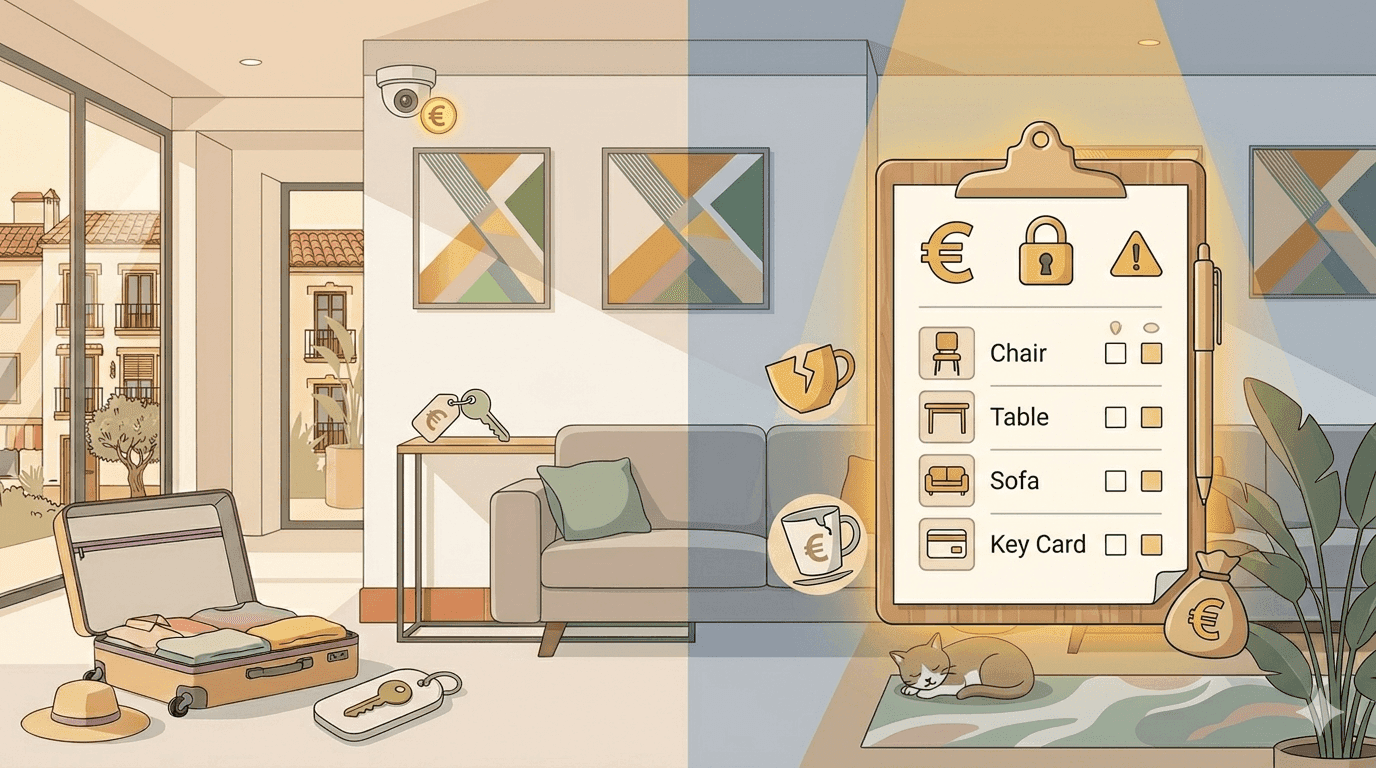
How to manage guest damage and security deposits in your vacation rental
Practical guide to preventing, documenting, and resolving guest damage in your vacation rental: security deposits, platform protection, insurance, and a step-by-step claims process.
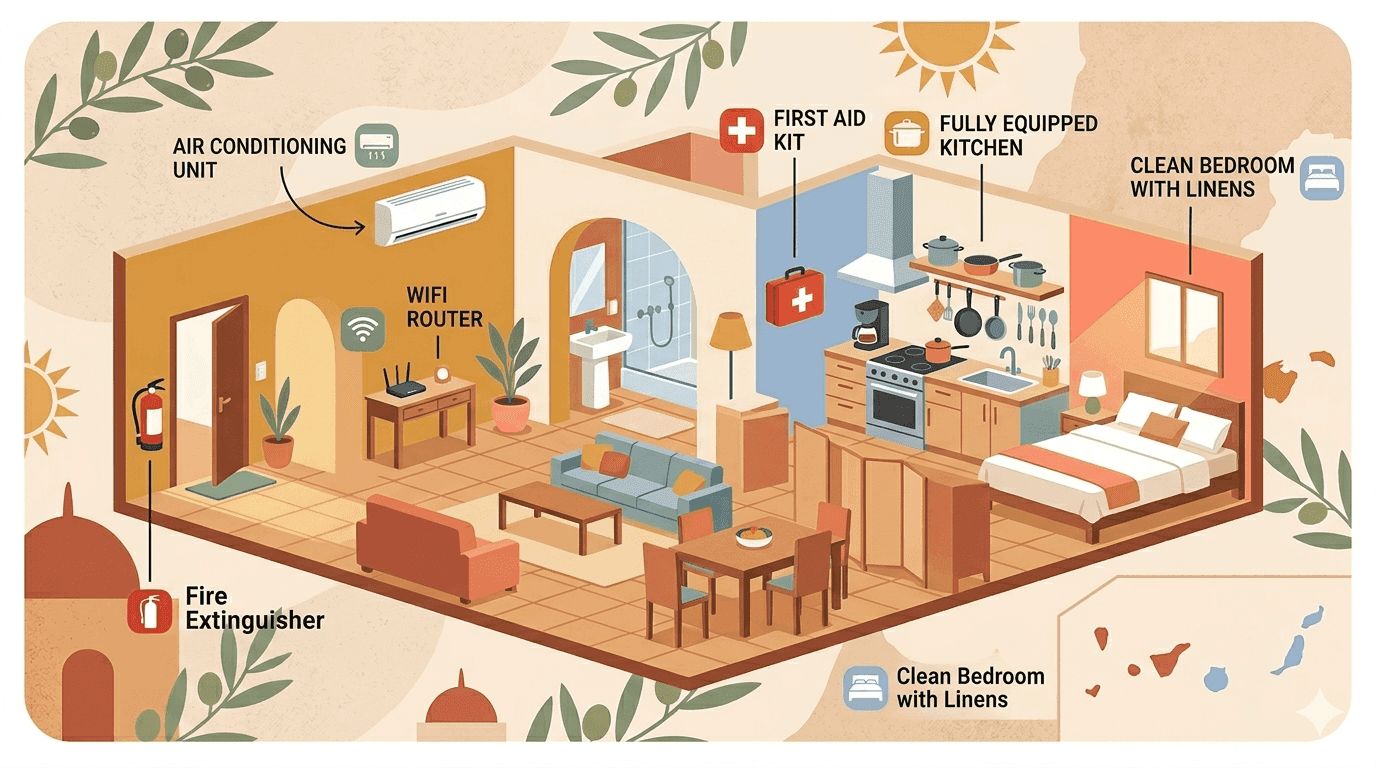
Technical requirements for a vacation rental in Spain: what your property must have
Complete guide to the technical and equipment requirements a tourist-use property must meet in Spain: from climate control and wifi to first aid kits and complaint forms, with requirements by autonomous community.
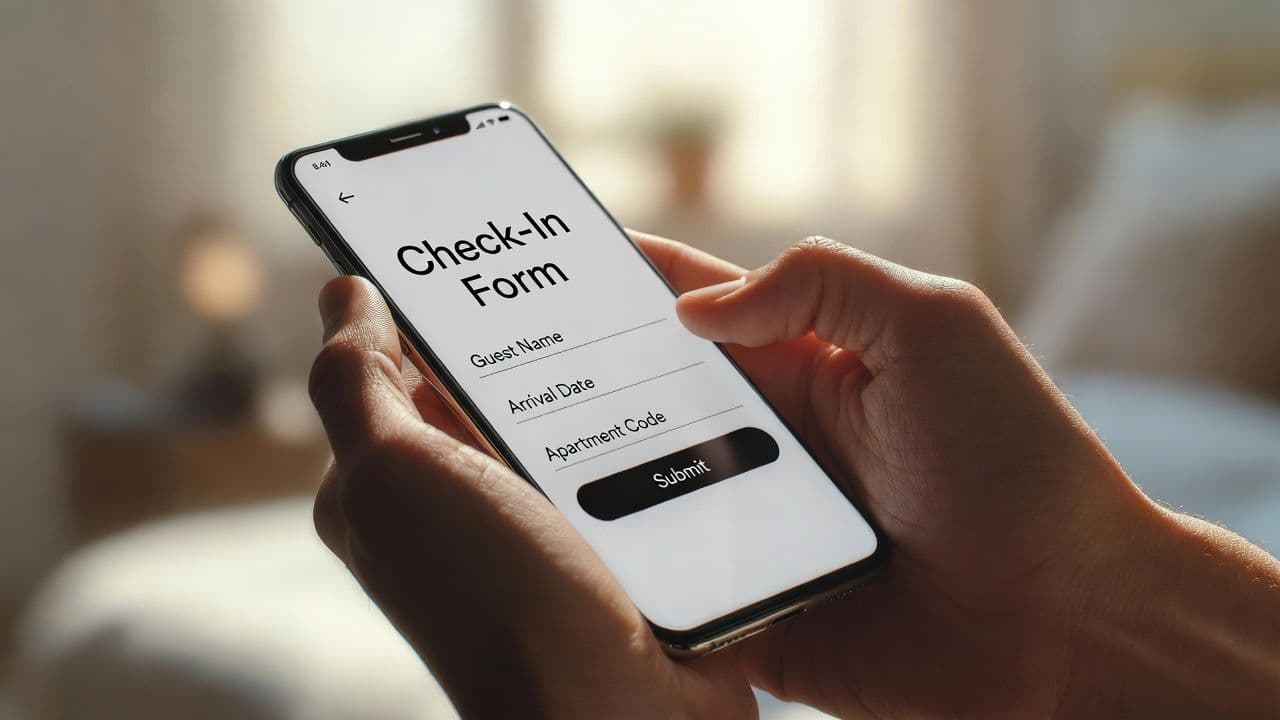
How to automate check-in for your Spanish vacation rental
Discover how self-service guest registration can save you hours every week while keeping your vacation rental compliant with Spanish law.
Ready to automate your guest registration?
Create your account and start streamlining SES Hospedajes compliance for your Spanish rentals.
Get started