Hot Water in Your Vacation Rental: Thermos, Boiler, or Heat Pump, What to Choose and How Much You Spend
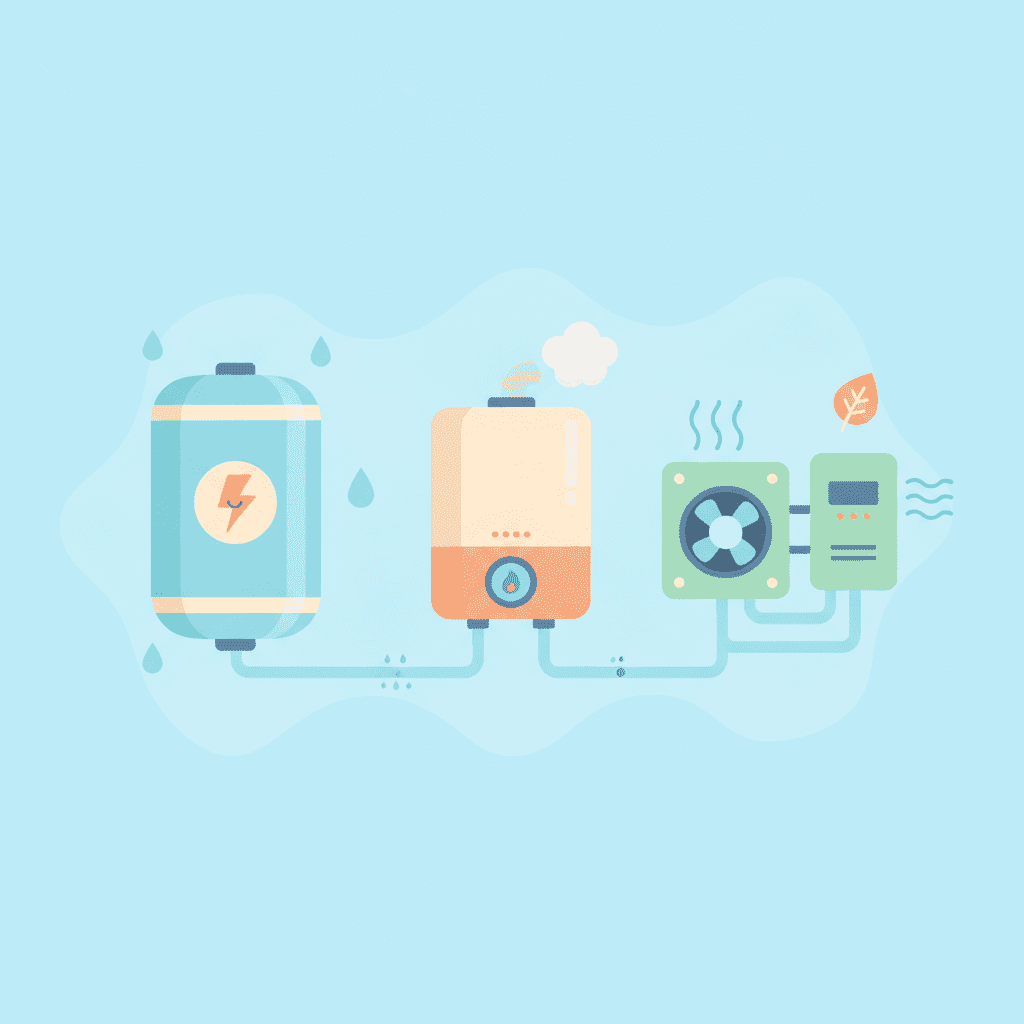
Hot water is one of those topics that no one pays attention to until a guest takes a shower with cold water and leaves you a three-star review. In this guide, I explain which system suits you best depending on the type of apartment, how much you spend monthly with each, and the costly mistakes made by novice owners. With real numbers and no strange technical jargon.
Let's get to the point.
Why Hot Water Matters More Than You Think
A guest might forgive you for a regular coffee maker or a small TV. But a cold shower at 8 in the morning before a flight? That translates into:
- Almost guaranteed negative reviews
- Messages at 7 a.m. (bye-bye sleep)
- Partial refunds that you have to negotiate
- Loss of direct bookings and recommendations
And worst of all: most hot water problems are avoidable. It's a matter of choosing the right system and sizing it for the number of guests you will have.
The Three Most Common Systems in Spain
In vacation homes, 95% of cases are resolved with one of these three:
Electric Water Heater (Accumulator)
The classic. A tank that heats water with an electric resistance and keeps it hot until you use it.
Pros:
- Cheap to install (€200-€400 plus labor)
- No need for gas or mandatory inspections
- Easy to replace
Cons:
- Consumes quite a bit of electricity
- If it runs out, it takes 1-2 hours to have hot water again
- Lifespan of 8-10 years
Gas Boiler (Wall-mounted)
The typical mixed boiler that provides hot water and heating. Heats water instantly or with micro-accumulation.
Pros:
- Virtually unlimited hot water
- Gas is cheaper than electricity per kWh
- Usually provides heating as well
Cons:
- Mandatory inspection every 2 years (may be 4 depending on the community)
- More expensive installation (€1,500-€3,000)
- If it fails, repairs can cost the entire reservation
- Requires certified flue outlet
Heat Pump (Air-source for Domestic Hot Water)
The modern option. Extracts heat from the air to heat water. Much more efficient than a regular electric water heater.
Pros:
- Uses 3-4 times less energy than an electric heater
- No gas, no combustion inspections
- Compatible with solar panels if you have them
Cons:
- High initial investment (€1,800-€3,500)
- Makes some noise (important if near bedrooms)
- Needs space and ventilation
Comparative Table with Real Numbers
For a two-bedroom apartment with medium-high occupancy (about 20 days a month, 4 people):
| System | Initial Investment | Monthly Consumption | Lifespan | Annual Maintenance |
|---|---|---|---|---|
| 100L Electric Water Heater | €250-€450 | €45-€70 | 8-10 years | €0-€30 |
| Mixed Gas Boiler | €1,500-€3,000 | €30-€50 | 12-15 years | €80-€120 |
| Domestic Hot Water Heat Pump | €1,800-€3,500 | €15-€25 | 15-20 years | €30-€50 |
Numbers vary depending on electricity rates, area, and actual use. But the order of magnitude is about the same.
Important: if your apartment already has a gas boiler that works well, do not change it out of whim. Savings take years to offset the investment.
How to Choose Based on Your Case
Small Apartment (studio or 1 bedroom), up to 2 guests
50-80 liter electric heater. Just go with it. The investment is minimal, and consumption won't spike because there are few showers.
2-Bedroom Apartment, 4 Guests
Here it depends. If there's already a gas boiler, keep it. If installing from scratch and occupancy is high, consider a heat pump. If occupancy is low, a 100-150 liter electric heater suffices.
Large Apartment (3+ bedrooms), 6+ guests
Don't risk with a small heater. Either a mixed gas boiler, a powerful heat pump, or a minimum 200-liter electric heater. With 6 people showering in the morning, a 100-liter heater runs out by the third shower, and the fourth is cold water.
Sizing the Heater: The Liter per Person Rule
If opting for an electric heater, calculate as follows:
- 1 person: 50-80 liters
- 2 persons: 80-100 liters
- 4 persons: 150-200 liters
- 6 persons: 200-300 liters
Don't skimp. A larger heater consumes a bit more standby power but saves you the nightmare of cold showers. The difference between 100L and 200L is about €5-€8 more per month. Much less than a negative review.
Common Costly Mistakes Owners Make
1. Heater too small for the apartment capacity. Advertising for 6 people and installing an 80-liter heater. That’s a problem.
2. Not checking water pressure. If the shower head has low pressure, the guest will blame it on hot water even if it’s a plumbing issue.
3. Forgetting boiler inspections. Mandatory by law. If something happens and you lack the up-to-date certificate, legal and insurance issues arise.
4. Not informing guests about the system type. If you have a heater, mention in the welcome manual that hot water may be limited if many showers are taken consecutively. Clear expectations prevent surprises.
5. Not having a trusted technician. When it breaks, it breaks. And often on weekends. Have two plumber/technician contacts in your agenda before it happens.
Basic Maintenance to Avoid Disasters
Electric Water Heater
- Check magnesium anode every 2-3 years (prevents tank corrosion)
- Drain and clean the tank every 4-5 years in hard water areas
- Ensure thermostat works properly
Gas Boiler
- Official inspection every 2 years (mandatory)
- Internal cleaning recommended annually
- Check circuit pressure monthly
Heat Pump
- Clean filters every 6 months
- Annual technical review
- Monitor noise (increase often indicates an issue)
Hot Water and Consumption: How to Control It
A vacation rental guest tends to shower longer than at home. We know. But there are ways to limit the damage:
- Flow restrictors on taps and showers: reduce flow without noticeable difference. Cuts hot water use by 30-40%.
- Set heater temperature to 55-60°C: enough for a comfortable shower. Higher consumes unnecessary energy.
- Schedule the heater if you have time-based rates: heating during off-peak hours can reduce the bill by 20%.
If you want to delve deeper into controlling your electricity bill, I recommend reading how to control electricity consumption in your vacation rental.
What About Heating?
If you have a mixed gas boiler, your heating is covered. If you only have a heater or heat pump for hot water, heating is another topic (air conditioning heat pumps, electric radiators, etc.). We cover this in detail in heating and air conditioning in vacation homes.
What to Include in the Welcome Manual
A short section on hot water can prevent 80% of complaints:
- Where the control panel for the heater or boiler is
- Approximate refill time if it runs out
- Emergency phone number if it fails
- Recommendation to space out showers if many guests
Two lines. Better safe than sorry.
How Autoregistro Fits In
While you decide whether to install a heater or boiler, you still need to comply with the SES Lodging guest registration for each guest entering. We automate this with Autoregistro: your guest fills out a form before arrival, their data goes directly to SES, and you do nothing. €1 per month per property, less than a coffee. If you want to see how it works, check out autoregistro.es.
Frequently Asked Questions
Can I install a low-consumption heater and save a lot?
Modern electric heaters with improved insulation consume 10-15% less than older models. But if you really want to save, the leap is to switch to a heat pump (consumes 3-4 times less).
Do I need to inform guests about the system?
Not mandatory, but recommended. If you have a heater, clearly state in the welcome manual that hot water may be limited after several consecutive showers. Clear expectations prevent complaints.
Are boiler inspections mandatory in vacation homes?
Yes. All gas boilers, whether for personal or tourist use, require regular inspections. The frequency depends on the autonomous community (usually every 2-4 years) and the power. Keep the certificate.
Is it worth installing solar panels for hot water?
In standalone houses with their own roof and good orientation, yes. In apartments in buildings, almost never due to community issues and amortization. A heat pump yields faster results in apartments.
What if the heater breaks with guests inside?
Have a trusted technician with quick response. If repairs take over 24 hours, offer compensation: discount, access to a nearby gym for showers, or rehoming if the damage is severe. Document everything via chat.
Related posts
Heating and air conditioning in holiday homes: what to install, how much you spend, and how to avoid crazy bills
Practical guide to choosing a climate control system in your vacation rental: types, actual installation and consumption costs, and how to prevent your guests from skyrocketing your electricity bill.

Electricity Consumption in Tourist Accommodation: How to Control Your Bill Without Your Guests Feeling Cold
Guests don't pay for the electricity, so they leave it at 24 degrees with the window open. I tell you how much a typical tourist accommodation really spends, which rate to choose, and real tricks to lower the bill without touching comfort.

Electricity consumption in holiday rental homes: how much your guests spend and how to reduce the bill without complaints
Guests spend 30-50% more on electricity than a regular tenant. I'll tell you how to control the electricity usage in your holiday rental home without setting the air conditioning to 26 degrees or ending up with bad reviews.
Electricity Consumption in Vacation Rental Homes: How to Lower Your Bill Without Guest Complaints
Guests don't pay for electricity, so they use it freely. Here's how to control your vacation home's electricity consumption without ruining the experience or receiving negative reviews.
Ready to automate your guest registration?
Create your account and start streamlining SES Hospedajes compliance for your Spanish rentals.
Get started