How to avoid neighbor conflicts from vacation rentals: a practical guide
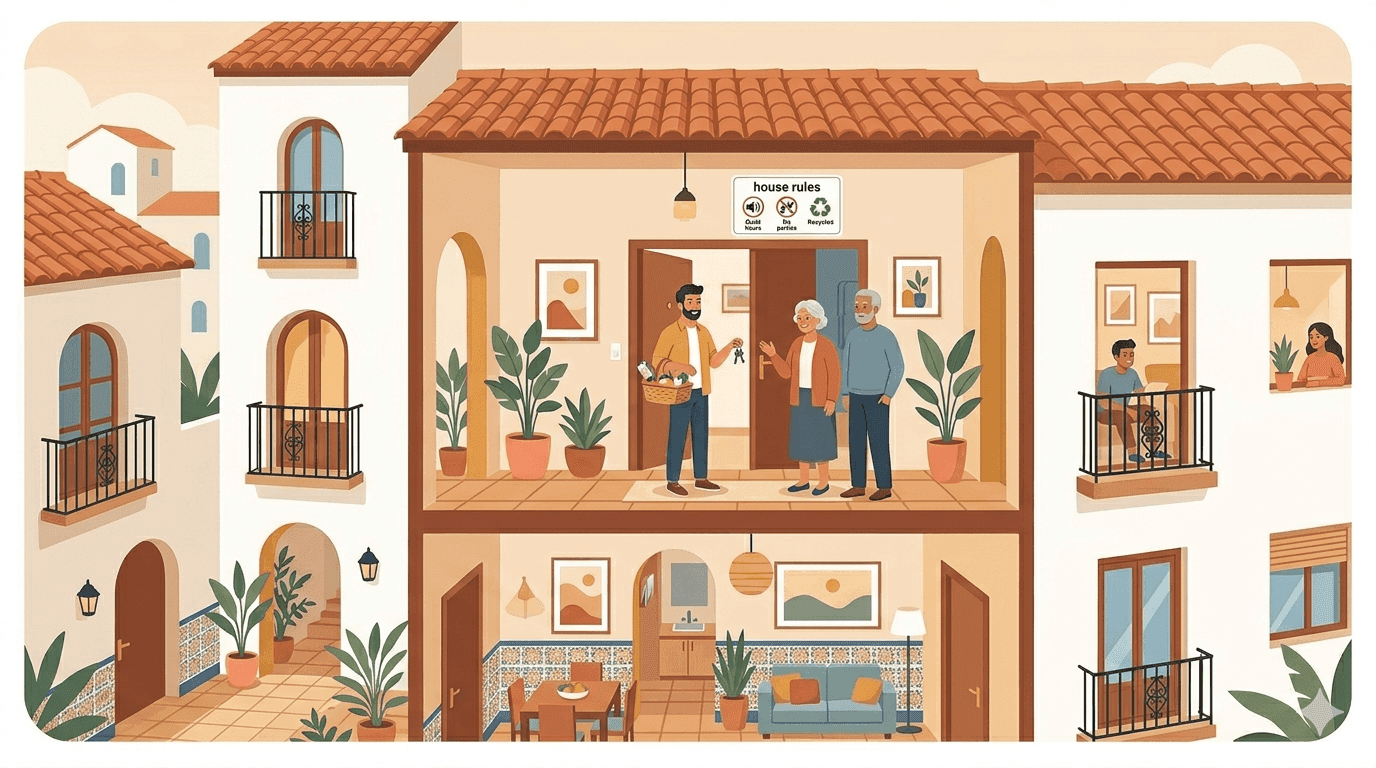
Neighbor conflicts are the main non-financial risk of vacation rentals in residential buildings. Noise, improper use of common areas, and the constant rotation of strangers create tensions that can end in complaints, municipal penalties, or even a ban on vacation rentals in your homeowners' association. The good news: most conflicts are preventable with the right measures.
If you rent a tourist apartment in a building with neighbors, this topic affects you directly. It doesn't matter how well you manage your property: if your guests bother the neighbors, the problem is yours. And the consequences can range from an informal complaint to a homeowners' meeting vote to ban vacation rentals in the entire building (more on this).
This article gives you concrete strategies to prevent conflicts, manage them when they arise, and protect your activity long-term.
Why conflicts arise
Understanding the causes is the first step to preventing them. Neighbors don't complain on a whim — they have legitimate reasons you should know:
Noise
This is the number one complaint, by far. Tourist guests tend to:
- Arrive and leave at odd hours (late flights, late check-in)
- Talk loudly in hallways and common areas
- Throw parties or noisy gatherings at night
- Drag suitcases through hallways and stairs at any hour
- Be unaware of the building's quiet hours
Use of common areas
- Occupying the elevator with luggage for extended periods
- Leaving trash outside of designated hours or in wrong places
- Using the community pool without following rules
- Smoking in common areas
- Leaving the building entrance door open (security)
Rotation of strangers
- Neighbors don't know who's coming and going in the building
- Feeling of insecurity from the constant presence of strangers
- Loss of community feeling
- Accelerated wear on common areas (elevator, stairs, lobby)
Perception of unfairness
- Neighbors feel they bear the nuisances while you get the financial benefit
- They perceive that vacation rental devalues their property or quality of life
- Frustration if they feel the owner doesn't take responsibility for problems
Prevention strategies: before the conflict arises
1. Communicate proactively with your neighbors
Don't wait for them to complain. Take the initiative:
- Introduce yourself as an owner who rents to tourists. Transparency builds trust.
- Leave your phone number with the closest neighbors (same floor, above and below). Tell them to call you if there's any problem.
- Explain your control measures: what you do to prevent disturbances, how you select guests, what rules you impose.
- Thank them for their patience and show willingness to resolve any issue quickly.
This simple step completely changes the dynamic. A neighbor who has your phone number and knows you respond is much less likely to go straight to filing a complaint.
2. Set clear rules for guests
Your guests don't know the building's rules. It's your responsibility to inform them. Create a rules document that includes:
- Quiet hours: typically 10 PM to 8 AM (or whatever your community establishes)
- No parties or noisy gatherings
- Elevator use: don't block it, don't make excessive noise
- Trash management: schedules, containers, recycling
- Common areas: pool rules, terrace, garage
- Building entrance door: always closed
- TV and music volume: moderate, especially at night
- Suitcases: avoid dragging through hallways during nighttime hours
Format: send the rules before arrival (in the confirmation message) and leave them printed in a visible place in the property. In the guest's language if possible, or at least in Spanish and English.
3. Control check-in and check-out times
Entry and exit moments carry the highest risk of disturbance:
- Set reasonable hours: check-in between 3 PM and 9 PM, check-out before 11 AM
- Avoid late-night check-ins whenever possible. If a guest arrives late, make sure they have clear instructions to enter quietly
- Smart locks: eliminate the need for someone to wait for the guest and allow silent access at any hour
- Detailed access instructions: the clearer the process, the less time the guest spends in common areas looking for the entrance
4. Select guests carefully
Not all guests are the same. You can reduce conflict risk:
- Review previous guest reviews on the platform
- Set minimum requirements: identity verification, positive previous reviews
- Ask the reason for travel: families and business travelers tend to be quieter than groups of friends on a bachelor party
- Limit capacity: don't allow more people than your property can comfortably accommodate
- Explicitly prohibit parties in house rules and in the listing
5. Install noise monitoring measures
- Noise sensors (like Minut or NoiseAware): detect excessive decibel levels and alert you in real time. They don't record conversations — they only measure volume. They're legal and increasingly common.
- Sound insulation: if your budget allows, improving insulation on doors, windows, and shared walls dramatically reduces complaints.
- Rugs and textiles: dampen footstep noise and furniture dragging.
6. Keep common areas spotless
- Make sure your cleaning service also cleans any traces in common areas (hallways, elevator)
- Don't leave keys in mailboxes or visible hiding spots that reveal tourist activity
- If there's trash outside of hours, pick it up yourself or have your cleaning team do it
Conflict management: when the problem has already arisen
Respond quickly
If a neighbor contacts you with a complaint:
- Thank them for letting you know (rather than going straight to filing a complaint)
- Contact the guest immediately to resolve the situation
- Inform the neighbor of the measures you've taken
- Follow up to make sure it doesn't happen again
Response speed is key. A problem resolved in 15 minutes is an anecdote. A problem that lasts all night is a formal complaint.
Document everything
Keep a record of:
- Complaints received (date, neighbor, reason, resolution)
- Measures taken with each problematic guest
- Communications with the homeowners' association
- Investments in improvements (insulation, sensors, etc.)
This documentation is your defense if the conflict escalates to the homeowners' association or administrative proceedings.
Compensate when necessary
If a guest has caused real disturbance:
- A sincere apology to the affected neighbor
- If the damage is tangible (mess in common areas, damage), fix it immediately
- In serious cases, a goodwill gesture (a bottle of wine, an apology note) can defuse a lot of tension
It's not about buying off the neighbor, but about showing you take responsibility.
Penalize problematic guests
- Leave an honest review on the platform to warn other hosts
- If the guest seriously violated the rules, file a claim through the platform
- In extreme cases (party, damage), you can request early departure
The most serious scenario: the homeowners' meeting
If conflicts accumulate, neighbors can bring the issue to the homeowners' meeting. Since the reform of the Horizontal Property Law, a community can ban or limit vacation rentals with a 3/5 favorable vote of owners (complete guide on bans).
How to protect yourself
- Attend homeowners' meetings. Your presence and willingness to dialogue are fundamental.
- Present data: show the measures you've implemented, the incident log (which should be minimal if you've done prevention well), and your commitment to coexistence.
- Propose commitments: check-in schedules, occupancy limits, direct communication channel with neighbors.
- Find allies: other owners who rent or who have no issues with your activity.
- Consult a lawyer if the situation gets complicated. Community agreements have formal requirements that, if not met, can be challenged.
Legal framework: your rights and obligations
Your rights as an owner
- You have the right to economically exploit your property, including vacation rental, unless the community bylaws or a meeting agreement expressly prohibit it
- You cannot be discriminated against or penalized for the mere fact of renting to tourists if you comply with regulations
- You have the right to participate and vote in homeowners' meetings
Your obligations
- Comply with the community's coexistence rules
- Be responsible for disturbances caused by your guests
- Inform guests of the building's rules
- Maintain the property and common areas in good condition
- Have liability insurance covering third-party damage (more on insurance)
Municipal regulations
Many town halls have coexistence ordinances that specifically apply to vacation rentals:
- Stricter noise limits
- Requirement for a 24-hour contact phone number
- Guest information requirements
- Specific penalties for repeated disturbances
Check your municipality's ordinance — municipal fines can be in addition to regional ones.
Strategy summary
| Strategy | Cost | Impact | Difficulty |
|---|---|---|---|
| Give your phone number to neighbors | Free | High | Low |
| Written rules for guests | Free | High | Low |
| Controlled check-in hours | Free | Medium | Low |
| Guest selection | Free | High | Medium |
| Noise sensor | €100-200 | High | Low |
| Smart lock | €150-400 | Medium | Low |
| Sound insulation | €500-3,000 | Very high | Medium |
| Attend homeowners' meetings | Time | High | Low |
How Autoregistro fits in
Autoregistro facilitates a key part of conflict prevention: orderly guest registration. By having each guest's data properly registered, you can identify who was staying in case of an incident, respond to community or authority requests with accurate information, and demonstrate that you manage your activity professionally and responsibly. That professionalism is your best argument when a neighbor or homeowners' meeting questions your activity.
Related posts
10 mistakes new vacation rental owners make in Spain (and how to avoid them)
The most common mistakes made by new vacation rental owners in Spain: from operating without a license to ignoring guest registration, plus fines, neighbor conflicts, and inspections. A practical guide to not tripping up.
How to manage guest damage and security deposits in your vacation rental
Practical guide to preventing, documenting, and resolving guest damage in your vacation rental: security deposits, platform protection, insurance, and a step-by-step claims process.
What insurance do you need for your vacation rental in Spain?
Complete guide to mandatory and recommended insurance for tourist-use properties in Spain: civil liability, home, non-payment, legal protection, and specific coverages you should demand.
Can my building ban me from short-term renting my apartment?
Legal and practical guide on vacation rental restrictions in homeowners' associations in Spain: what the law says, what voting majorities are needed, how bylaws affect you, and what options you have if your community votes against it.
Ready to automate your guest registration?
Create your account and start streamlining SES Hospedajes compliance for your Spanish rentals.
Get started