Vacation Rental Inspections in Spain: What They Check, Who Does Them, and How to Prepare
Vacation rental inspections in Spain are becoming increasingly frequent and systematic. They're conducted by regional and municipal authorities, can be random or complaint-driven, and check everything from your license to guest registration. This guide explains who inspects, what exactly they check, how inspections are triggered, and how to keep your property always ready.
If you operate a vacation rental in Spain, the question isn't whether you'll be inspected — it's when. Authorities have significantly increased resources dedicated to tourism inspection, especially in areas with the highest concentration of vacation rentals.
Who Conducts Inspections
Regional Tourism Inspection
Each autonomous community has a body of tourism inspectors. They're civil servants with authority to:
- Access the vacation rental (with the owner's consent or judicial authorization)
- Verify compliance with tourism regulations
- Issue infraction reports
- Propose penalties
Local and National Police
Police can verify:
- Guest registration (SES Hospedajes)
- Guest identification
- Compliance with municipal ordinances (noise, community living)
Municipal Inspection
City councils can inspect:
- Activity license or urban compatibility
- Zoning compliance
- Habitability conditions
- Identification plaque
Tax Authority
The Tax Agency doesn't physically inspect the property, but can request documentation about the activity and cross-reference tax data. Check our guide on not declaring income.
How Inspections Are Triggered
By Complaint
The most frequent route. Complaints can come from:
- Neighbors bothered by noise or foot traffic
- Homeowners' associations
- Competitors (other tourist accommodations)
- Dissatisfied guests
A complaint opens a file that normally results in an inspection.
Random or Ex Officio
Authorities conduct random inspections, especially in:
- Areas with high vacation rental concentration
- Peak season periods
- Specific enforcement campaigns
By Platform Monitoring
Authorities actively monitor platforms looking for:
- Listings without registration numbers
- Listings in restricted zones
- Properties not registered in the tourism registry
Barcelona, Palma, Madrid, and Valencia are especially active in this type of monitoring.
By Data Cross-Referencing
Cross-referencing between the tourism registry, cadastre, guest registry, and tax data can trigger inspections when inconsistencies are detected.
What Exactly They Check
Documentation
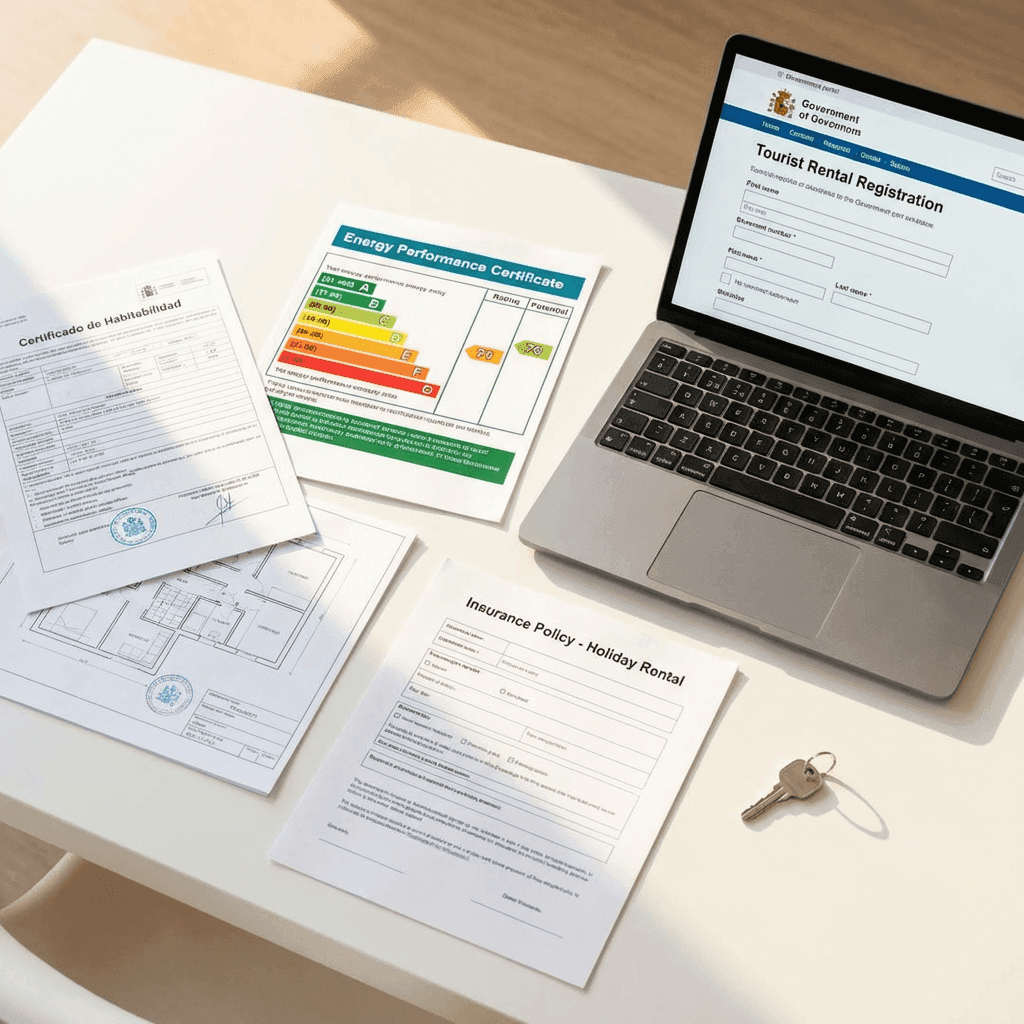
| Document | What they verify |
|---|---|
| Responsible declaration / license | That it's current and matches the property |
| Regional registration number | That it's valid and visible in the listing |
| National registration number | That it's obtained and communicated to platforms |
| Liability insurance | That it's current and covers tourist activity |
| Habitability certificate | That the property meets minimum conditions |
| Energy certificate | That it's current (if required by the region) |
Guest Registration
- That you're registered with SES Hospedajes
- That you send guest reports for each guest
- That reports contain all mandatory data
- That you keep records for the legal retention period
This is one of the points that generates the most infractions, because many owners don't know it's mandatory or don't do it correctly.
Property Conditions
Inspectors check the technical requirements your autonomous community demands:
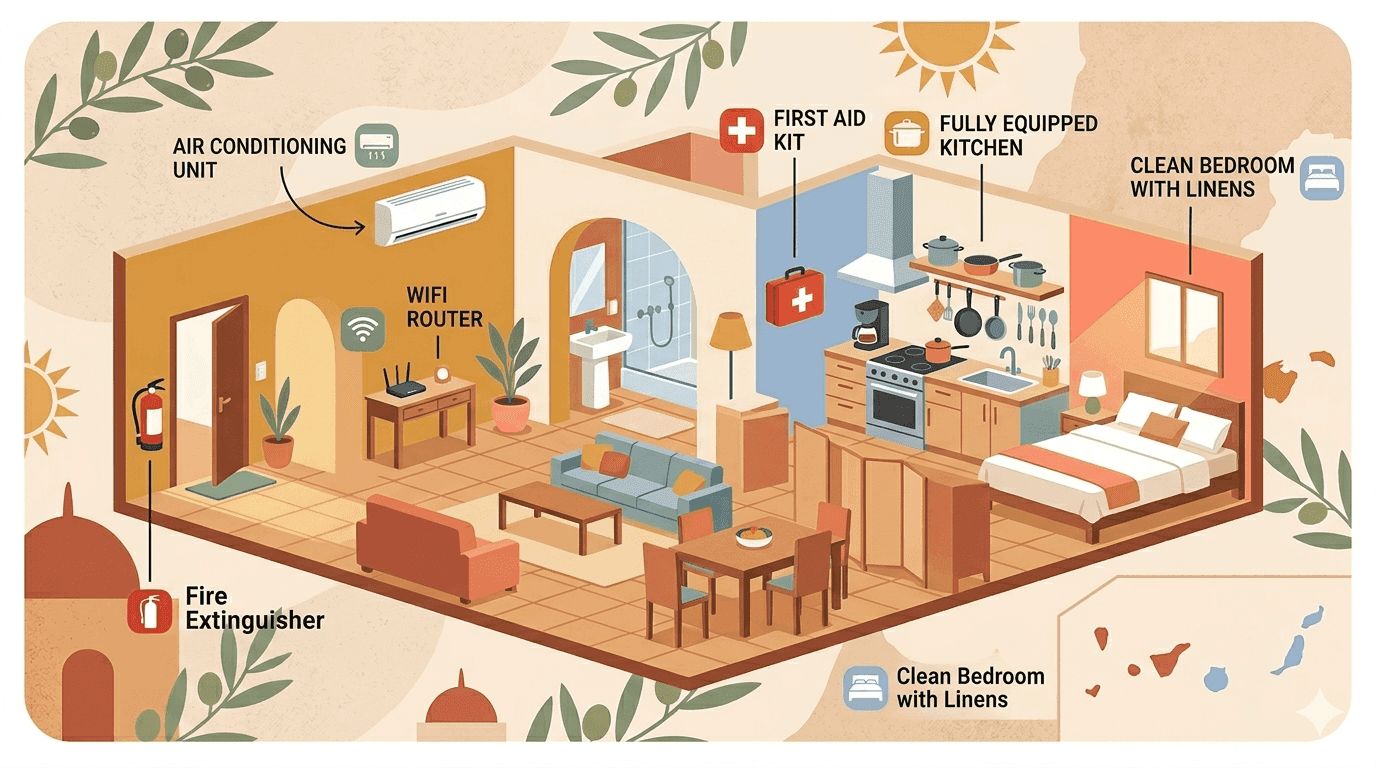
- Habitability: ventilation, lighting, minimum surface area
- Equipment: equipped kitchen, full bathroom, bed linens and towels
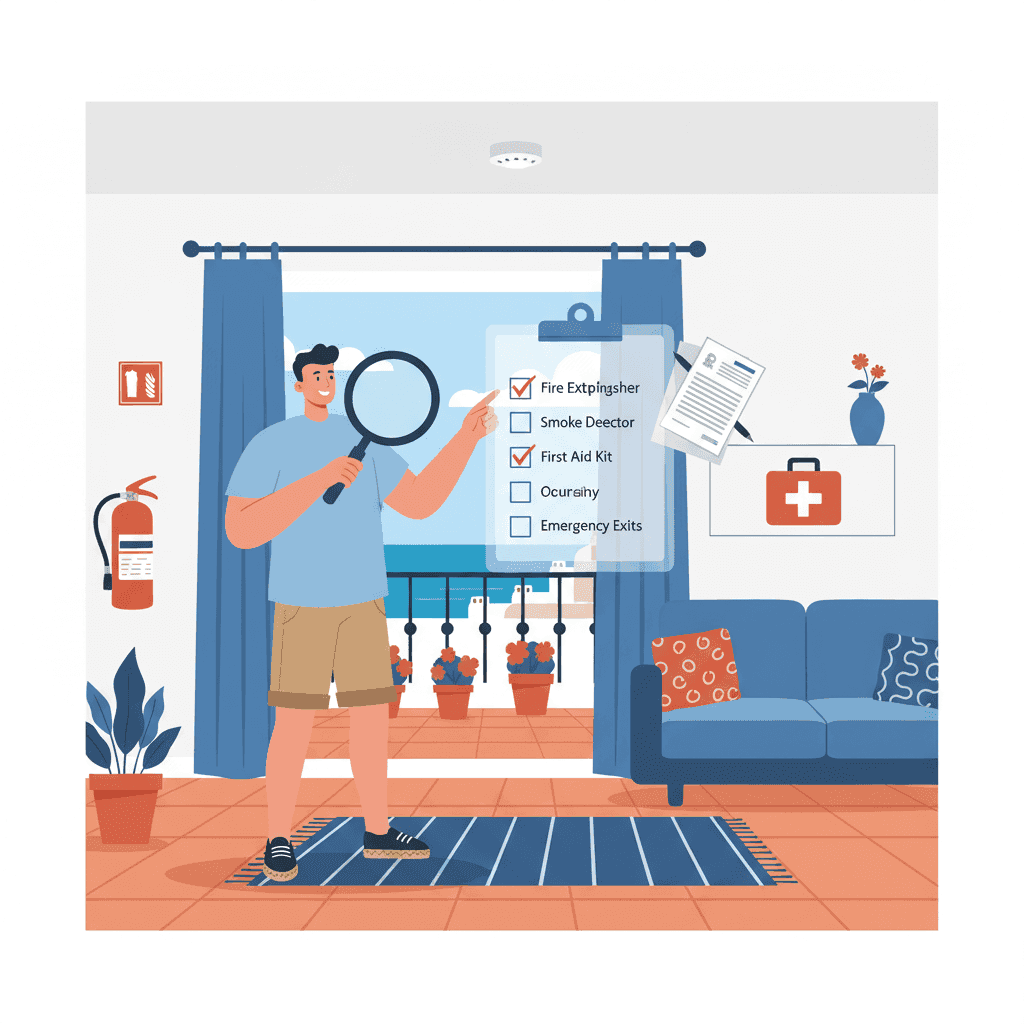
- Safety: fire extinguisher, first aid kit, emergency signage (varies by region)
- Climate control: air conditioning and/or heating (depending on zone and region)
- Communications: wifi available
- Guest information: house rules, emergency phone numbers, complaint forms
Identification Plaque
Many regions require a visible plaque on the property exterior with the registration number. Inspectors verify its presence and that the data is correct.
Advertising and Listings
- That the registration number appears in all listings
- That the listing description matches the actual property
- That advertised capacity doesn't exceed what's authorized
What Happens If You Fail the Inspection
Infraction Report
The inspector files a detailed report of irregularities found. You have the right to make allegations.
Correction Period
For minor infractions (missing plaque, incomplete equipment), you're normally given a period to correct the situation (15-30 days).
Financial Penalty
For serious infractions (operating without a license, not registering guests), the penalty is direct. Amounts vary by region — check our guide on fines.
Activity Cessation
In serious or repeat cases, the authority can order immediate cessation of tourist activity.
How to Keep Your Property Always Ready
Documentation Folder
Maintain a folder (physical or digital) with:
- Copy of responsible declaration / license
- Regional and national registration numbers
- Current insurance policy
- Habitability certificate
- Energy certificate
- Recent guest reports sent
Equipment Checklist
Periodically verify your property meets all technical requirements for your region. The most forgotten:
- Complaint forms available
- Emergency phone numbers visible
- Fire extinguisher within inspection date
- Complete first aid kit
- Identification plaque in good condition
Guest Registration Up to Date
Ensure every guest is registered with SES Hospedajes within 24 hours of arrival. It's the point that generates the most infractions and the easiest to automate.
Neighbor Relations
Maintain a good relationship with the homeowners' association. Neighbor complaints are the main source of inspections. Clear rules for guests, noise control, and proactive communication with neighbors significantly reduce risk.
How Autoregistro Fits In
Guest registration is one of the most inspected points and the one that generates the most penalties for non-compliance. Autoregistro completely automates this process: the guest completes their data before arrival, reports are sent automatically to SES Hospedajes within the legal deadline, and signatures are archived as proof of compliance.
In case of inspection, you can demonstrate that all your guests are correctly registered — with dates, data, and signatures. It's the difference between passing the inspection without issues and facing a penalty that can reach €600,000.
Related posts
How to register your tourist rental property in Spain: step-by-step guide
The complete process to register your property as a vacation rental in Spain: prior documentation, responsible declaration, national registration number, SES Hospedajes setup, and platform listing.

Fines for renting without a tourist license in Spain: how much they cost and how to avoid them
Detailed guide on penalties for operating a vacation rental without a license in Spain: amounts by autonomous community, infraction types, how they're detected, what happens with platforms, and how to regularize your situation.
Technical requirements for a vacation rental in Spain: what your property must have
Complete guide to the technical and equipment requirements a tourist-use property must meet in Spain: from climate control and wifi to first aid kits and complaint forms, with requirements by autonomous community.
Mandatory guest registration in Spain: what property managers need to know
Everything you need to know about the legal obligation to register guests in Spanish rental properties under Royal Decree 933/2021.
Ready to automate your guest registration?
Create your account and start streamlining SES Hospedajes compliance for your Spanish rentals.
Get started